CGM Global Summit 2025 – Reflections Through a Banker’s Lens (Series 4/9)
AI, Data Centres & Carbon-Free Energy
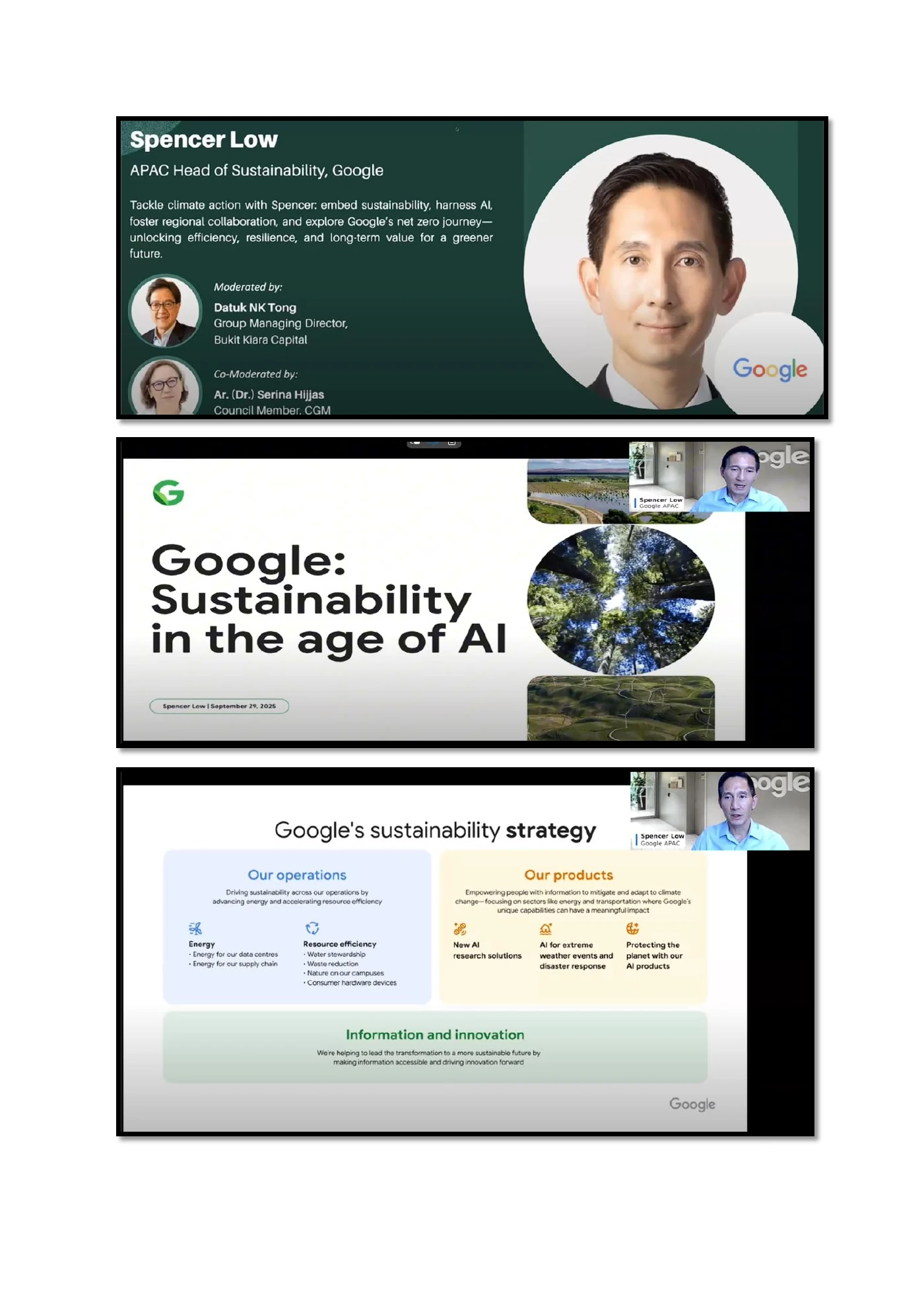
Insights from Spencer Low, Head of Sustainability and Data Centres at Google, joined Ar. Dr. Serina Hijjas and Datuk NK Tong. A fascinating discussion on how artificial intelligence and sustainability can progress together in harmony.
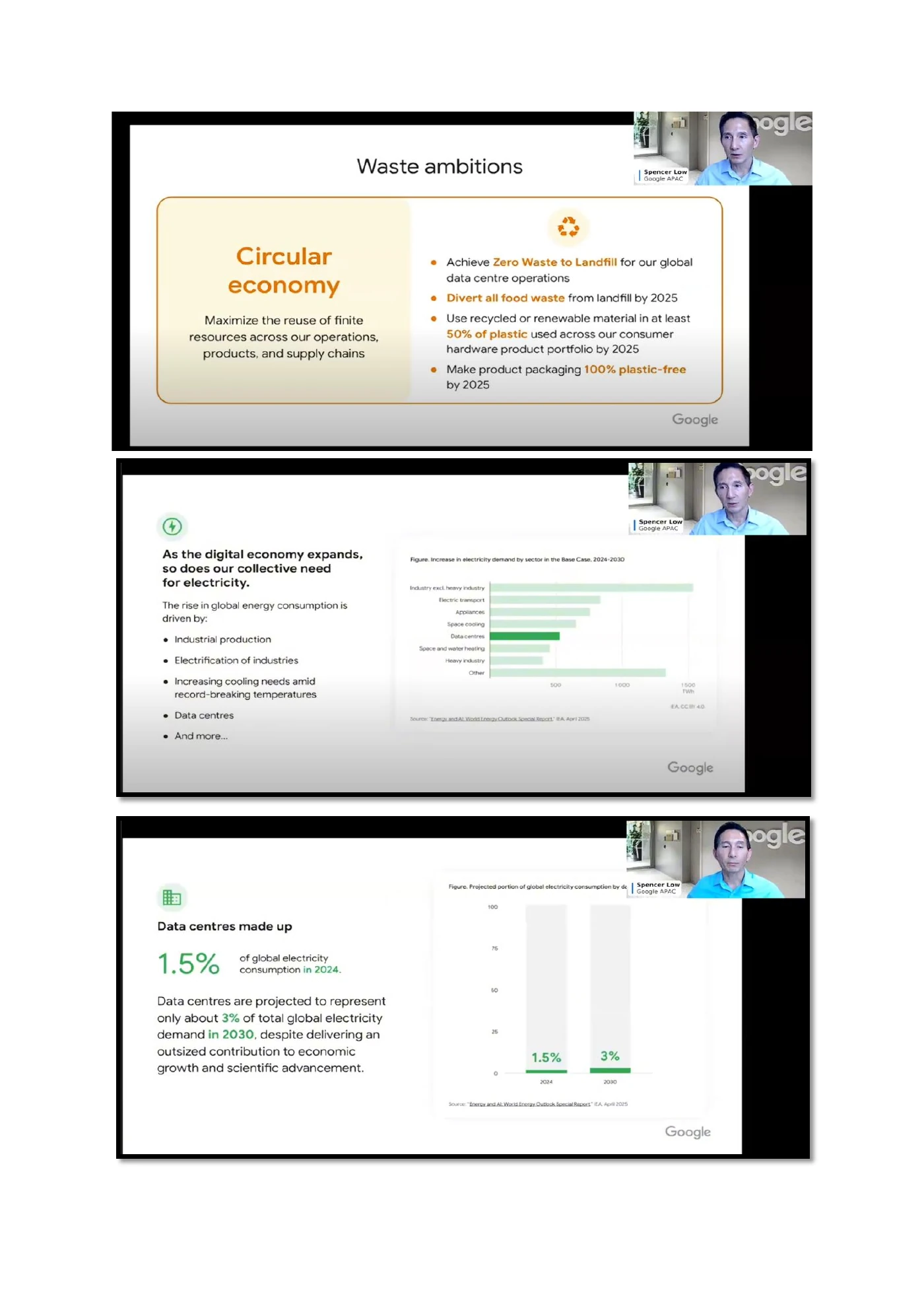
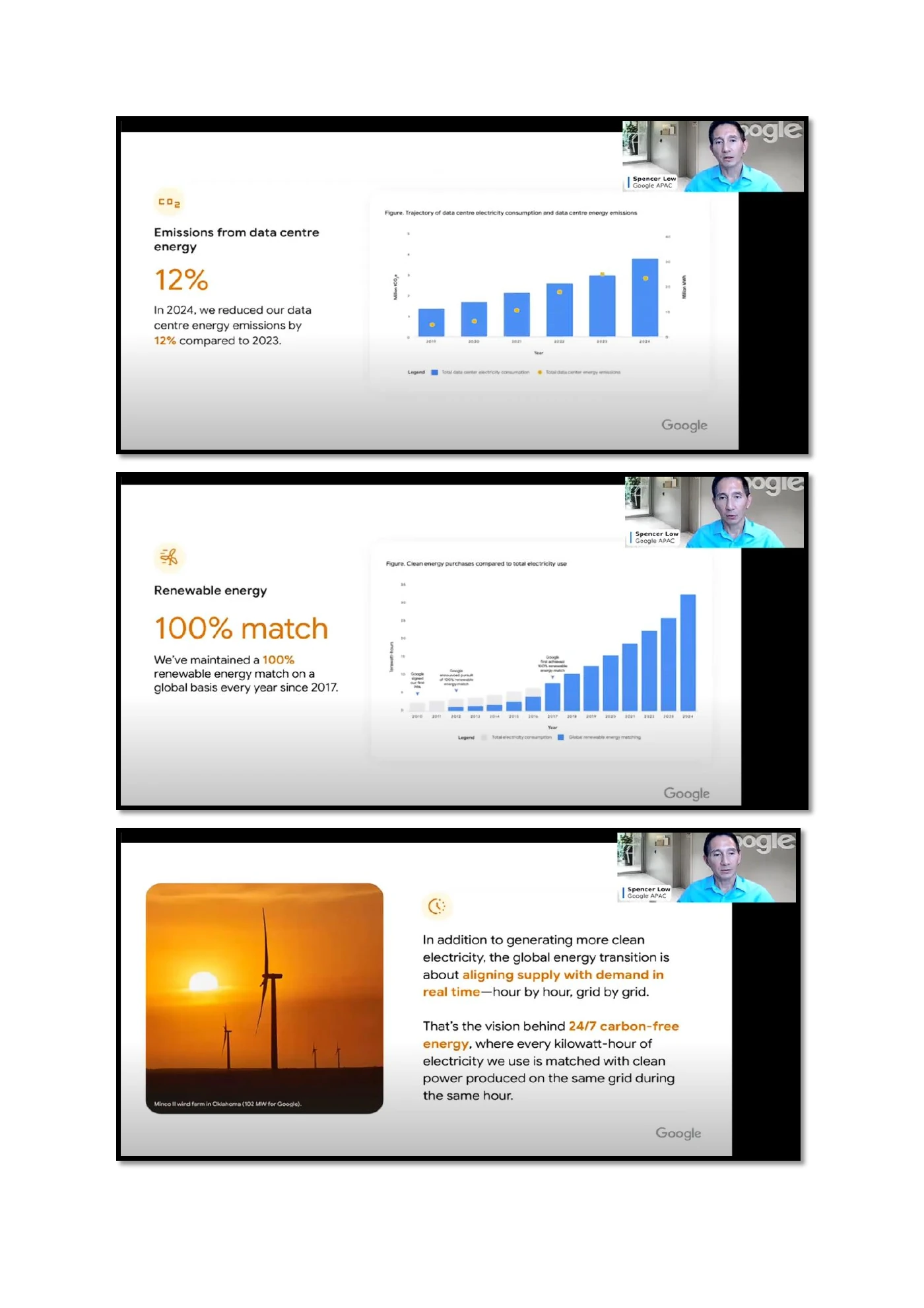
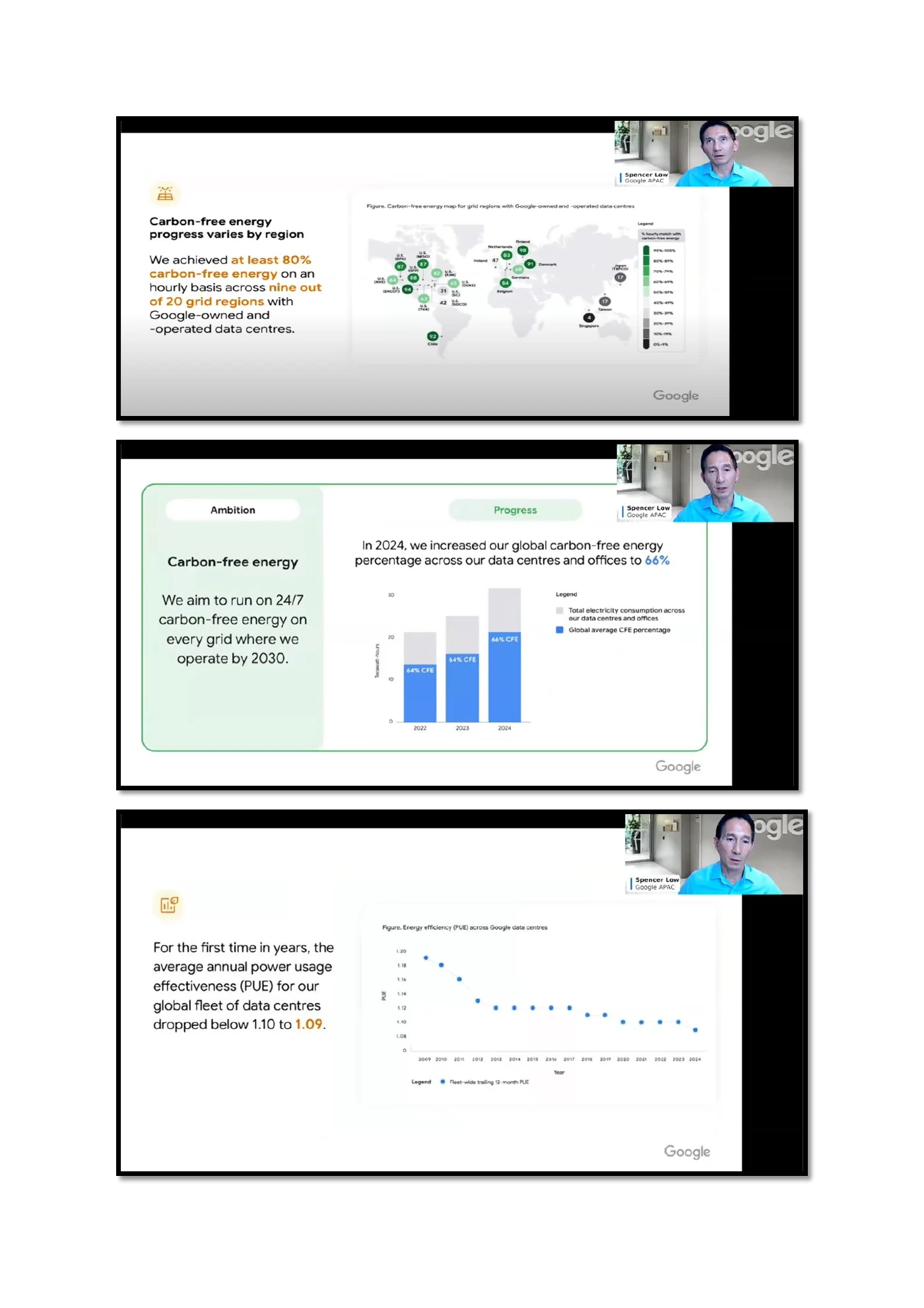
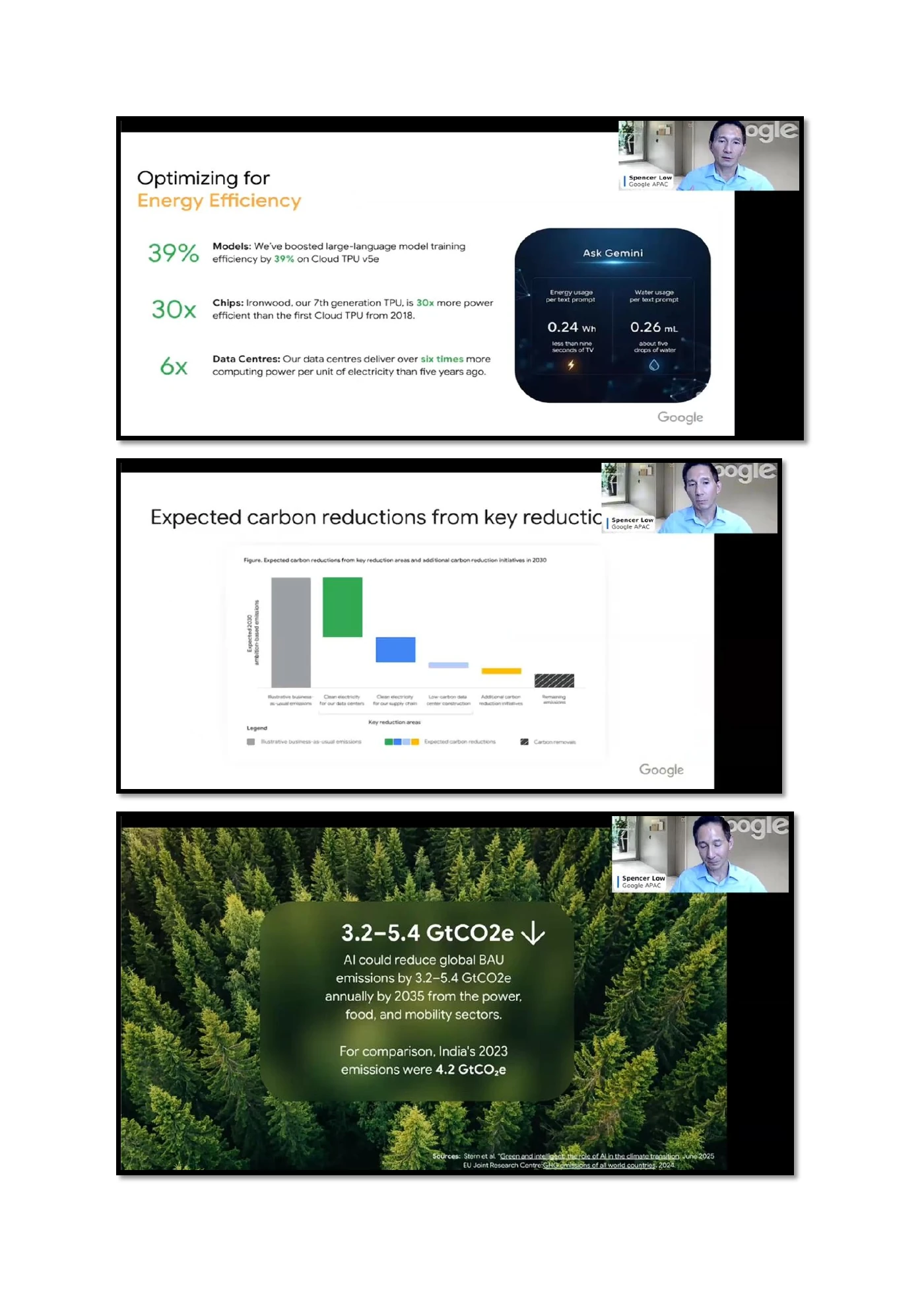
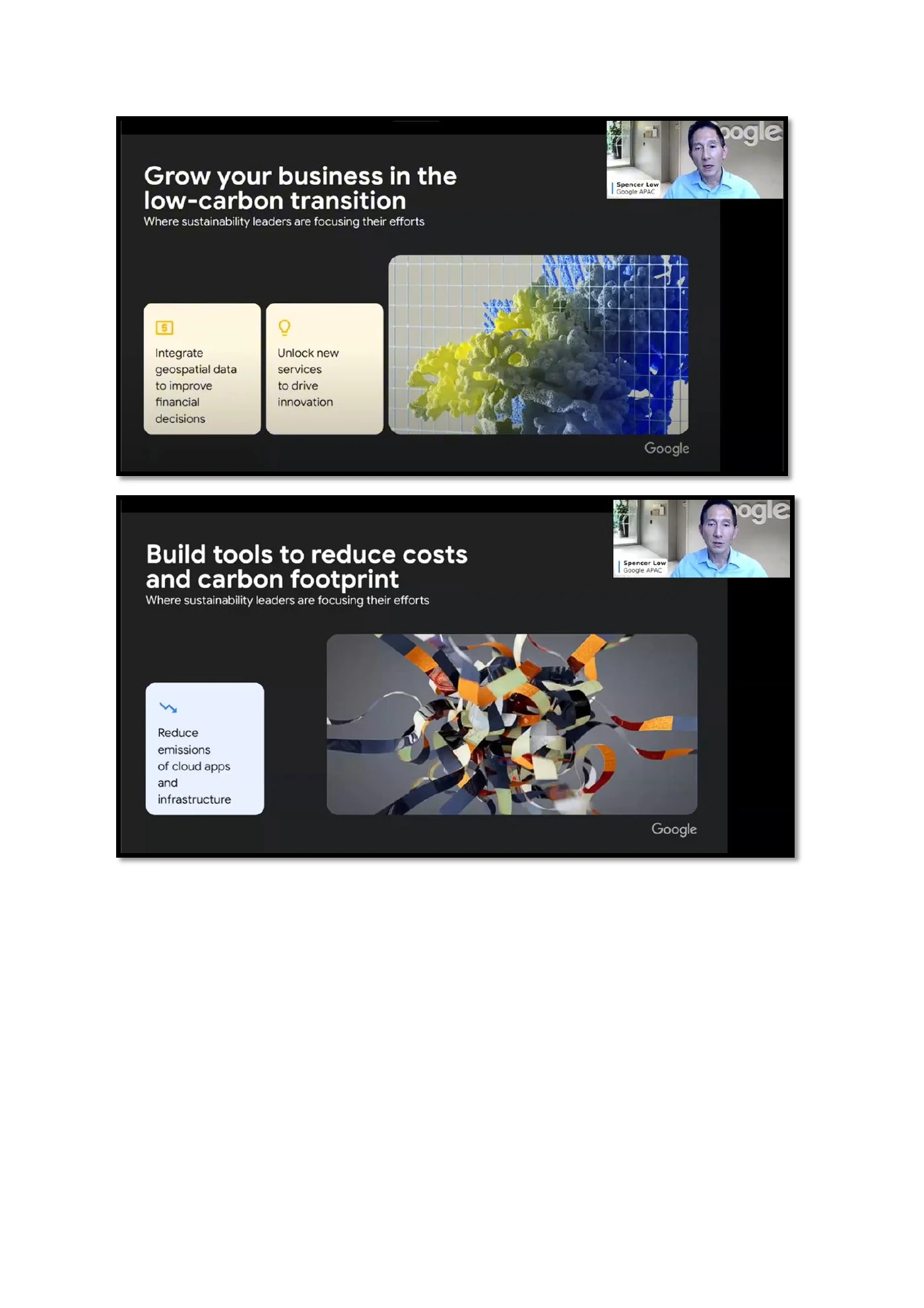
1️⃣Efficiency in the AI Era As global data-centre demand surges, Spencer showed how innovation can drive responsibility. 📌In 2024, Google’s electricity use grew 27 %, yet its emissions fell 12 %, with its carbon-free energy score rising to 66 %. How? Through smarter design, efficient hardware (7th-gen TPUs use 30× less energy than in 2018) and AI-optimised software that improves model training efficiency by nearly 40%.
“Every watt saved matters — even in fossil-fuel-heavy grids like Asia Pacific.”
2️⃣AI as a Climate Enabler Citing a Nature study led by Lord Nicholas Stern, Spencer noted that AI could cut 3–5 gigatons CO₂ by 2035 — roughly India’s yearly emissions.
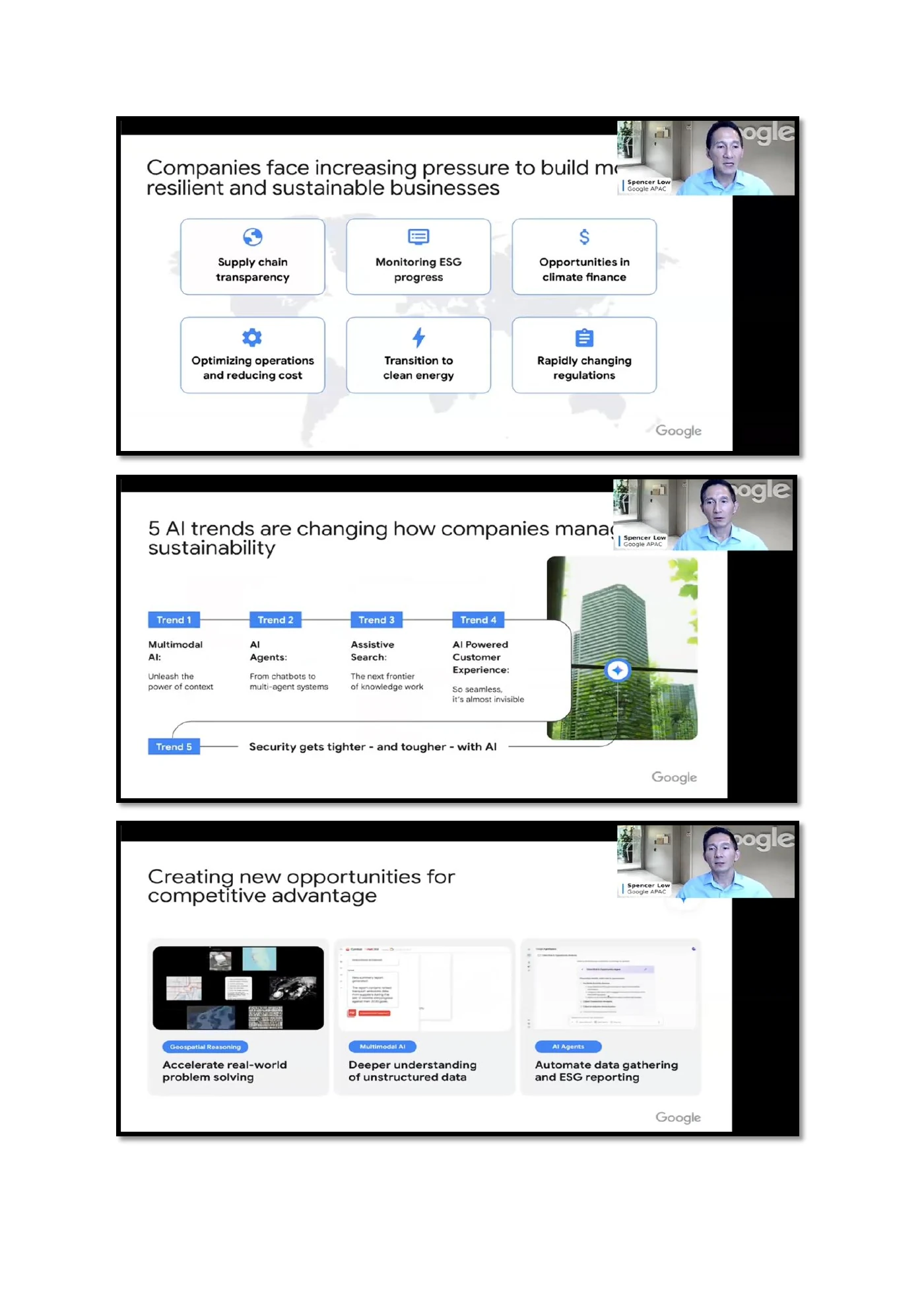
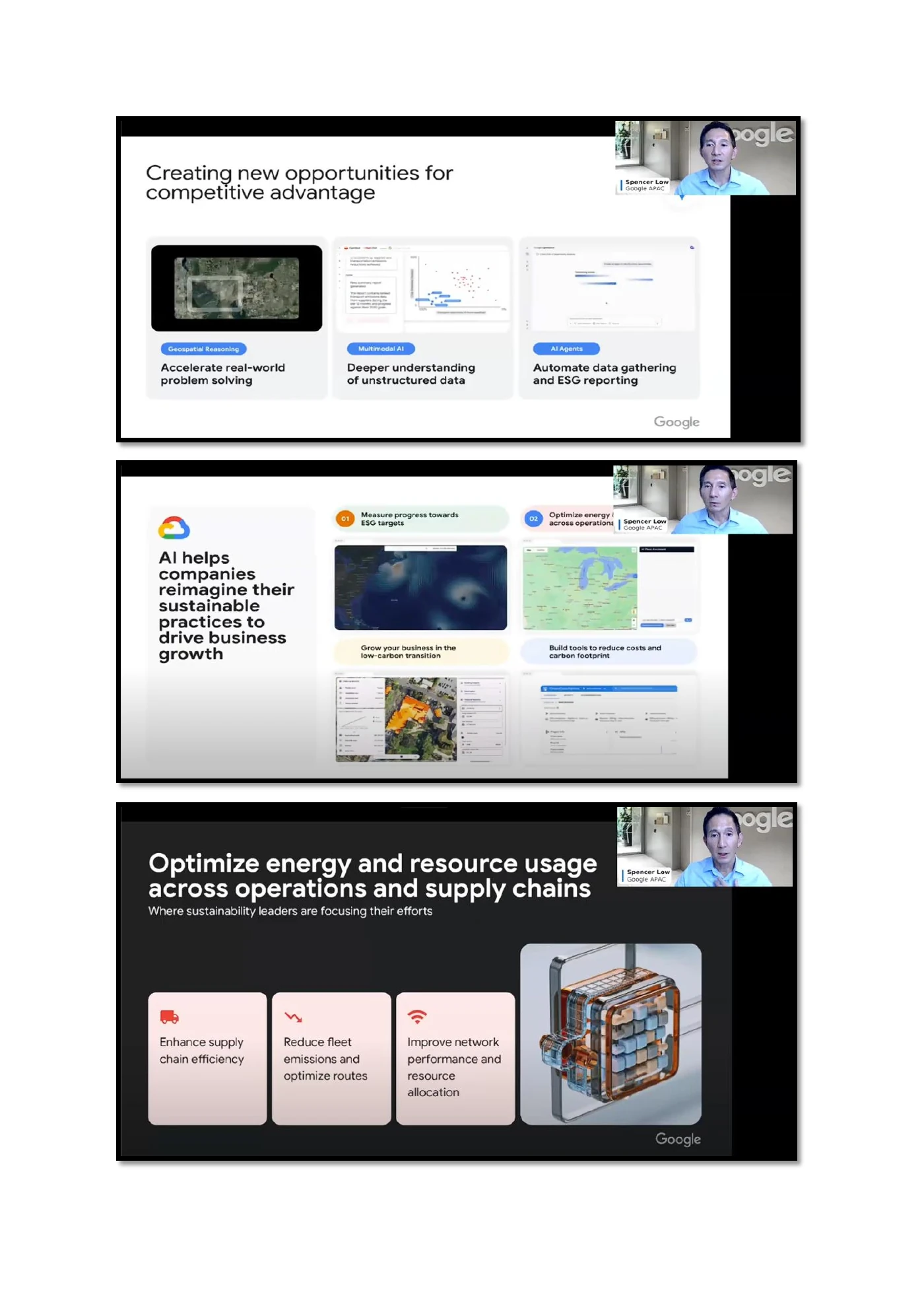
How AI is accelerating climate action: ☑️ Real-time monitoring through satellite and sensor data. ☑️ Automated ESG reporting and verification. ☑️ Green R&D via assistive search. ☑️ Transparent consumer data on product footprints. ☑️ Cyber-secure sustainability systems.
“We’re shifting from periodic audits to 24/7 verifiable monitoring.”
3️⃣Malaysia on the Digital Map Google’s expansion into Malaysia reflects confidence in our talent and infrastructure. 📌 Spencer confirmed that growth will be phased and powered by renewables through long-term offtake agreements, aligned with the ASEAN Power Grid.
“We want carbon-free electrons flowing within the grids we operate — not imported credits.”
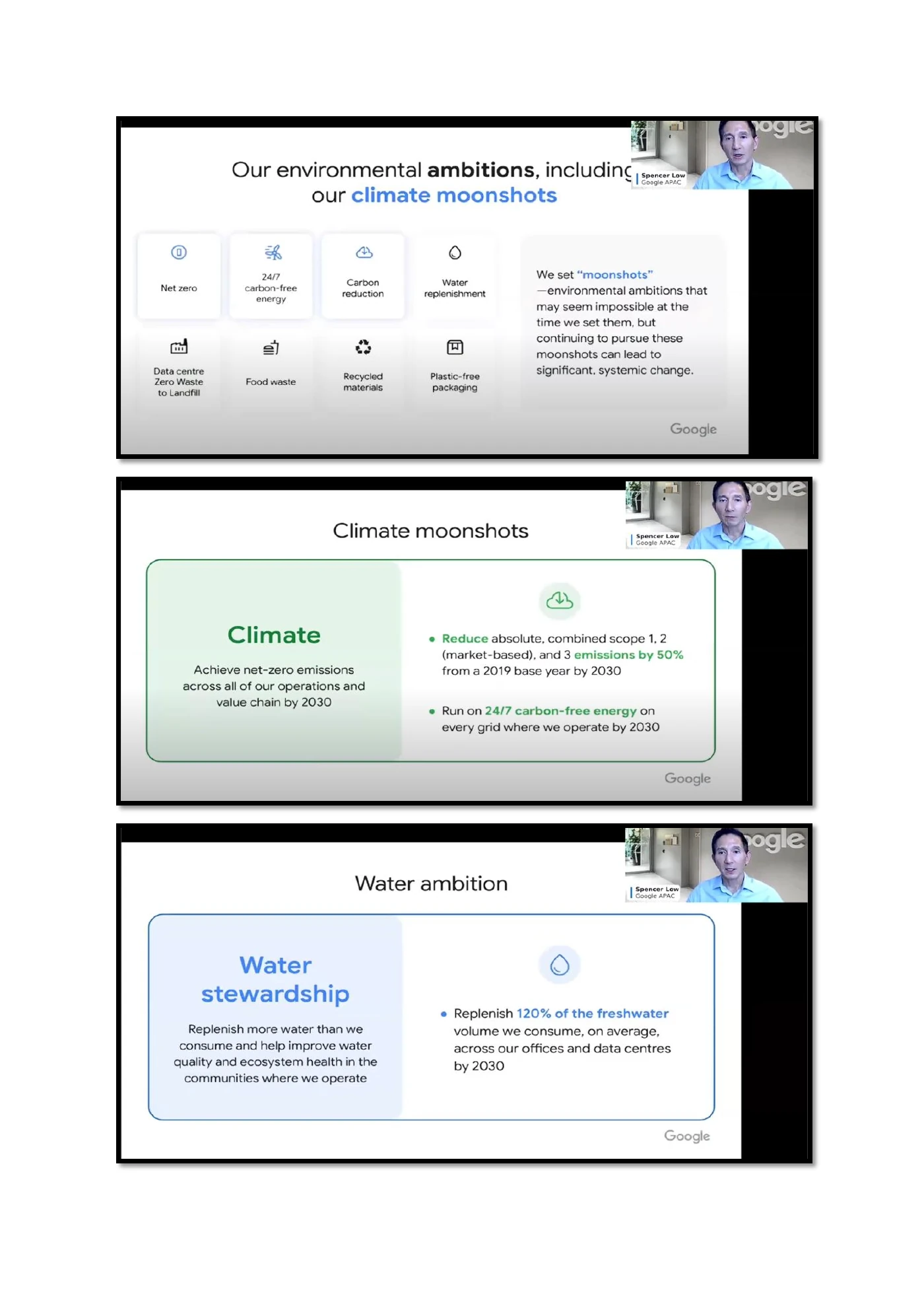
4️⃣Managing Water, Noise & Design Google’s prioritises recycled or seawater, with a target of 120 % freshwater replenishment for local communities. 📌 Low-noise, low-carbon materials, and better insulation demonstrate that sustainability extends from servers to structures.
5️⃣The Future – Breaking the Link Between Energy & Emissions Acknowledging the Jevons Paradox, Spencer urged investment in carbon-free abundance — solar, wind, geothermal, and eventually fusion and small modular reactors.
“We don’t need less energy — we need cleaner, smarter energy.”
My Reflection
Spencer Low’s session reminded that innovation and responsibility CAN and MUST coexist. Google’s ability to cut emissions while expanding AI proves that sustainability can be engineered through design and intent.
As a banker, I see parallels — if technology can decouple growth from emissions, finance can decouple profit from unsustainable practices. AI can also strengthen climate-risk assessment, ESG validation, and CCPT implementation across banking.
Malaysia’s expanding digital footprint is a chance to align technology, renewables, and green finance — because every watt saved and every decision made moves us closer to a resilient, low-carbon future.
Climate Governance Malaysia