Document & post

CCPT - From Classification to Action

Captured 13 August 2026 · LinkedIn displayed “11mo •” at capture. Original publication date unverified.

Read the original LinkedIn post Jump to original text ↓
CCPT & sustainable finance

Original illustrated document

6 pages to explore

Download PDF (526 KB)
Page 1 of CCPT - From Classification to Action. Read the extracted page text below or open the original PDF.

Page 1 of 6

Read the document text, page by page

Automatically extracted from the original PDF. Reading order and symbols may differ from the designed pages; the PDF remains the authoritative visual version.

Page 1

How CCPT Influences Lending, Pricing, and Risk Decisions A Banker’s Guide

Page 2

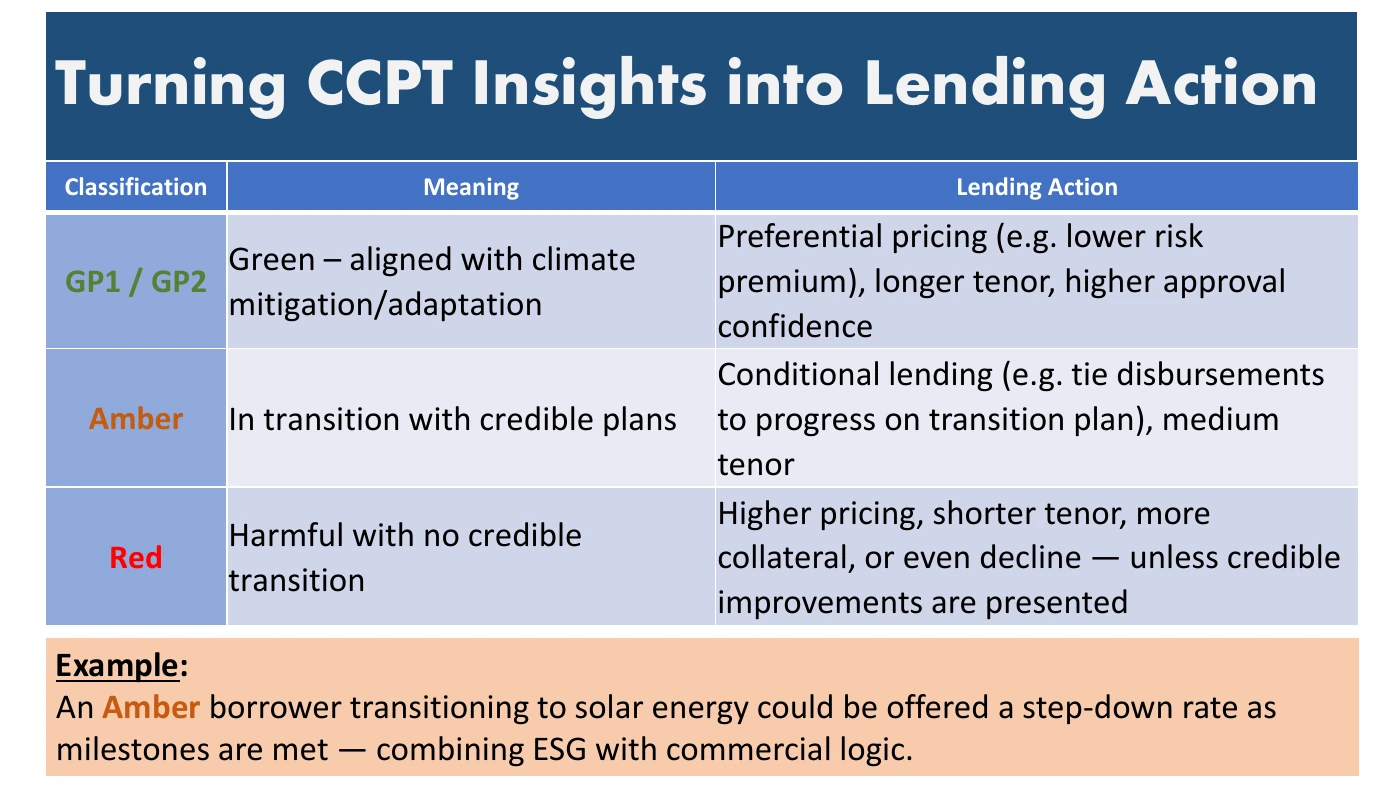
Turning CCPT Insights into Lending Action Classification Meaning Lending Action GP1 / GP2 Green – aligned with climate mitigation/adaptation Preferential pricing (e.g. lower risk premium), longer tenor, higher approval confidence Amber In transition with credible plans Conditional lending (e.g. tie disbursements to progress on transition plan), medium tenor Red Harmful with no credible transition Higher pricing, shorter tenor, more collateral, or even decline — unless credible improvements are presented Example: An Amber borrower transitioning to solar energy could be offered a step-down rate as milestones are met — combining ESG with commercial logic.

Page 3

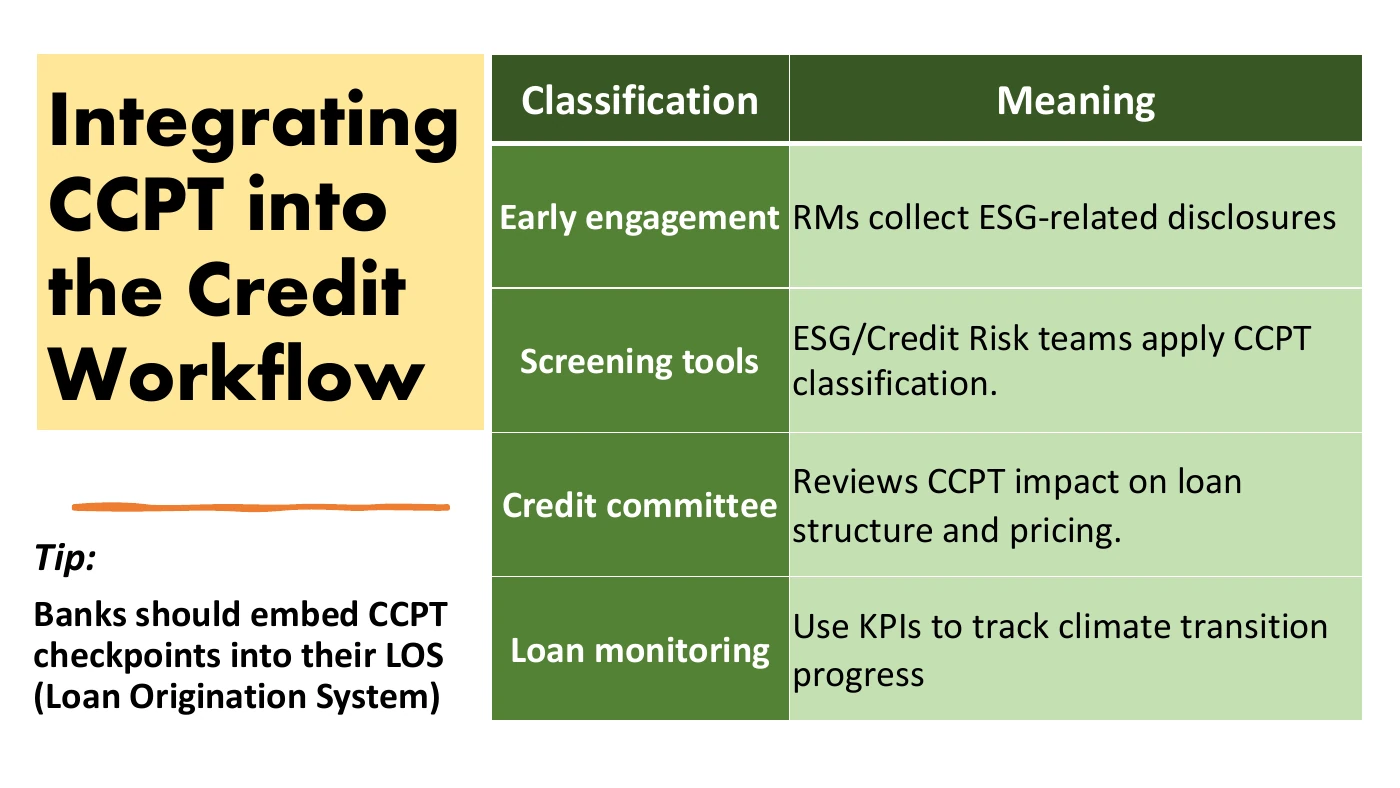
Integrating CCPT into the Credit Workflow Tip: Banks should embed CCPT checkpoints into their LOS (Loan Origination System) Classification Meaning Early engagement RMs collect ESG-related disclosures Screening tools ESG/Credit Risk teams apply CCPT classification. Credit committee Reviews CCPT impact on loan structure and pricing. Loan monitoring Use KPIs to track climate transition progress

Page 4

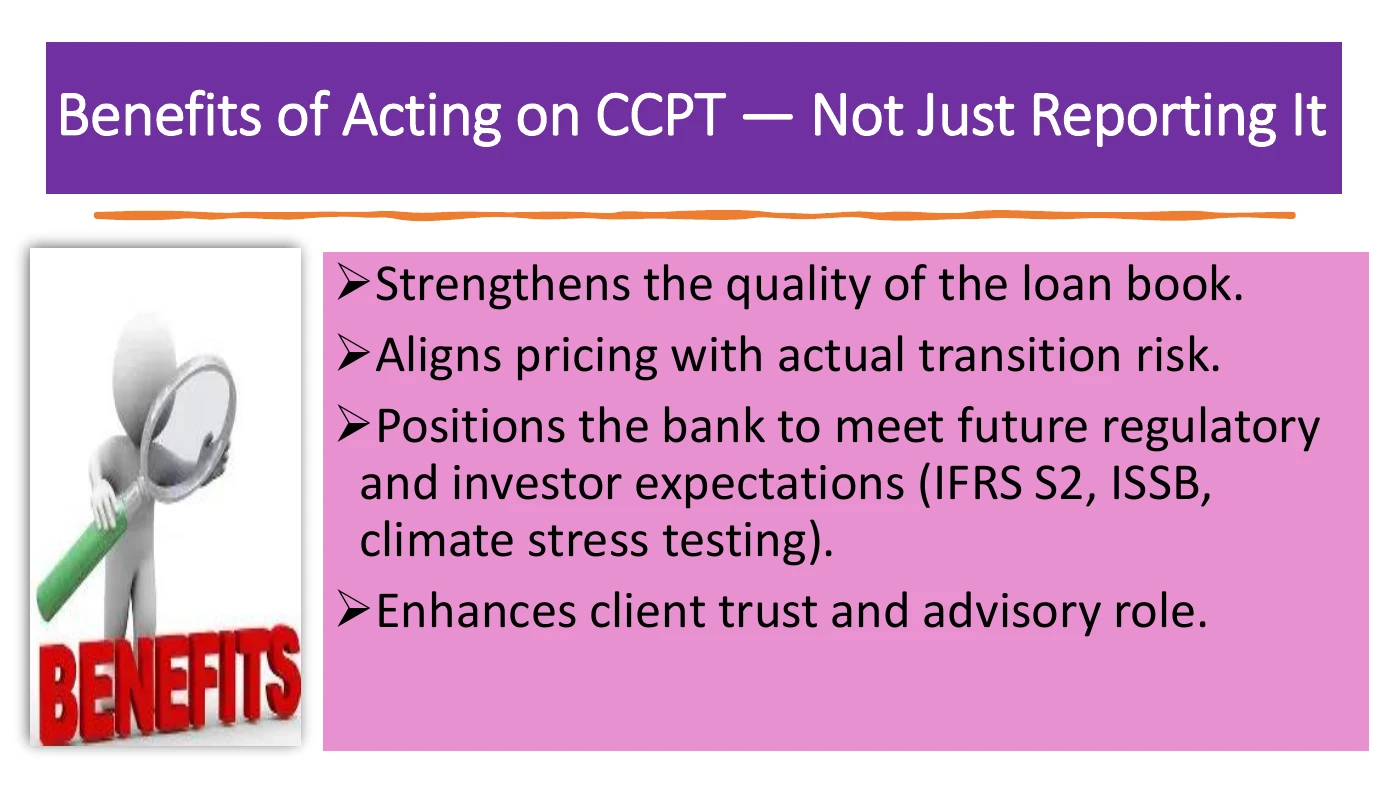
Benefits of Acting on CCPT — Not Just Reporting It ➢Strengthens the quality of the loan book. ➢Aligns pricing with actual transition risk. ➢Positions the bank to meet future regulatory and investor expectations (IFRS S2, ISSB, climate stress testing). ➢Enhances client trust and advisory role.

Page 5

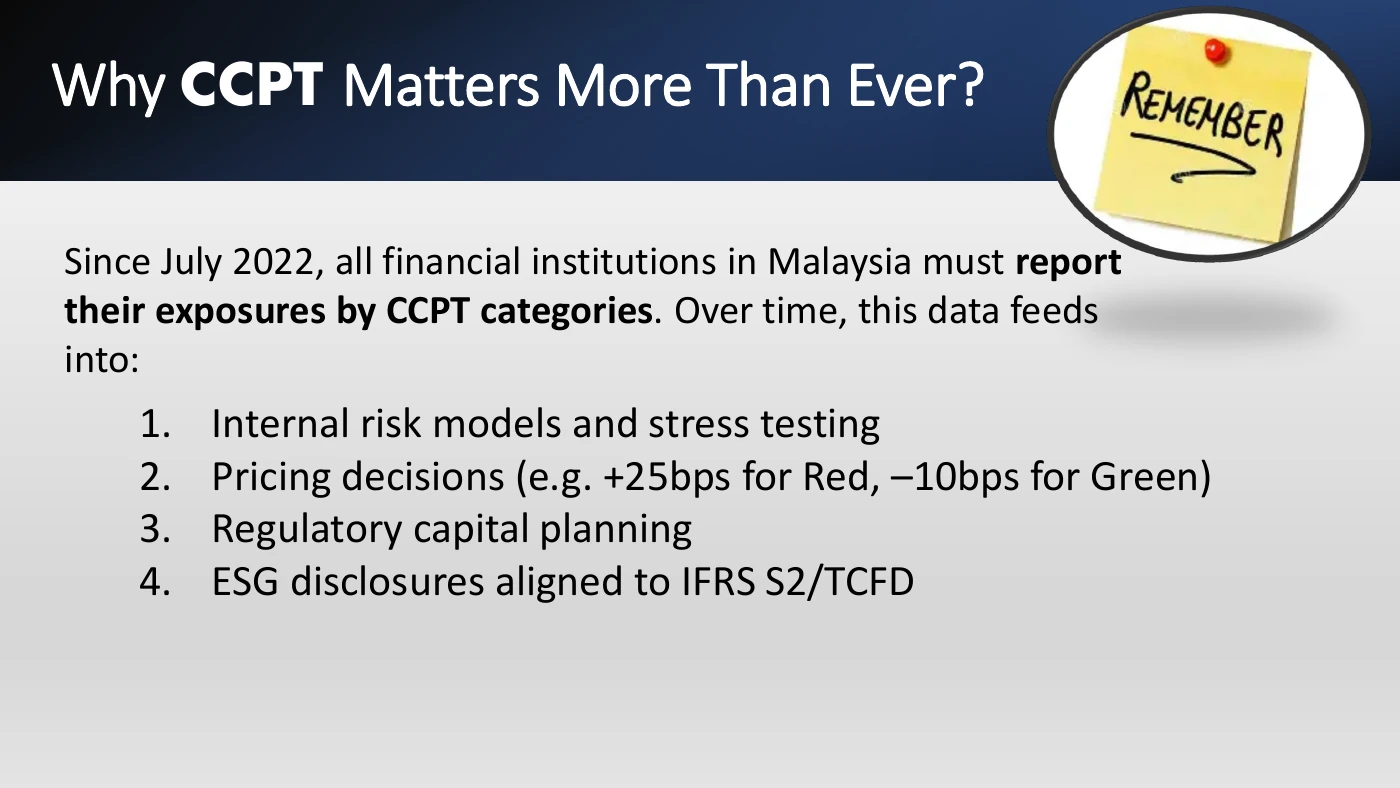
Why CCPT Matters More Than Ever? Since July 2022, all financial institutions in Malaysia must report their exposures by CCPT categories. Over time, this data feeds into: 1. Internal risk models and stress testing 2. Pricing decisions (e.g. +25bps for Red, –10bps for Green) 3. Regulatory capital planning 4. ESG disclosures aligned to IFRS S2/TCFD

Page 6

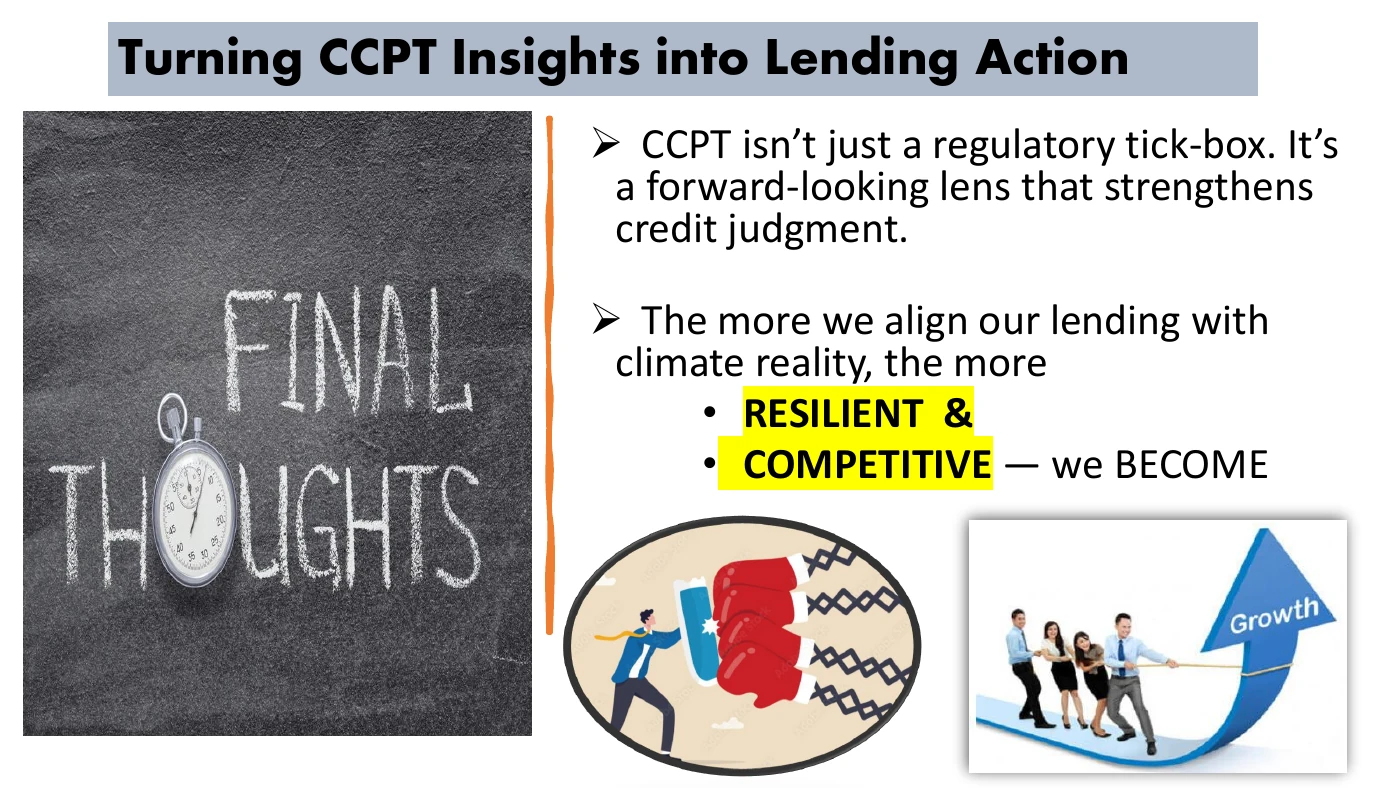
➢ CCPT isn’t just a regulatory tick-box. It’s a forward-looking lens that strengthens credit judgment. ➢ The more we align our lending with climate reality, the more • RESILIENT & • COMPETITIVE — we BECOME Turning CCPT Insights into Lending Action

Open the complete original PDF

In Yasotha’s words

Original post

Credit Management : How CCPT Influences Lending, Pricing, and Risk Decisions

“After classifying a borrower under CCPT, then what?”

Said it many times;.....a common question I often hear.

Classification is just the starting point. The real value lies in how we act on the insights it provides towards sustainable credit practices.

In this posting, sharing my thoughts on :-

a. How we can turn CCPT insights into Lending Action b. How we can integrate CCPT into the Credit Workflow c. The benefits of Acting on CCPT — Not Just Reporting It

CCPT isn’t just a regulatory tick-box. It’s a forward-looking lens that strengthens credit judgment.

The more we align our lending with climate reality, the more resilient and competitive, we become.


Yasotha K.R Gopal

Banking insight. Practical learning. Thoughtful transition.

LinkedIn

Briefing enquiry

Shape a useful first conversation.

Choose a few starting points, then copy the summary into the channel you prefer. This website prepares a summary; it does not send a message.

Continue on LinkedIn