Document & post

Climate Change Isn't Just a Scientific Issue for Banks

Captured 13 August 2026 · LinkedIn displayed “1yr •” at capture. Original publication date unverified.

Read the original LinkedIn post Jump to original text ↓
Risk & resilience

Original illustrated document

6 pages to explore

Download PDF (837 KB)
Page 1 of Climate Change Isn't Just a Scientific Issue for Banks. Read the extracted page text below or open the original PDF.

Page 1 of 6

Read the document text, page by page

Automatically extracted from the original PDF. Reading order and symbols may differ from the designed pages; the PDF remains the authoritative visual version.

Page 1

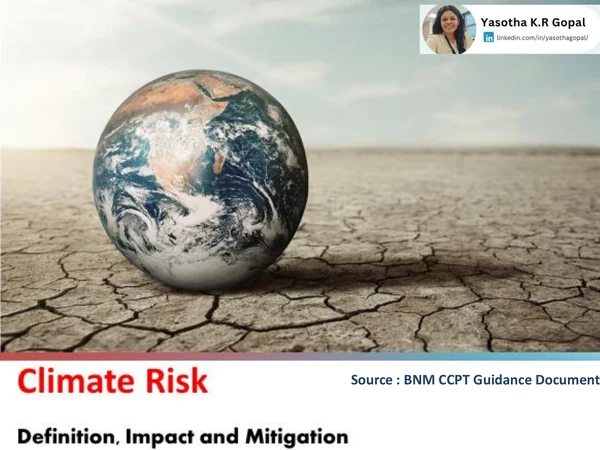
Climate Change: An Urgent Global Challenge

Page 2

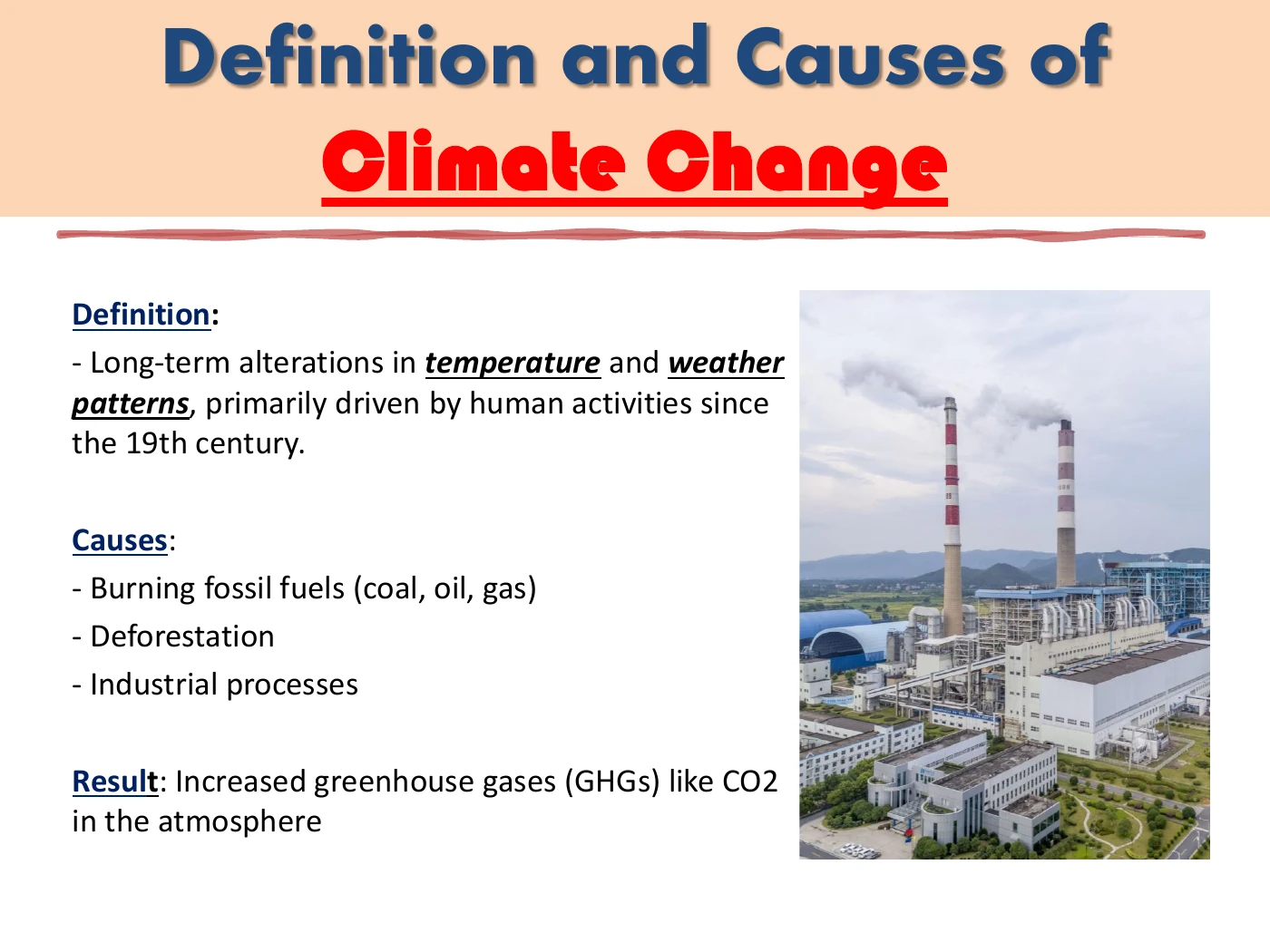
Definition and Causes of Climate Change Definition: - Long-term alterations in temperature and weather patterns, primarily driven by human activities since the 19th century. Causes: - Burning fossil fuels (coal, oil, gas) - Deforestation - Industrial processes Result: Increased greenhouse gases (GHGs) like CO2 in the atmosphere

Page 3

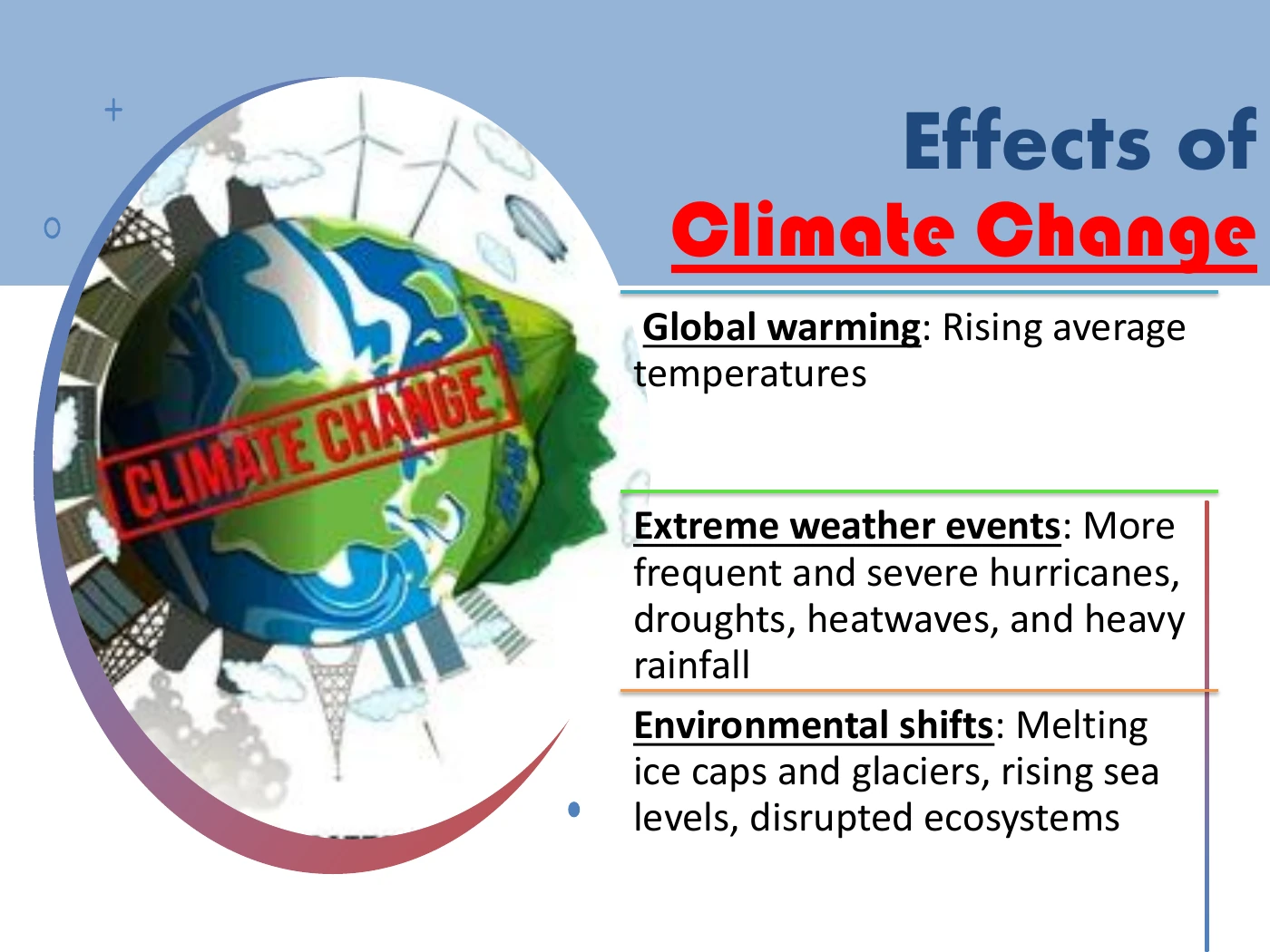
Effects of Climate Change Global warming: Rising average temperatures Extreme weather events: More frequent and severe hurricanes, droughts, heatwaves, and heavy rainfall Environmental shifts: Melting ice caps and glaciers, rising sea levels, disrupted ecosystems

Page 4

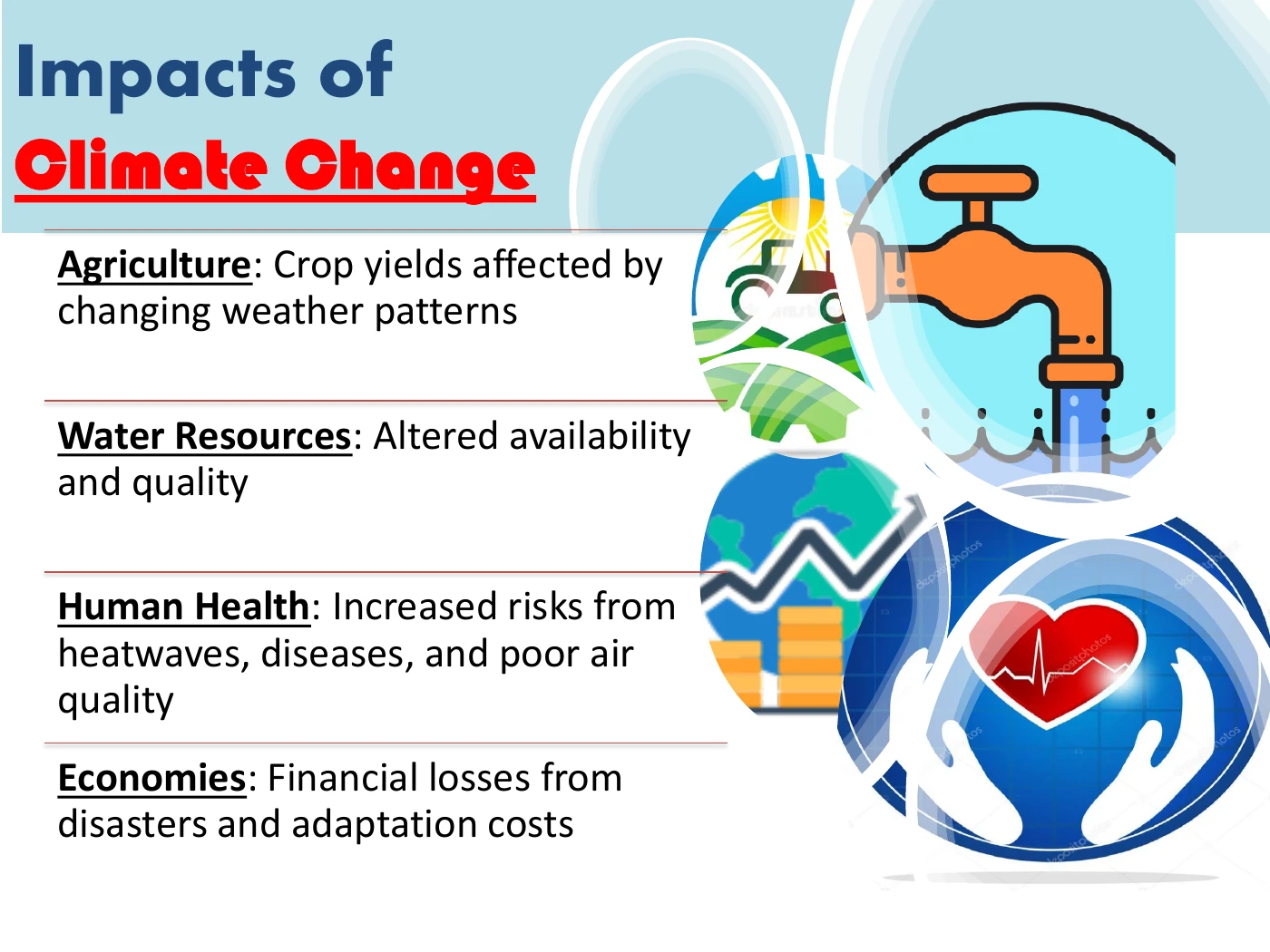
Impacts of Climate Change Agriculture: Crop yields affected by changing weather patterns Water Resources: Altered availability and quality Human Health: Increased risks from heatwaves, diseases, and poor air quality Economies: Financial losses from disasters and adaptation costs

Page 5

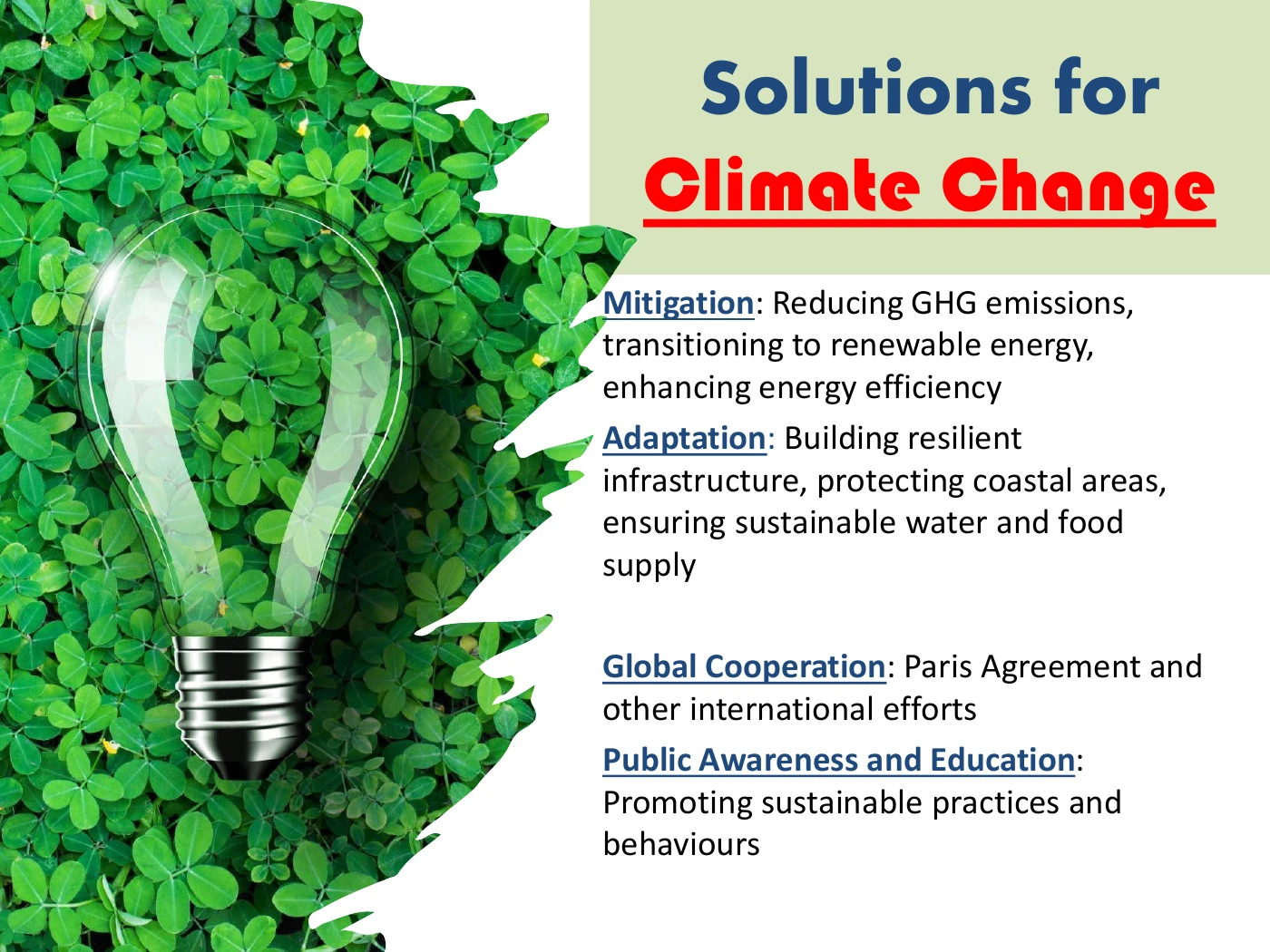
Solutions for Climate Change Mitigation: Reducing GHG emissions, transitioning to renewable energy, enhancing energy efficiency Adaptation: Building resilient infrastructure, protecting coastal areas, ensuring sustainable water and food supply Global Cooperation: Paris Agreement and other international efforts Public Awareness and Education: Promoting sustainable practices and behaviours

Page 6

Conclusion Addressing Climate Change requires immediate, sustained action and global cooperation to mitigate impacts and ensure a sustainable future.

Open the complete original PDF

In Yasotha’s words

Original post

🌍 Climate Change Isn’t Just a Scientific Issue — It’s a Strategic One for Banks

What starts with rising temperatures can lead to rising credit defaults, operational disruptions, and reputational risks.

Most bankers don’t need a lesson in atmospheric science. But every banker today needs to understand one thing clearly:

Climate change is already reshaping the financial landscape.

This post breaks down what climate change means for banks — in simple terms, with real examples from Malaysian industries. Here’s how it’s affecting the real economy—and your loan book:

🌾 In Kedah, prolonged droughts have reduced rice yields, increasing default risk for agribusiness borrowers. 🌊 In Penang and Klang Valley, flash floods have damaged SME warehouses and disrupted cash flows. 🏭 A steel manufacturer in Selangor faces increased scrutiny from buyers shifting to lower-carbon supply chains. 🏘️ Coastal properties in Sabah and Johor are seeing growing insurance premiums—and potential devaluation—due to rising sea levels.

These aren’t future scenarios. They’re already showing up in our risk assessments and operational planning.

In this post, I’ve simplified what climate change really is, what causes it, and what it means for banks like ours. Sourced from BNM CCPT Guidance.

👉 Next up: I’ll break down the three types of Climate Risk every banker should know—Physical, Transition, and Liability Risk—and how they impact lending decisions.
Yasotha K.R Gopal

Banking insight. Practical learning. Thoughtful transition.

LinkedIn

Briefing enquiry

Shape a useful first conversation.

Choose a few starting points, then copy the summary into the channel you prefer. This website prepares a summary; it does not send a message.

Continue on LinkedIn