Document & post

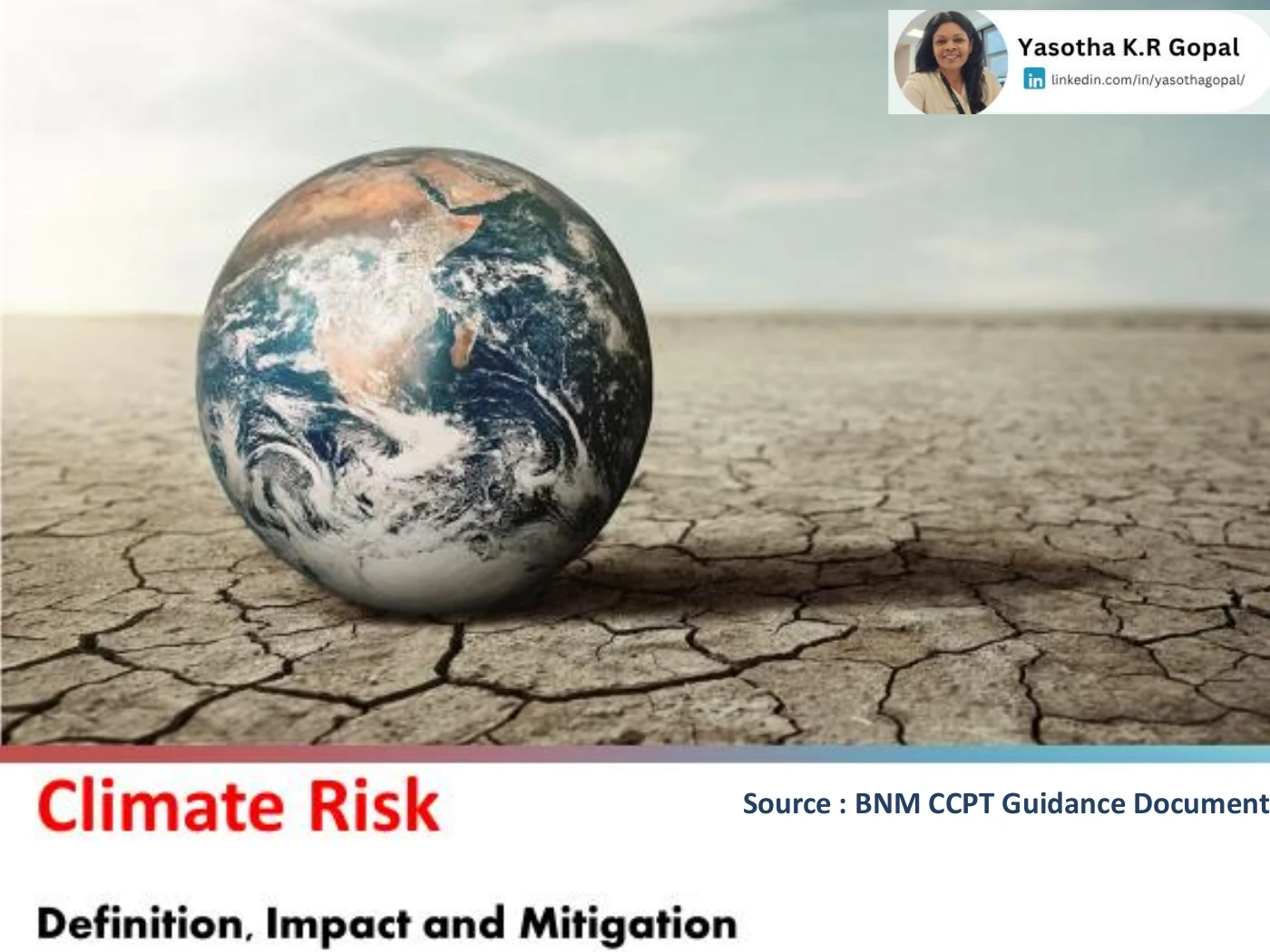
Climate Risk - Definition, Impact and Mitigation

Captured 13 August 2026 · LinkedIn displayed “1yr •” at capture. Original publication date unverified.

Read the original LinkedIn post Jump to original text ↓
Risk & resilience

Original illustrated document

7 pages to explore

Download PDF (819 KB)
Page 1 of Climate Risk - Definition, Impact and Mitigation. Read the extracted page text below or open the original PDF.

Page 1 of 7

Read the document text, page by page

Automatically extracted from the original PDF. Reading order and symbols may differ from the designed pages; the PDF remains the authoritative visual version.

Page 1

Source : BNM CCPT Guidance Document

Page 2

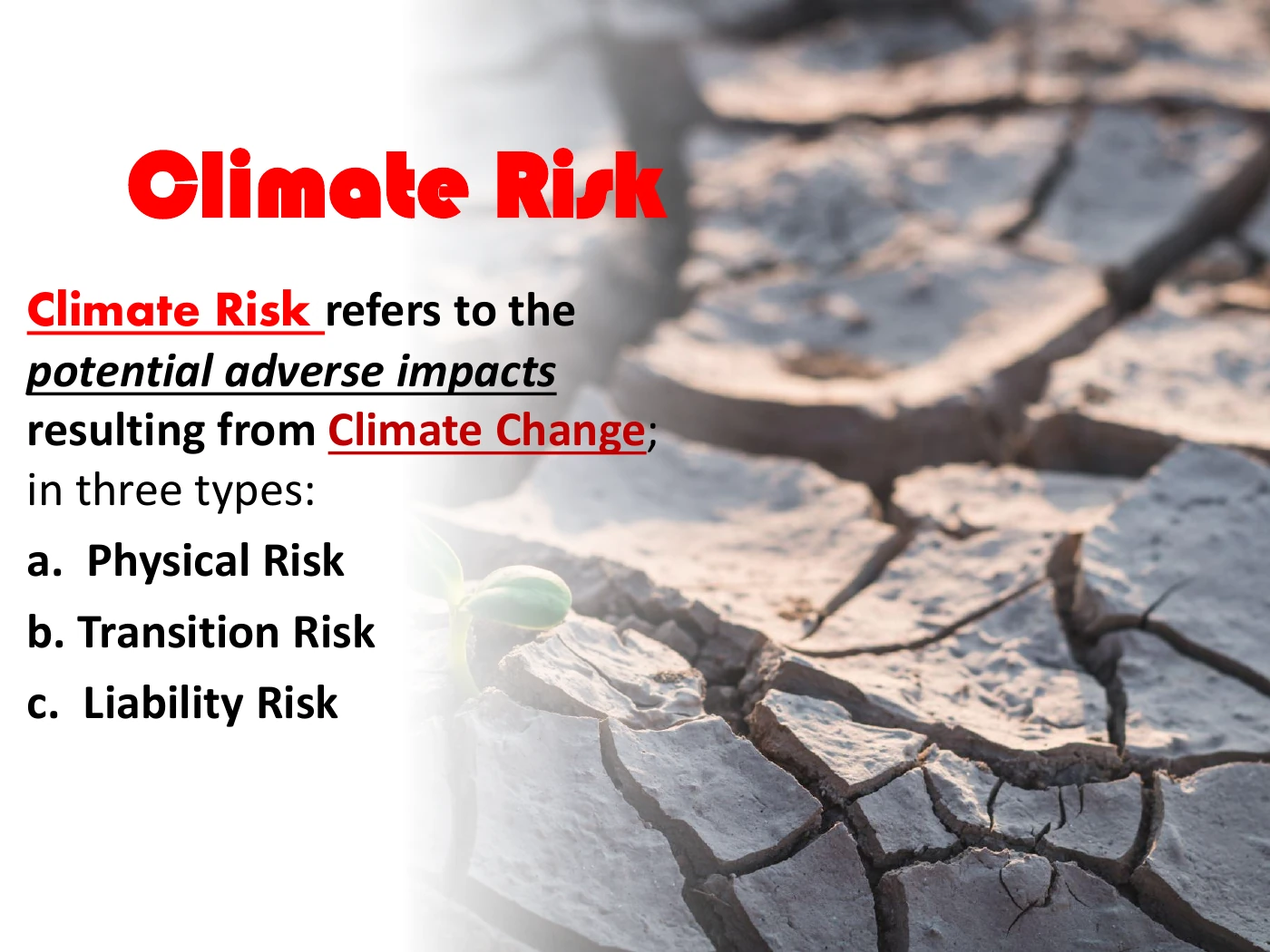
Climate Risk Climate Risk refers to the potential adverse impacts resulting from Climate Change; in three types: a. Physical Risk b. Transition Risk c. Liability Risk

Page 3

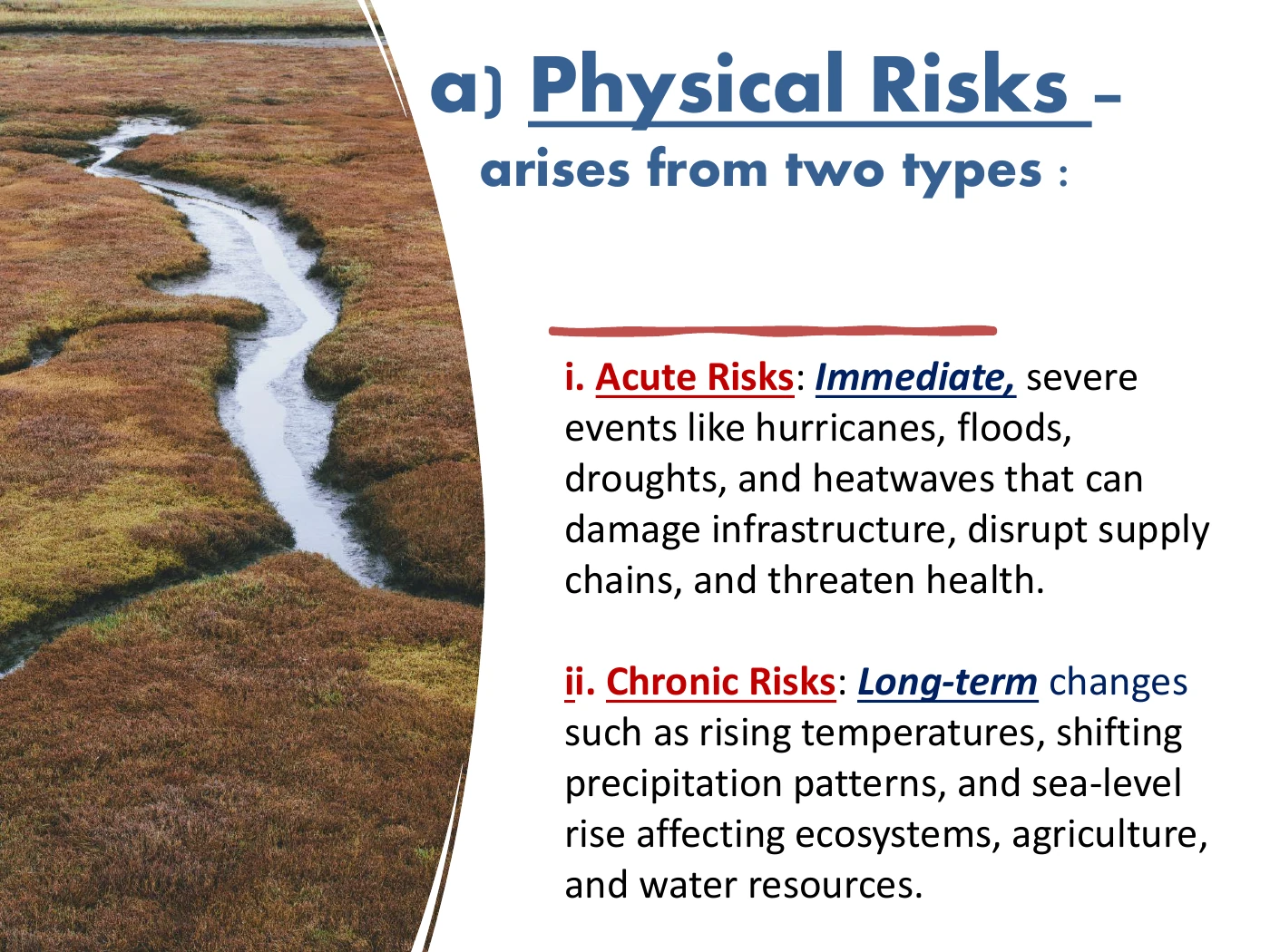
a) Physical Risks – arises from two types : i. Acute Risks: Immediate, severe events like hurricanes, floods, droughts, and heatwaves that can damage infrastructure, disrupt supply chains, and threaten health. ii. Chronic Risks: Long-term changes such as rising temperatures, shifting precipitation patterns, and sea-level rise affecting ecosystems, agriculture, and water resources.

Page 4

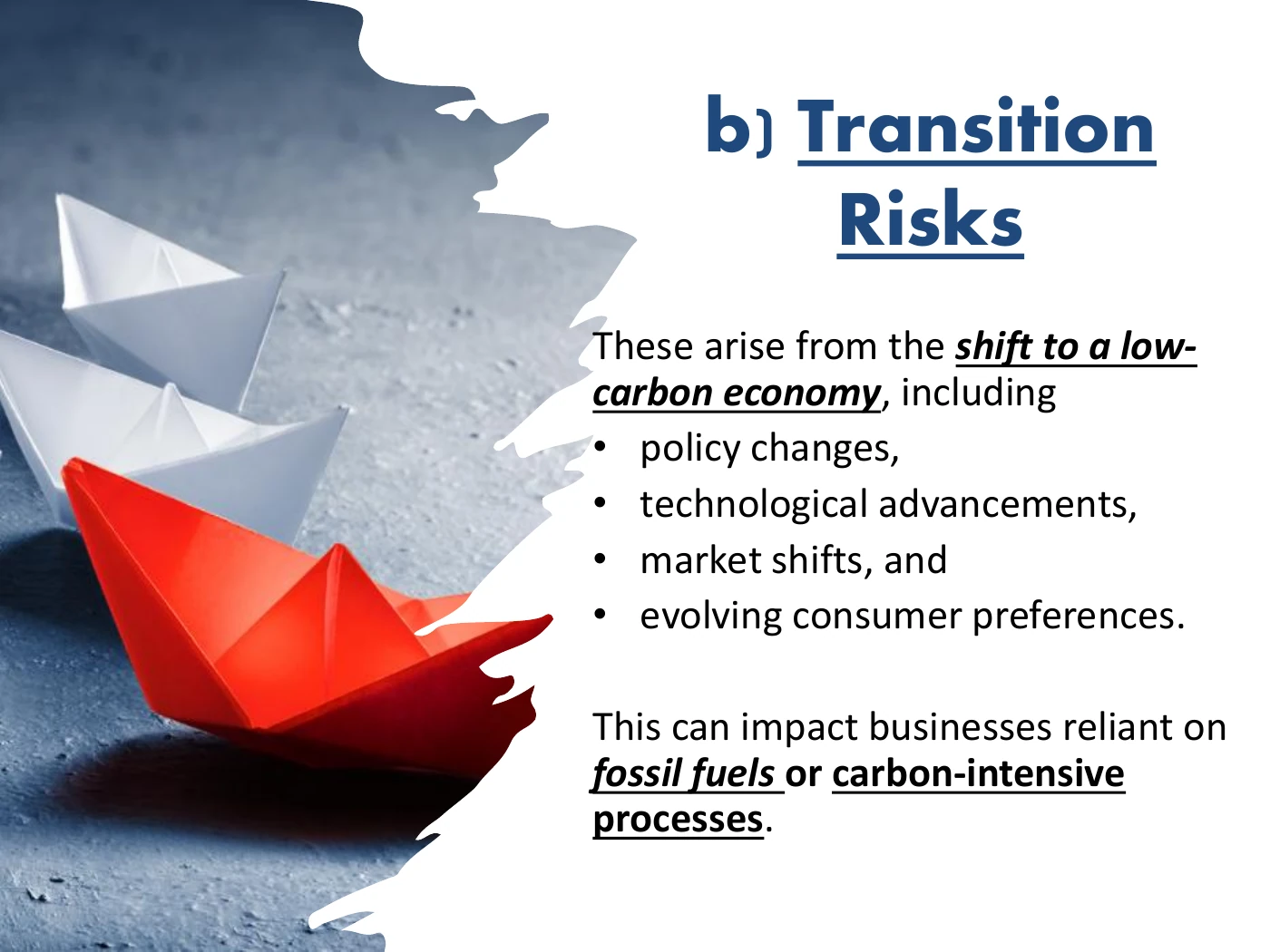
b) Transition Risks These arise from the shift to a low- carbon economy, including • policy changes, • technological advancements, • market shifts, and • evolving consumer preferences. This can impact businesses reliant on fossil fuels or carbon-intensive processes.

Page 5

c) Liability Risks Stems from legal risk and claims on damages and losses due to inaction or lack of action on effects of Physical Risks and Transition Risks. Example – if Bank’s financing of environmentally harmful projects or failure to assess climate risks adequately, it could be liable for negative impacts.

Page 6

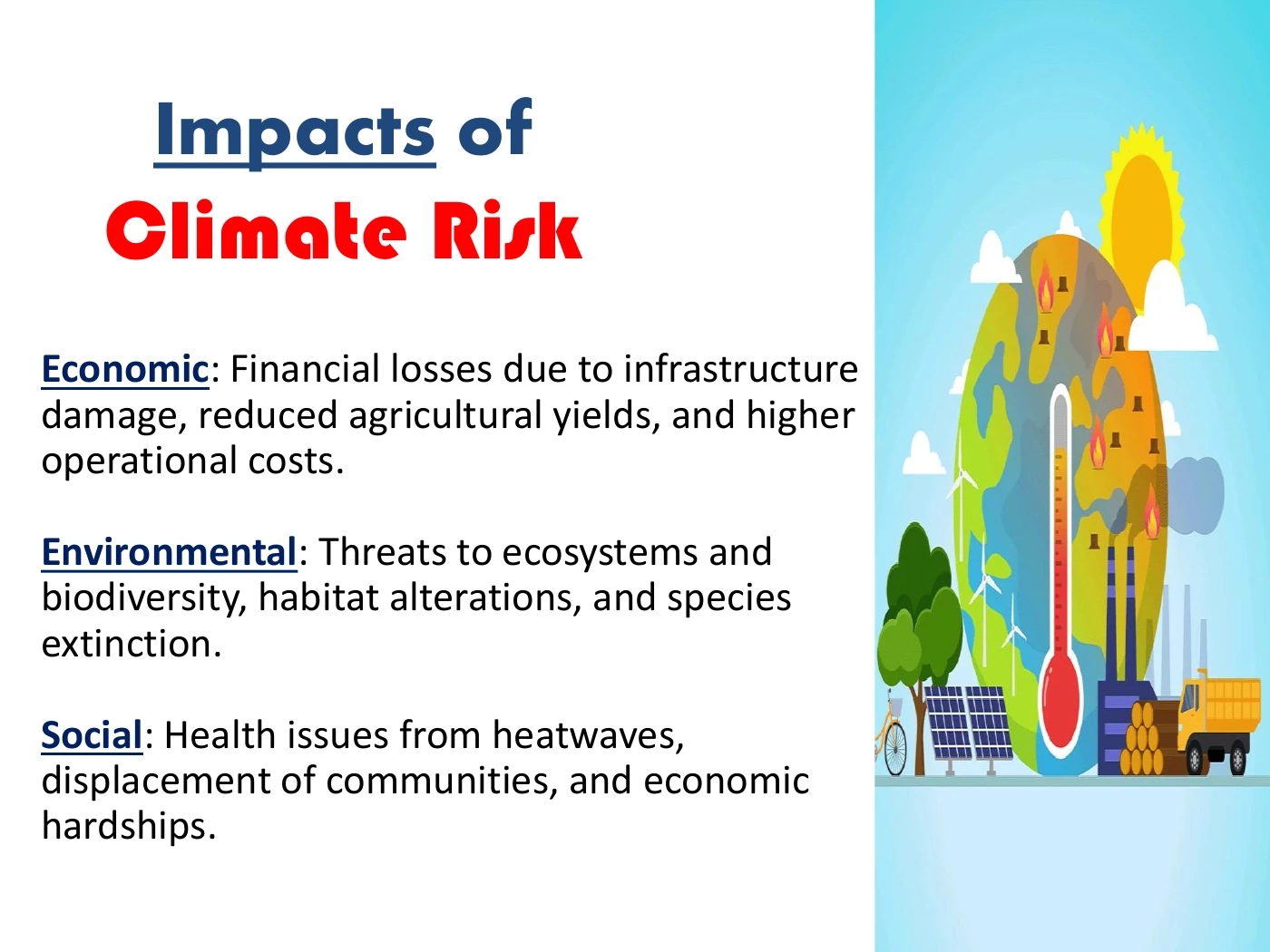
Impacts of Climate Risk Economic: Financial losses due to infrastructure damage, reduced agricultural yields, and higher operational costs. Environmental: Threats to ecosystems and biodiversity, habitat alterations, and species extinction. Social: Health issues from heatwaves, displacement of communities, and economic hardships.

Page 7

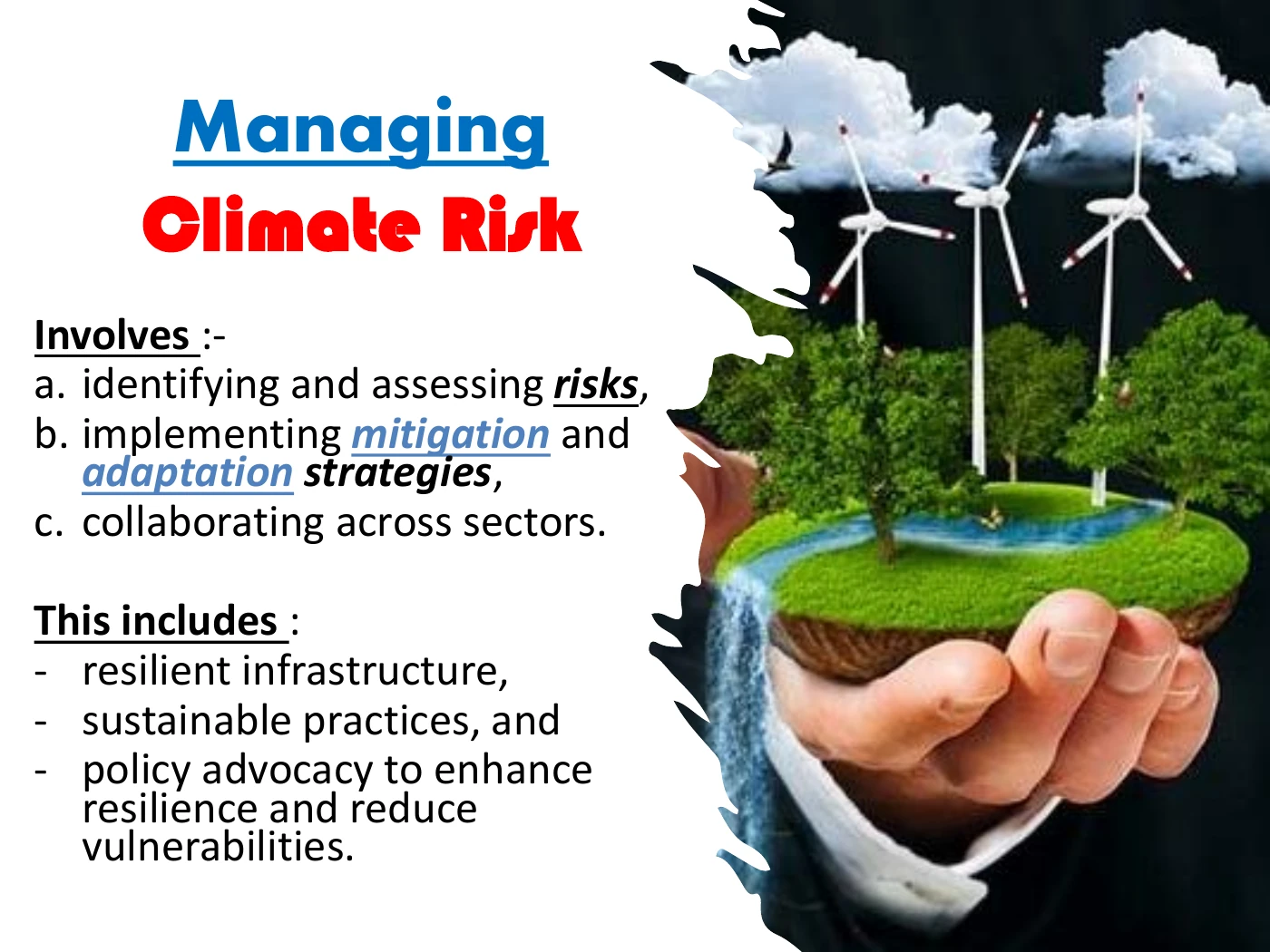
Managing Climate Risk Involves :- a. identifying and assessing risks, b. implementing mitigation and adaptation strategies, c. collaborating across sectors. This includes : - resilient infrastructure, - sustainable practices, and - policy advocacy to enhance resilience and reduce vulnerabilities.

Open the complete original PDF

In Yasotha’s words

Original post

💬 Climate Risk - “How exactly does climate change affect banks?”

In my previous post, I spoke about how climate change isn’t just an environmental concern—it’s a financial risk already affecting lending portfolios in Malaysia.

👉 Let’s take that a step further.

Bank Negara Malaysia’s CCPT outlines three categories of Climate Risk that every banker—especially those in credit, risk, and operations—should understand:

Climate risk isn’t just an environmental issue. It’s a financial, operational, and legal risk that’s already materialising. 🔹 In Penang, flash floods disrupted manufacturing SMEs, delaying deliveries and triggering loan restructuring. 🔹 A Sarawak-based plantation client faced rising insurance premiums due to wildfire exposure. 🔹 An automotive supplier in Selangor saw declining overseas demand as buyers shifted to lower-carbon supply chains.

These are not future possibilities. They are today’s realities—and they affect creditworthiness, loan performance, portfolio risk and business continuity.

In this short explainer, I’ve summarised the 3 types of climate risk: 1️⃣ Physical Risk – from floods, droughts, and heatwaves 2️⃣ Transition Risk – from policy, market, and technology shifts in the low-carbon economy 3️⃣ Liability Risk – from legal actions tied to climate inaction or poor due diligence

Whether you're a Relationship Manager, Credit Officer, or Risk Manager, climate risk is now part of your everyday responsibilities.

📊 Swipe through the slides to see how these risks translate into real-world impacts—and why they matter to us as bankers. Sourced from BNM CCPT Guidance

💬 I welcome your thoughts
Yasotha K.R Gopal

Banking insight. Practical learning. Thoughtful transition.

LinkedIn

Briefing enquiry

Shape a useful first conversation.

Choose a few starting points, then copy the summary into the channel you prefer. This website prepares a summary; it does not send a message.

Continue on LinkedIn