Climate Risk Conversations for RMs: The Dos and Don'ts of Engaging Customers
As climate risk and sustainability become increasingly important, many Relationship Managers (RMs) are expected to engage customers on these topics.
However, good intentions do not always lead to good conversations.
One of the biggest mistakes is approaching climate transition as a compliance exercise rather than a business discussion.
Customers are often more interested in: ✔ Managing costs ✔ Improving productivity ✔ Growing revenue ✔ Remaining competitive ✔ Building resilience ..........than discussing carbon emissions or taxonomy classifications.
For example, imagine meeting a manufacturing SME owner.
Instead of starting with: ❌ "Let's discuss your CCPT classification." Try: ✔ "Have rising electricity costs affected your margins?" ✔ "Are your customers asking about sustainability requirements?" ✔ "Have you considered upgrading older equipment to improve efficiency?"
The conversation immediately becomes more relevant to the customer's business realities.
Other common mistakes include: ❌ Using excessive technical jargon ❌ Focusing only on reporting requirements ❌ Treating customers as non-compliant ❌ Assuming all industries face the same transition challenges
The most effective RMs understand that every customer is different.
👉 A logistics company may be concerned about fuel costs. 👉 A manufacturer may be focused on energy efficiency. 👉 A plantation company may be worried about climate-related impacts on yields and productivity.
This is why successful climate conversations should start with the customer's business challenges, not the framework.
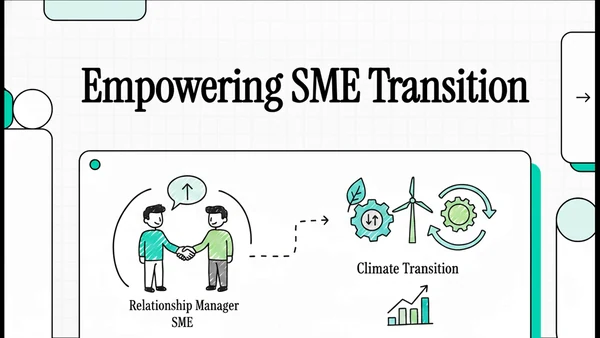
Guided by Bank Negara Malaysia's CCPT, the objective is not simply to classify customers. The objective is to help customers identify risks, uncover opportunities, and build a practical pathway towards a more resilient and sustainable business..
Because customers rarely ask for a climate transition plan. But they often ask how to reduce costs, improve competitiveness, and future-proof their business. And that's where effective RMs can make the greatest impact.