
Making CCPT Count: From Compliance to Commercial Value
When Bank Negara Malaysia introduced the Climate Change and Principle-based Taxonomy (CCPT), many in the banking industry saw it as a compliance exercise — something to tick off for regulatory reporting. But the real value of CCPT lies not in reporting exposures, but in responding to them.
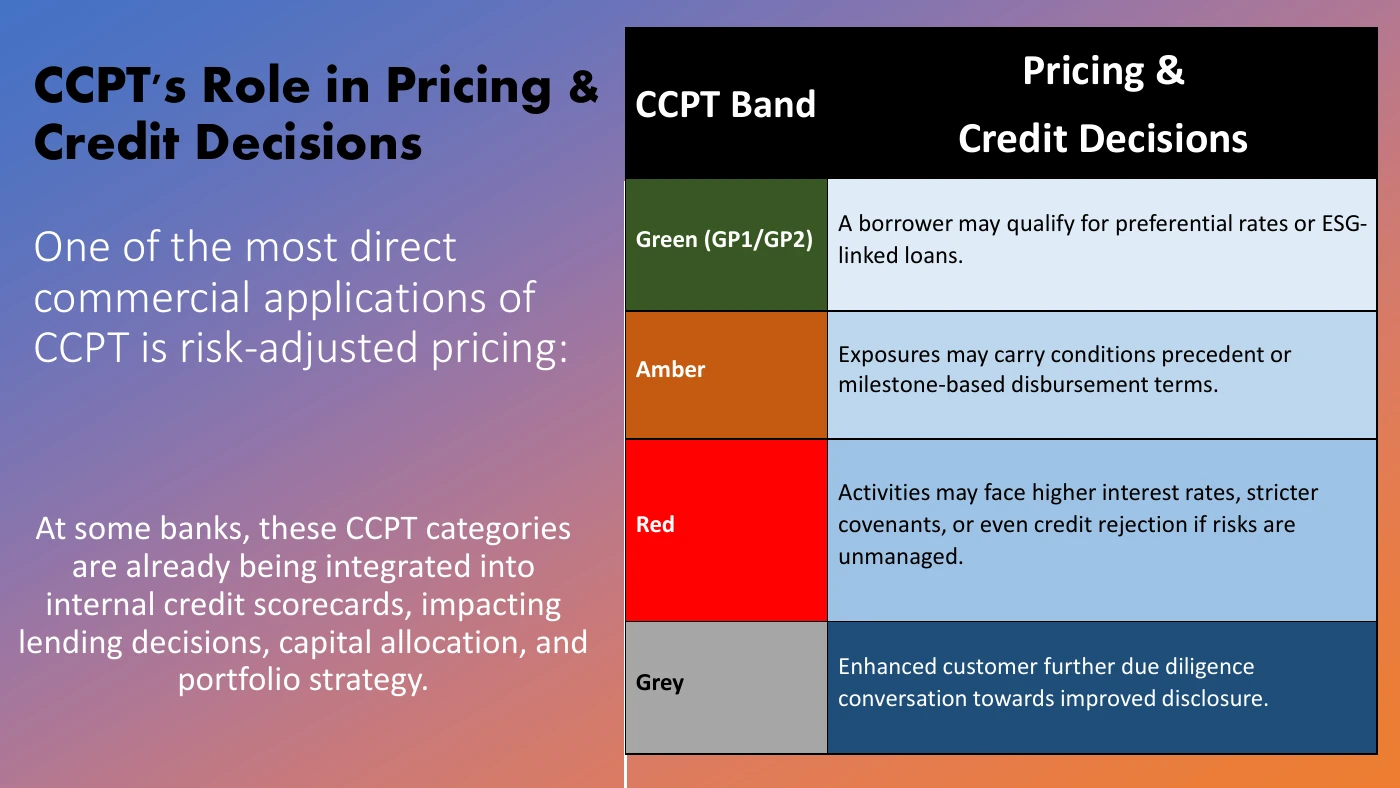
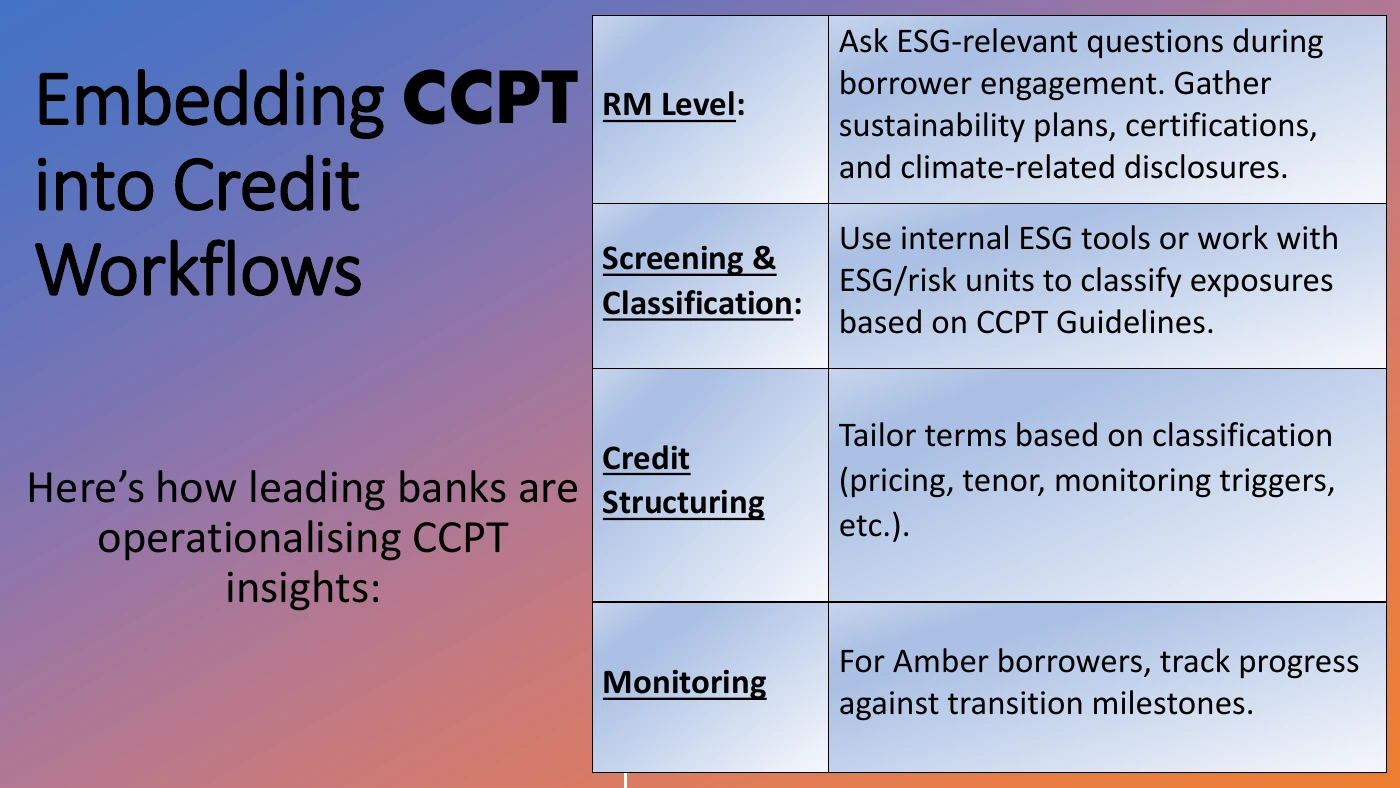
For Relationship Managers, Credit Officers, and Risk practitioners, CCPT is more than a label. It’s a forward-looking lens to identify transition risks, price them appropriately, and structure better credit deals.
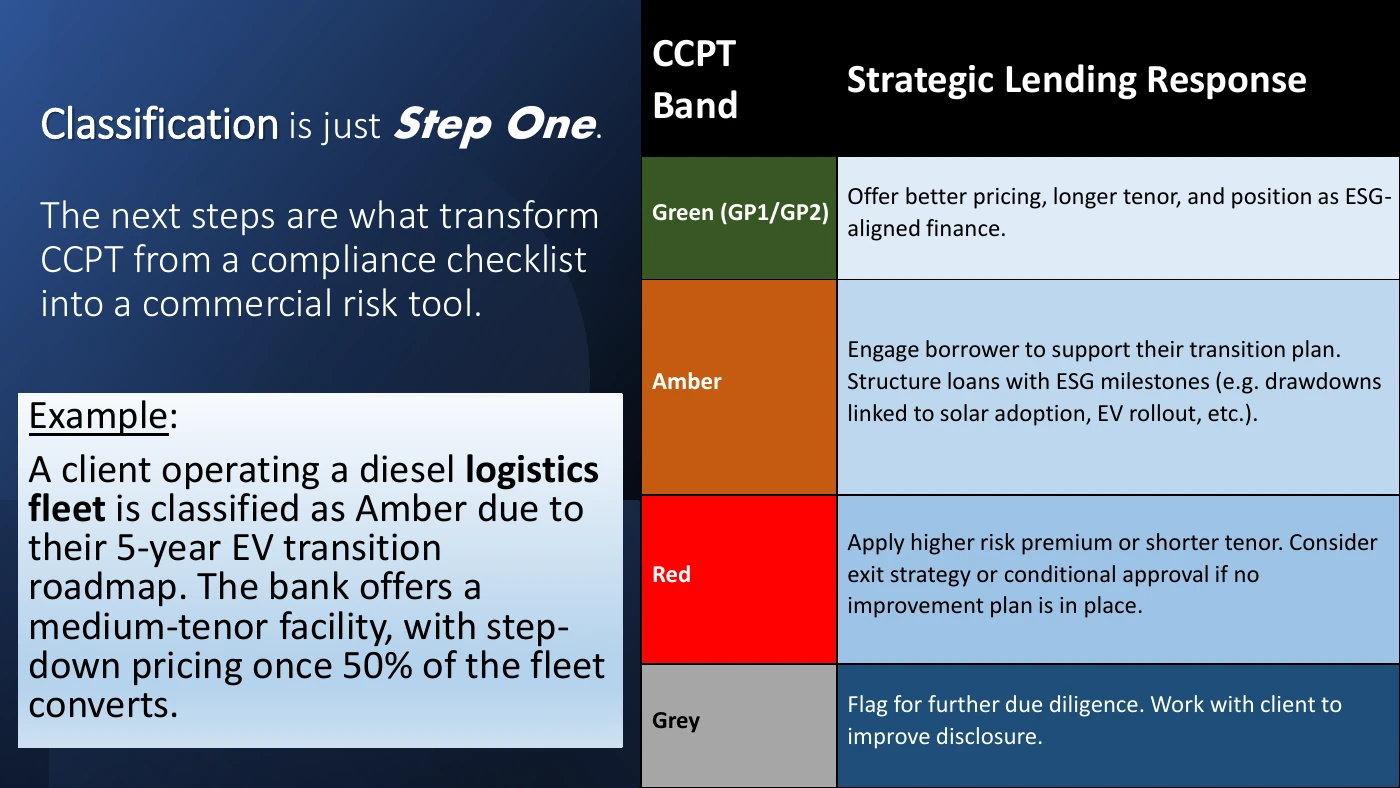
From Classification to Strategy - The CCPT framework classifies economic activities based on their alignment to climate objectives: - GP1/GP2 (Green): Aligned with climate mitigation/adaptation - Amber: Transitioning with a credible plan - Red: Environmentally harmful with no credible transition - White/Grey: Out of scope or insufficient information
At its core, CCPT tells us: How environmentally sustainable is this business activity? And how is that changing over time?
So, What Happens After Classification? Let me share my thoughts with you.