Read the document text, page by page
Automatically extracted from the original PDF. Reading order and symbols may differ from the designed pages; the PDF remains the authoritative visual version.
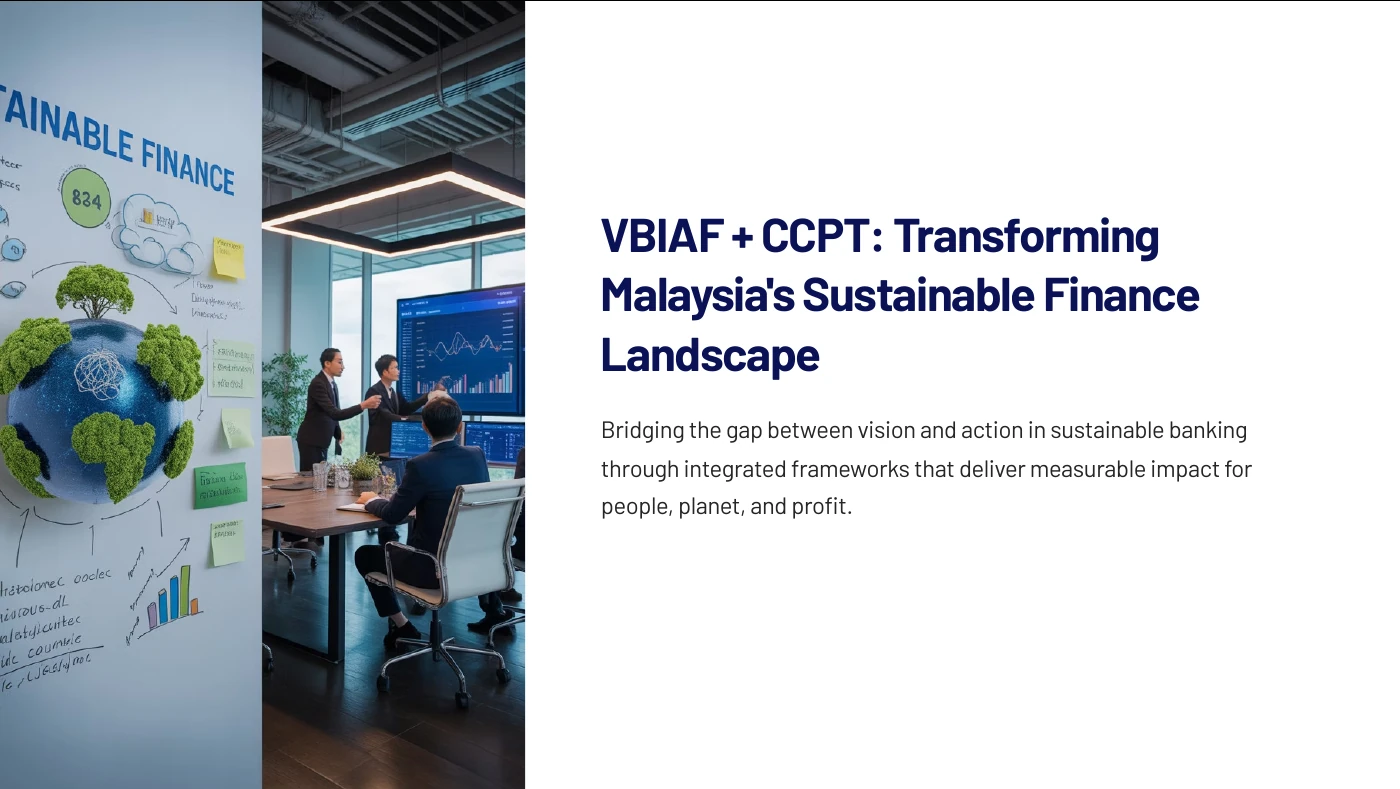
VBIAF + CCPT: Transforming
Malaysia's Sustainable Finance
Landscape
Bridging the gap between vision and action in sustainable banking
through integrated frameworks that deliver measurable impact for
people, planet, and profit.
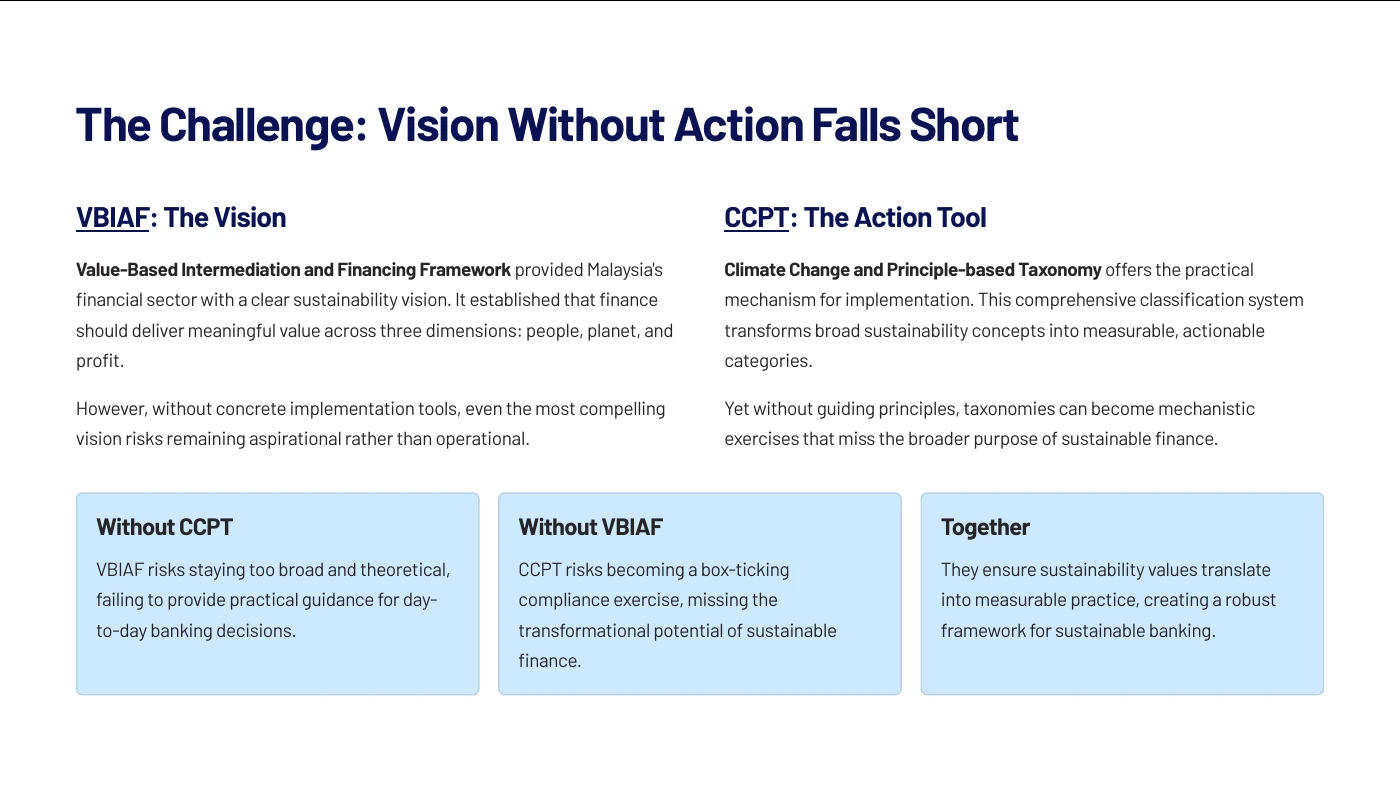
The Challenge: Vision Without Action Falls Short
VBIAF: The Vision
Value-Based Intermediation and Financing Framework provided Malaysia's
financial sector with a clear sustainability vision. It established that finance
should deliver meaningful value across three dimensions: people, planet, and
profit.
However, without concrete implementation tools, even the most compelling
vision risks remaining aspirational rather than operational.
CCPT: The Action T ool
Climate Change and Principle-based Taxonomy offers the practical
mechanism for implementation. This comprehensive classification system
transforms broad sustainability concepts into measurable, actionable
categories.
Yet without guiding principles, taxonomies can become mechanistic
exercises that miss the broader purpose of sustainable finance.
Without CCPT
VBIAF risks staying too broad and theoretical,
failing to provide practical guidance for day-
to-day banking decisions.
Without VBIAF
CCPT risks becoming a box-ticking
compliance exercise, missing the
transformational potential of sustainable
finance.
T ogether
They ensure sustainability values translate
into measurable practice, creating a robust
framework for sustainable banking.
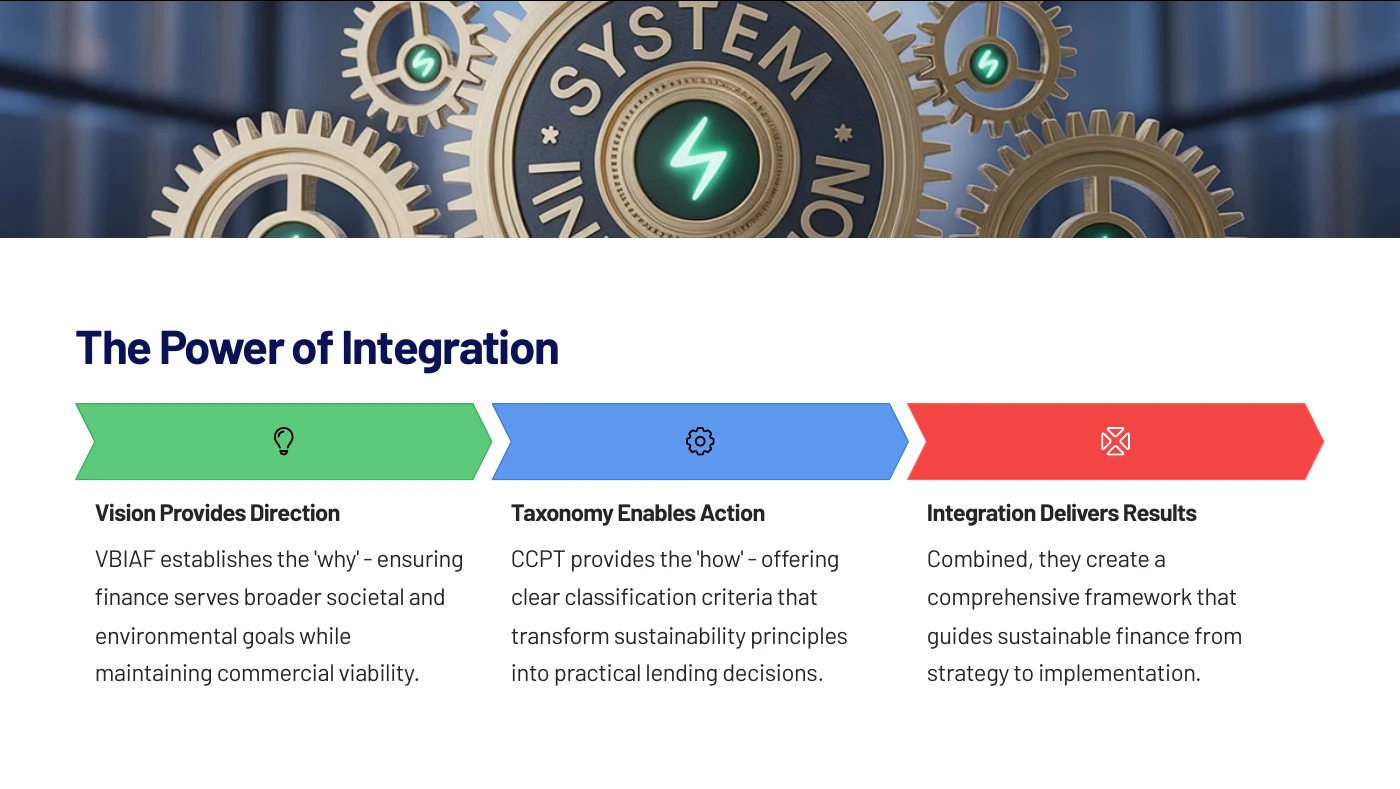
The Power of Integration
Vision Provides Direction
VBIAF establishes the 'why' - ensuring
finance serves broader societal and
environmental goals while
maintaining commercial viability.
Taxonomy Enables Action
CCPT provides the 'how' - offering
clear classification criteria that
transform sustainability principles
into practical lending decisions.
Integration Delivers Results
Combined, they create a
comprehensive framework that
guides sustainable finance from
strategy to implementation.
Making ESG Tangible for SMEs
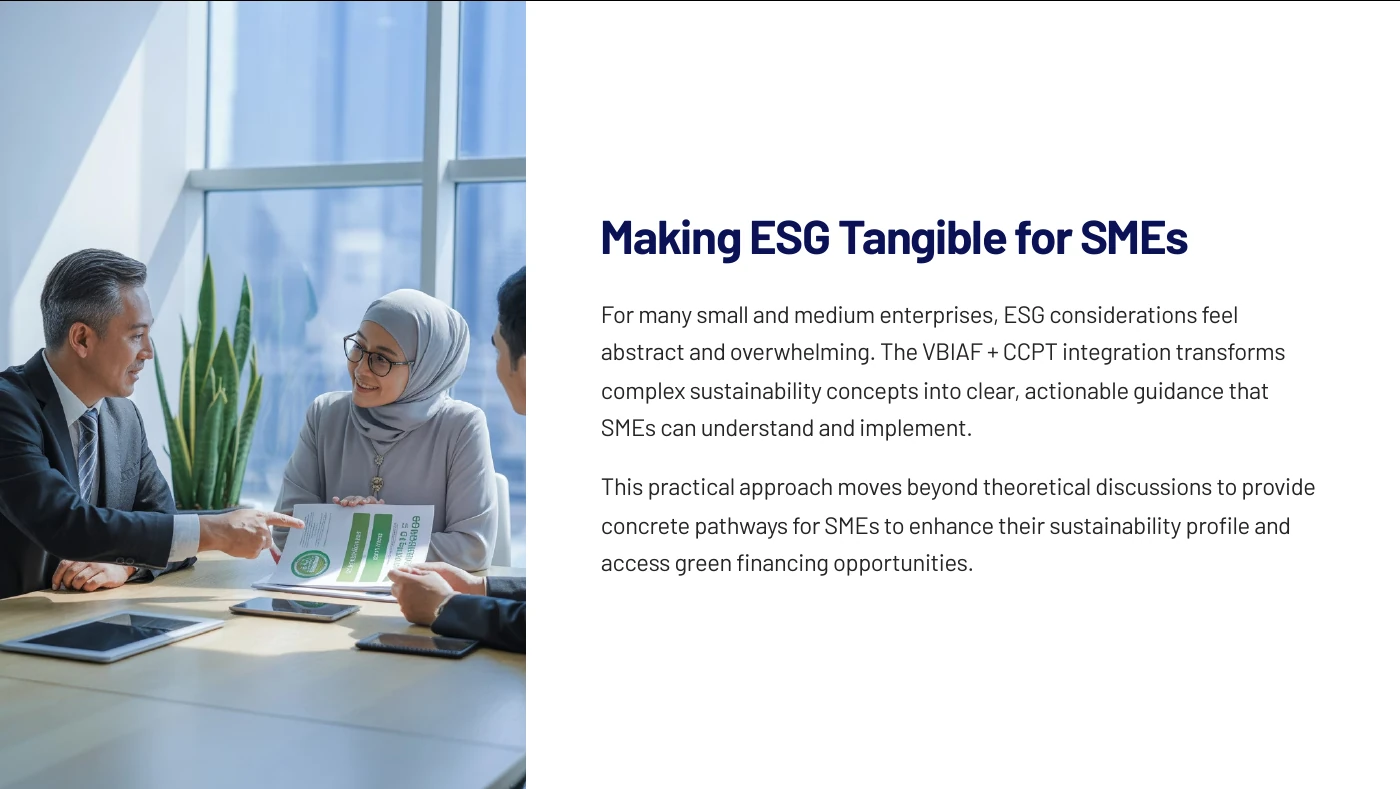
For many small and medium enterprises, ESG considerations feel
abstract and overwhelming. The VBIAF + CCPT integration transforms
complex sustainability concepts into clear, actionable guidance that
SMEs can understand and implement.
This practical approach moves beyond theoretical discussions to provide
concrete pathways for SMEs to enhance their sustainability profile and
access green financing opportunities.
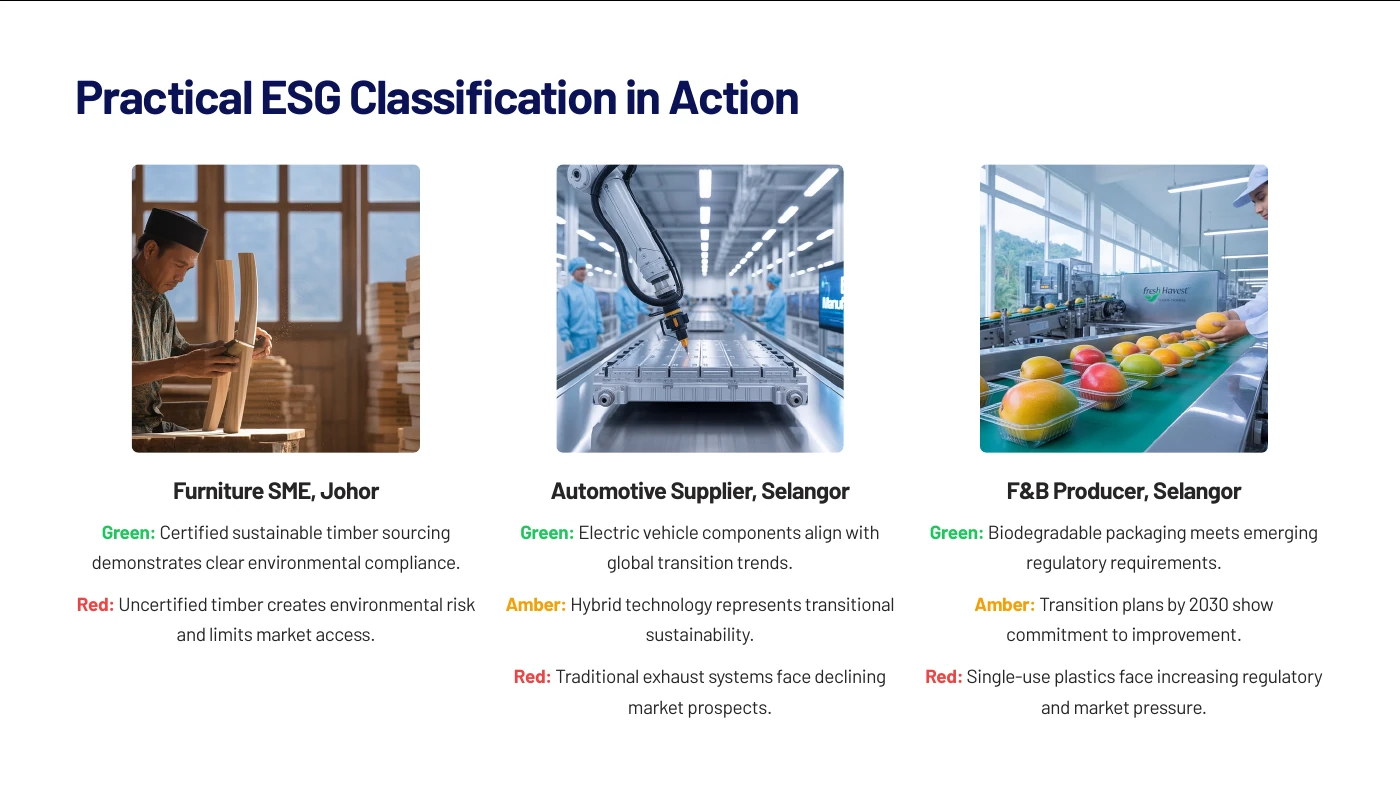
Practical ESG Classification in Action
Furniture SME, Johor
Green: Certified sustainable timber sourcing
demonstrates clear environmental compliance.
Red: Uncertified timber creates environmental risk
and limits market access.
Automotive Supplier, Selangor
Green: Electric vehicle components align with
global transition trends.
Amber: Hybrid technology represents transitional
sustainability.
Red: Traditional exhaust systems face declining
market prospects.
F&B Producer, Selangor
Green: Biodegradable packaging meets emerging
regulatory requirements.
Amber: Transition plans by 2030 show
commitment to improvement.
Red: Single-use plastics face increasing regulatory
and market pressure.
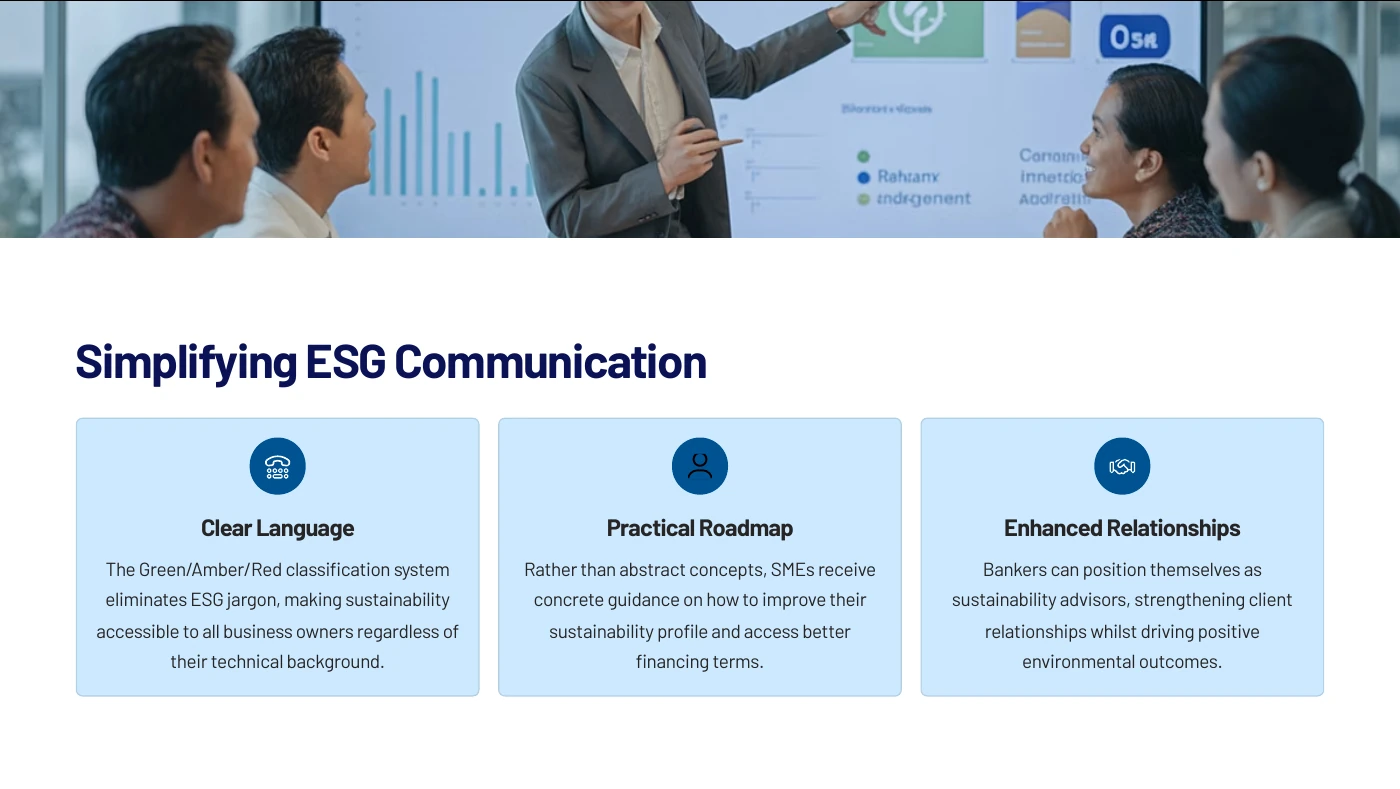
Simplifying ESG Communication
Clear Language
The Green/ Amber/Red classification system
eliminates ESG jargon, making sustainability
accessible to all business owners regardless of
their technical background.
Practical Roadmap
Rather than abstract concepts, SMEs receive
concrete guidance on how to improve their
sustainability profile and access better
financing terms.
Enhanced Relationships
Bankers can position themselves as
sustainability advisors, strengthening client
relationships whilst driving positive
environmental outcomes.
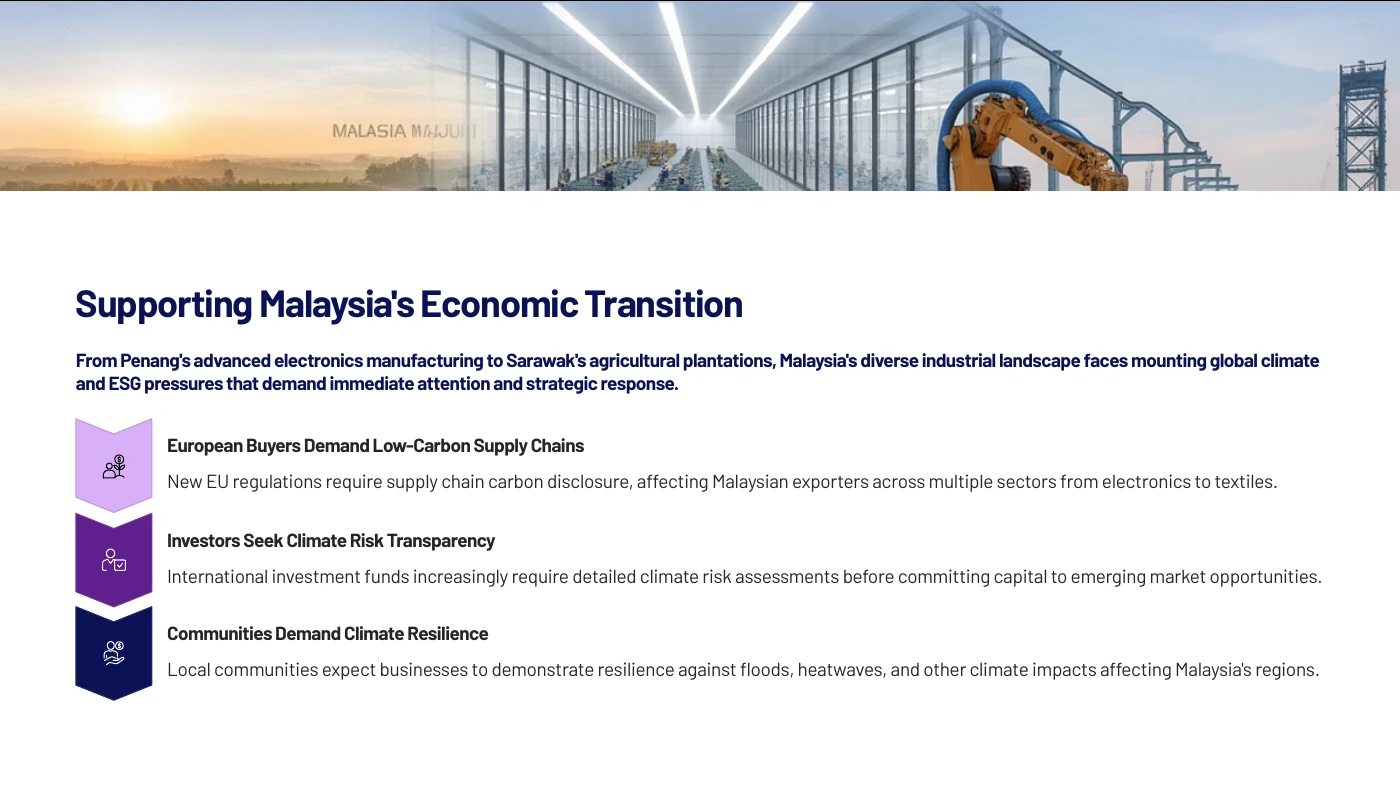
Supporting Malaysia's Economic Transition
From Penang's advanced electronics manufacturing to Sarawak's agricultural plantations, Malaysia's diverse industrial landscape faces mounting global climate
and ESG pressures that demand immediate attention and strategic response.
European Buyers Demand Low-Carbon Supply Chains
New EU regulations require supply chain carbon disclosure, affecting Malaysian exporters across multiple sectors from electronics to textiles.
Investors Seek Climate Risk Transparency
International investment funds increasingly require detailed climate risk assessments before committing capital to emerging market opportunities.
Communities Demand Climate Resilience
Local communities expect businesses to demonstrate resilience against floods, heatwaves, and other climate impacts affecting Malaysia's regions.
Banking's Strategic Response
01
Redirect Capital to Sustainable Players
VBIAF + CCPT enable banks to identify
and prioritise lending to businesses
demonstrating genuine sustainability
credentials, supporting Malaysia's green
transition.
02
Reduce Portfolio Climate Risk Exposure
Systematic classification helps banks
identify and mitigate exposure to
stranded assets and climate-vulnerable
sectors before risks materialise.
03
Support SME International Market
Access
By helping SMEs improve their
sustainability profiles, banks enable
client access to international markets
with increasingly stringent ESG
requirements.
Global Alignment and Competitive Advantage
Strategic Advantage: Malaysian banks implementing VBIAF + CCPT are building capabilities that will become mandatory
globally, creating competitive moats in sustainable finance.
Internationally, frameworks such as IFRS S2 are establishing new disclosure
expectations that will fundamentally reshape how financial institutions assess and
report climate-related risks and opportunities.
The integration of VBIAF and CCPT provides Malaysian banks with a significant
head start, embedding sustainability considerations into core credit decision-
making processes rather than treating them as mere compliance afterthoughts.
This proactive approach positions Malaysia's banking sector as a regional leader in
sustainable finance, capable of competing effectively in global markets whilst
driving domestic economic transformation.
The Path Forward
VBIAF: The Spark
Ignited Malaysia's sustainable finance
transformation by establishing clear
principles and direction for value-
based banking.
CCPT: The Flame
Provided the practical tools needed to
transform sustainability vision into
measurable action across all banking
operations.
T ogether: Lighting the Way
Combined, they illuminate the path towards a financial system that successfully
balances profitability with sustainability impact.
By combining principled vision with practical implementation tools, Malaysia's financial
system is uniquely positioned to finance economic growth that delivers lasting value
for people, planet, and profit. The integration of VBIAF and CCPT represents not just
regulatory compliance, but a strategic transformation that positions Malaysian banks
at the forefront of global sustainable finance innovation.