Read the document text, page by page
Automatically extracted from the original PDF. Reading order and symbols may differ from the designed pages; the PDF remains the authoritative visual version.
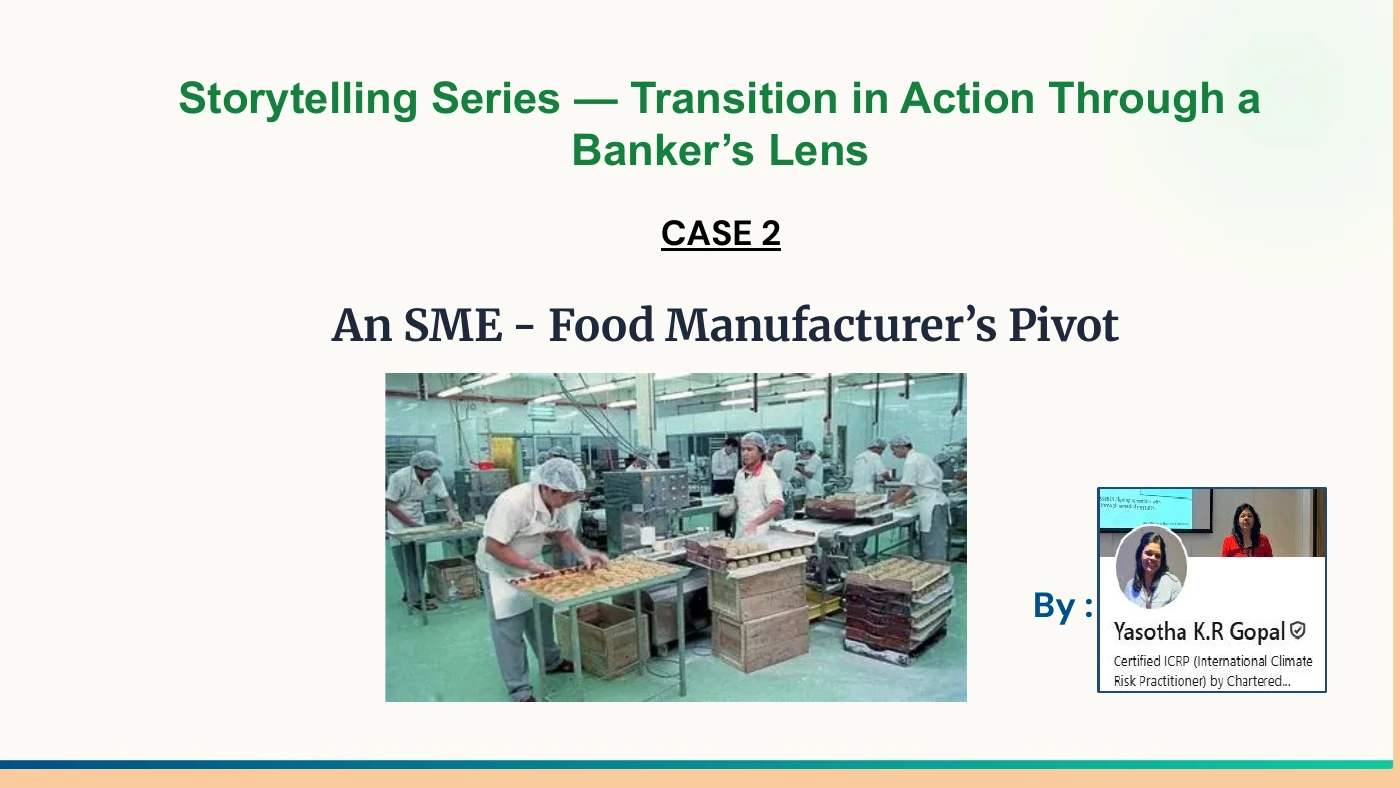
CASE 2
An SME - Food Manufacturer’s Pivot
By :
Storytelling Series — Transition in Action Through a
Banker’s Lens
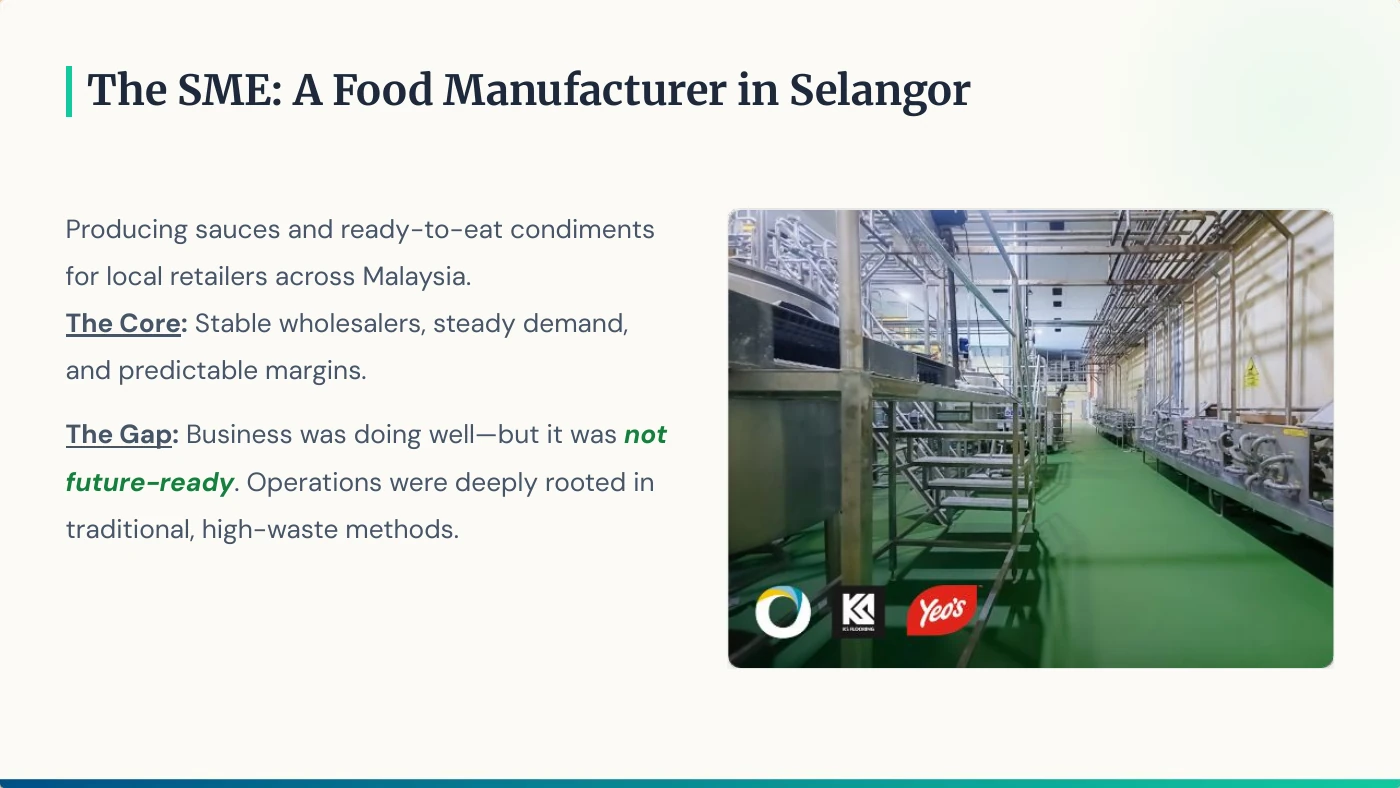
Producing sauces and ready-to-eat condiments
for local retailers across Malaysia.
The Core: Stable wholesalers, steady demand,
and predictable margins.
The Gap: Business was doing well—but it was not
future-ready. Operations were deeply rooted in
traditional, high-waste methods.
The SME: A Food Manufacturer in Selangor
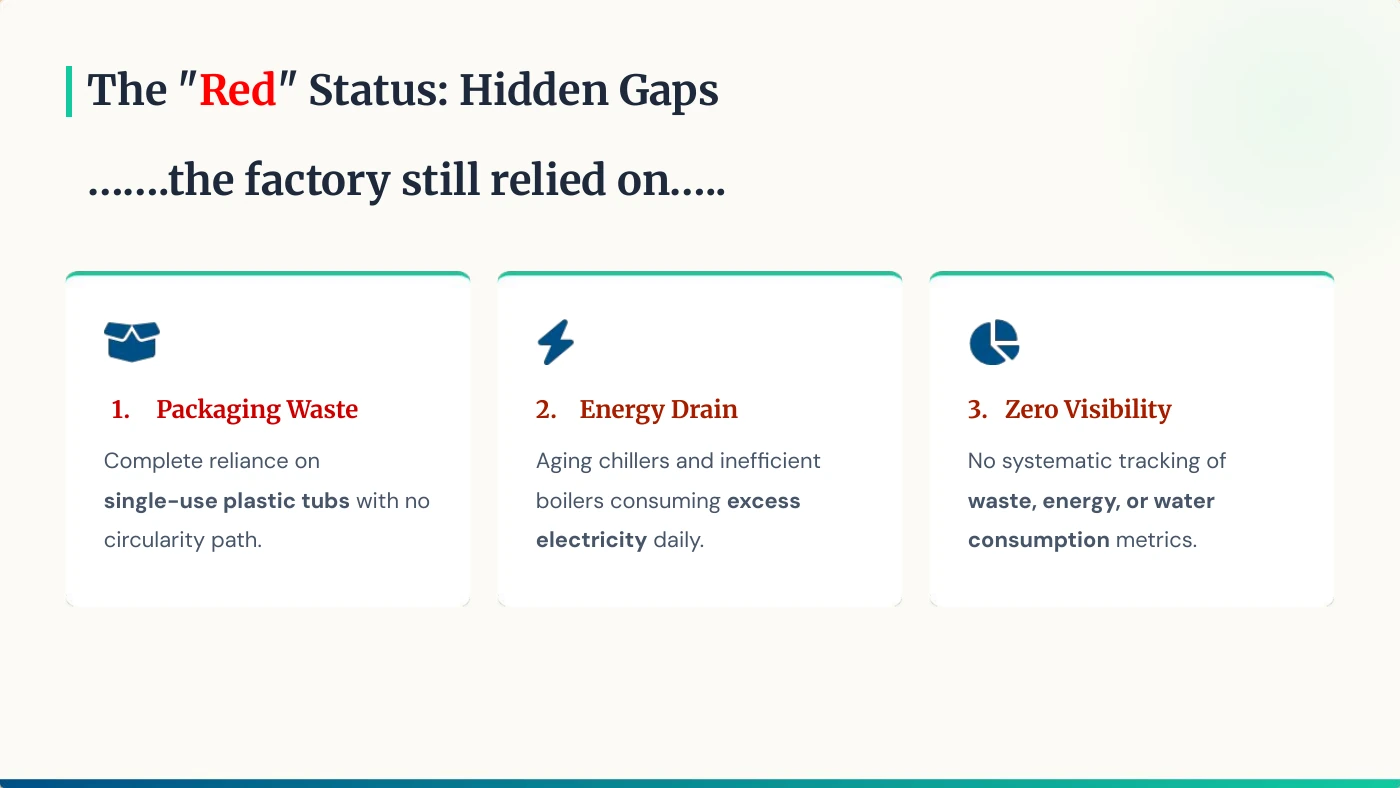
1. Packaging Waste
Complete reliance on
single-use plastic tubs with no
circularity path.
2. Energy Drain
Aging chillers and inefficient
boilers consuming excess
electricity daily.
3. Zero Visibility
No systematic tracking of
waste, energy, or water
consumption metrics.
The "Red" Status: Hidden Gaps
…….the factory still relied on…..
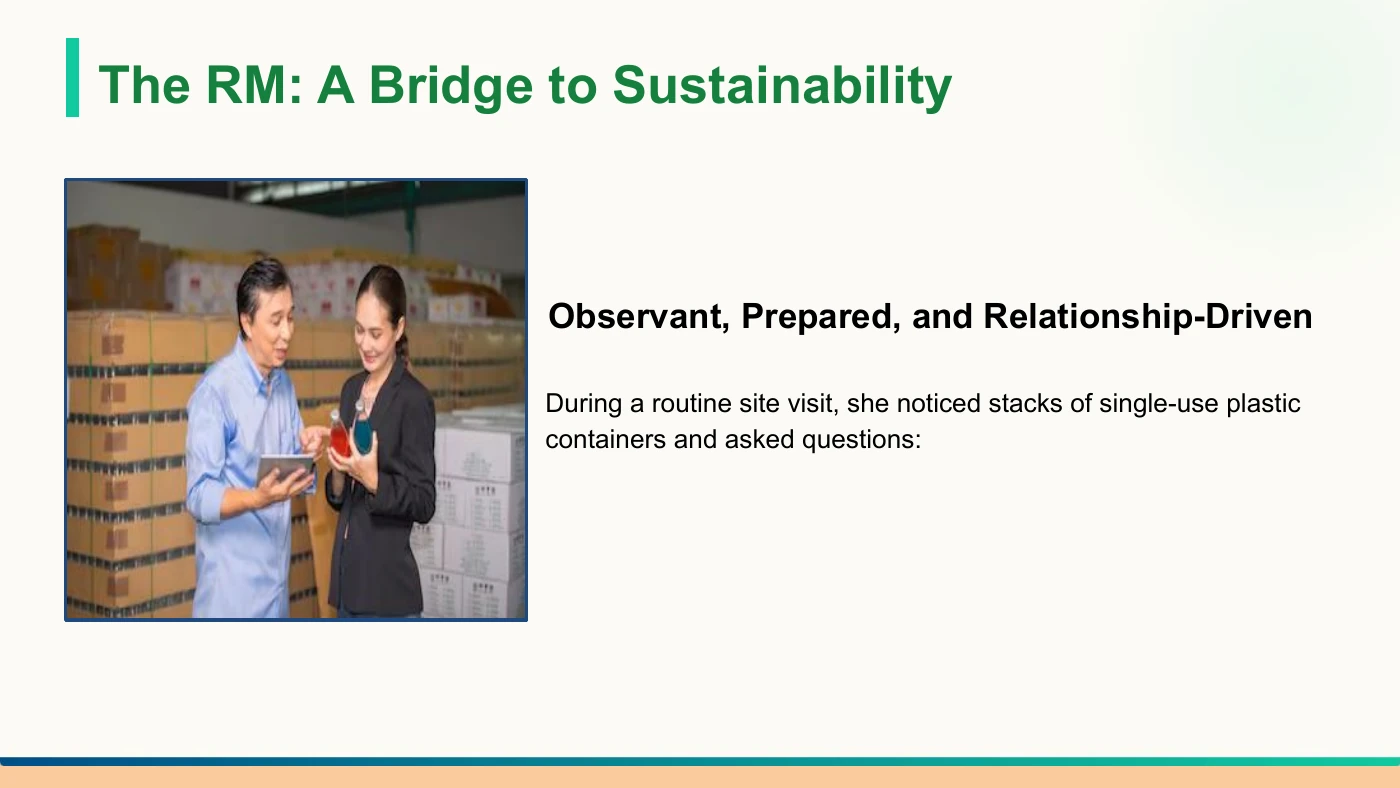
The RM: A Bridge to Sustainability
During a routine site visit, she noticed stacks of single-use plastic
containers and asked questions:
Observant, Prepared, and Relationship-Driven
“Have any of your buyers asked about sustainable
packaging?”
One simple question during a site visit that changed the trajectory of
the conversation.
“
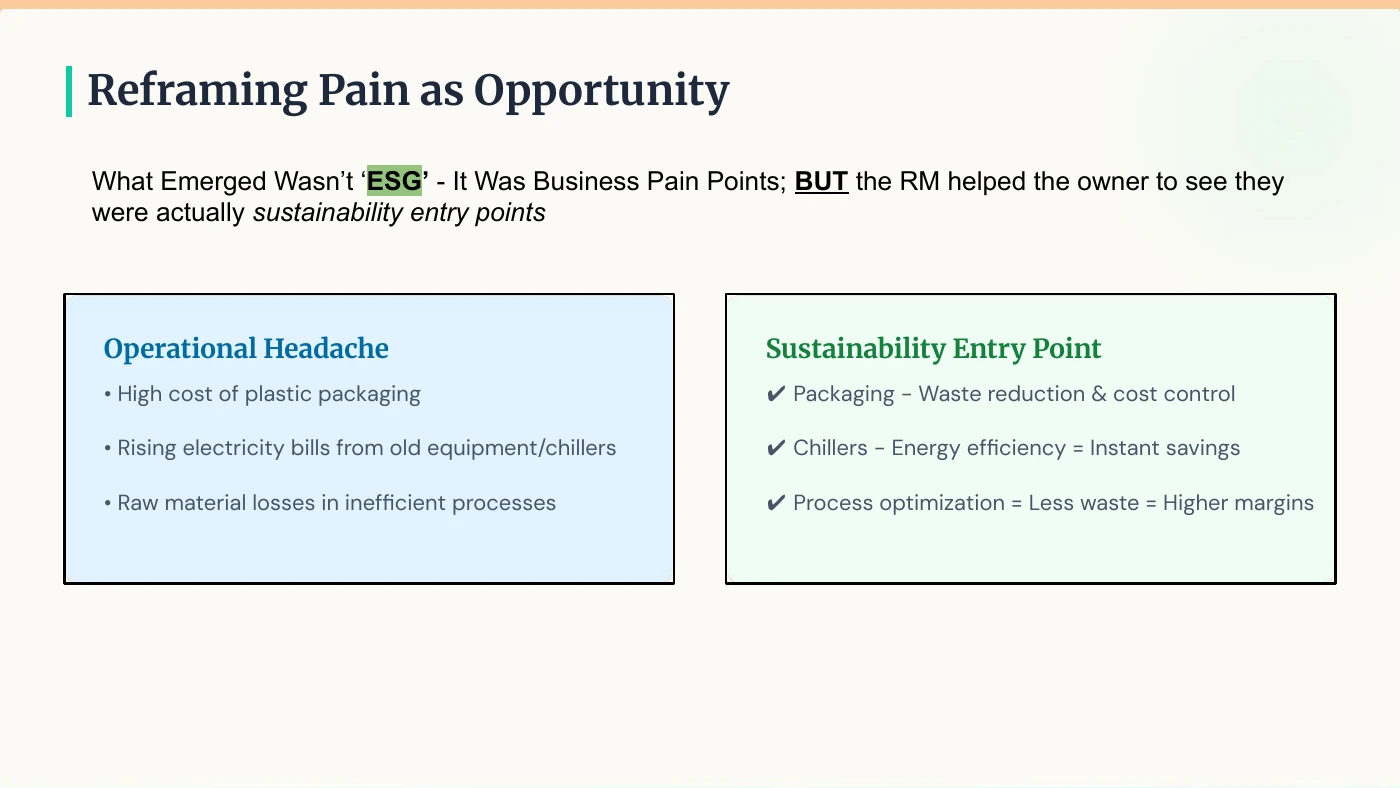
Operational Headache
• High cost of plastic packaging
• Rising electricity bills from old equipment/chillers
• Raw material losses in inefficient processes
Sustainability Entry Point
✔ Packaging - Waste reduction & cost control
✔ Chillers - Energy efficiency = Instant savings
✔ Process optimization = Less waste = Higher margins
Reframing Pain as Opportunity
What Emerged Wasn’t ‘ESG’ - It Was Business Pain Points; BUT the RM helped the owner to see they
were actually sustainability entry points
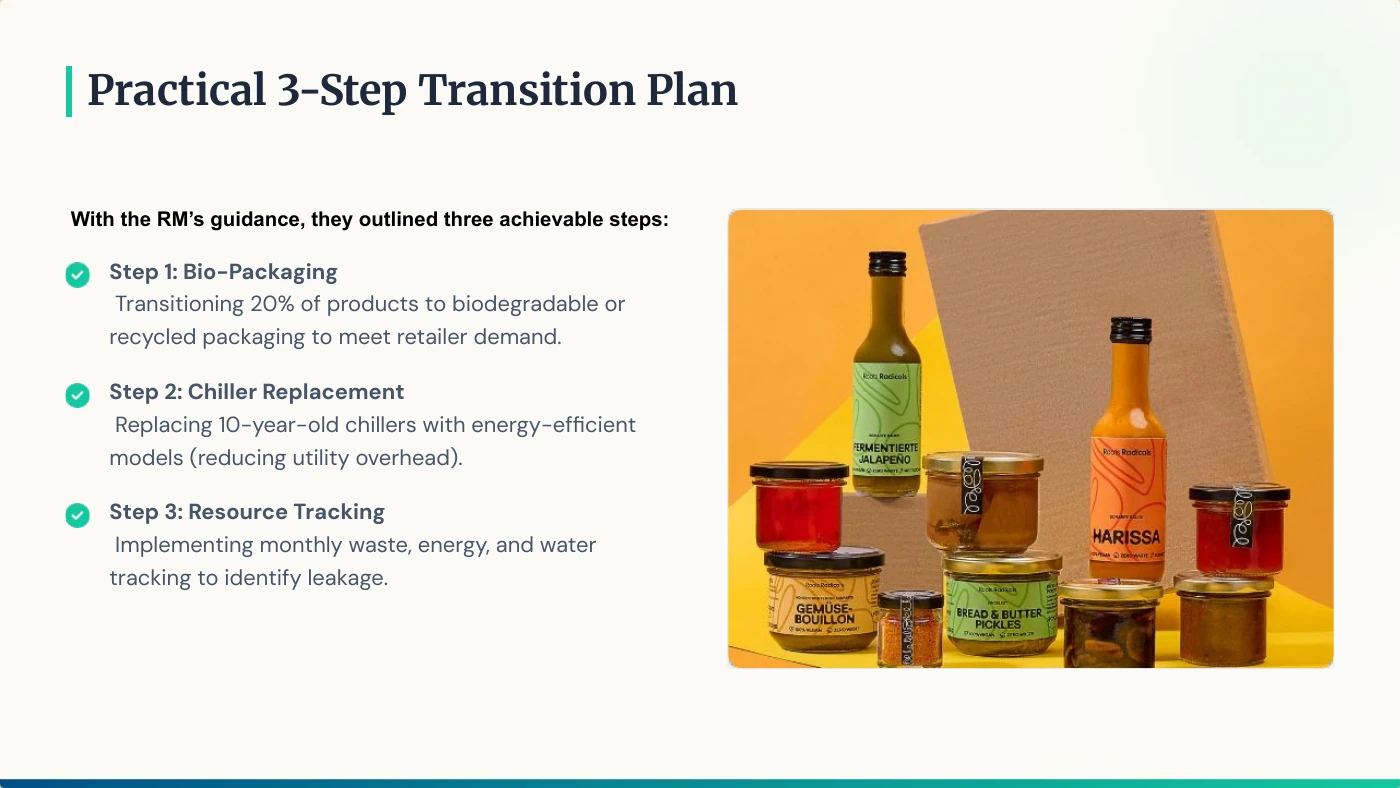
Step 1: Bio-Packaging
Transitioning 20% of products to biodegradable or
recycled packaging to meet retailer demand.
Step 2: Chiller Replacement
Replacing 10-year-old chillers with energy-efficient
models (reducing utility overhead).
Step 3: Resource Tracking
Implementing monthly waste, energy, and water
tracking to identify leakage.
Practical 3-Step Transition Plan
With the RM’s guidance, they outlined three achievable steps:
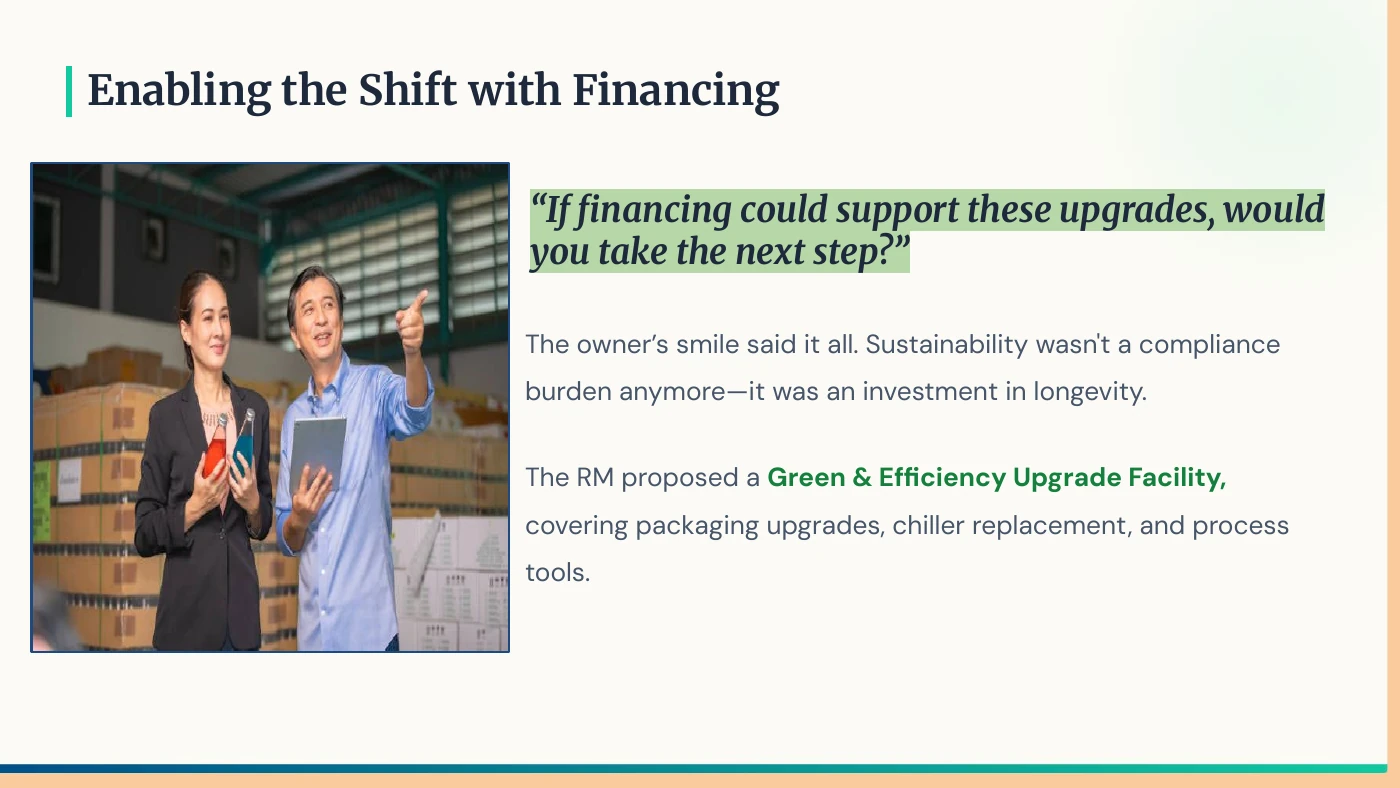
“If financing could support these upgrades, would
you take the next step?”
The owner’s smile said it all. Sustainability wasn't a compliance
burden anymore—it was an investment in longevity.
The RM proposed a Green & Efficiency Upgrade Facility,
covering packaging upgrades, chiller replacement, and process
tools.
Enabling the Shift with Financing
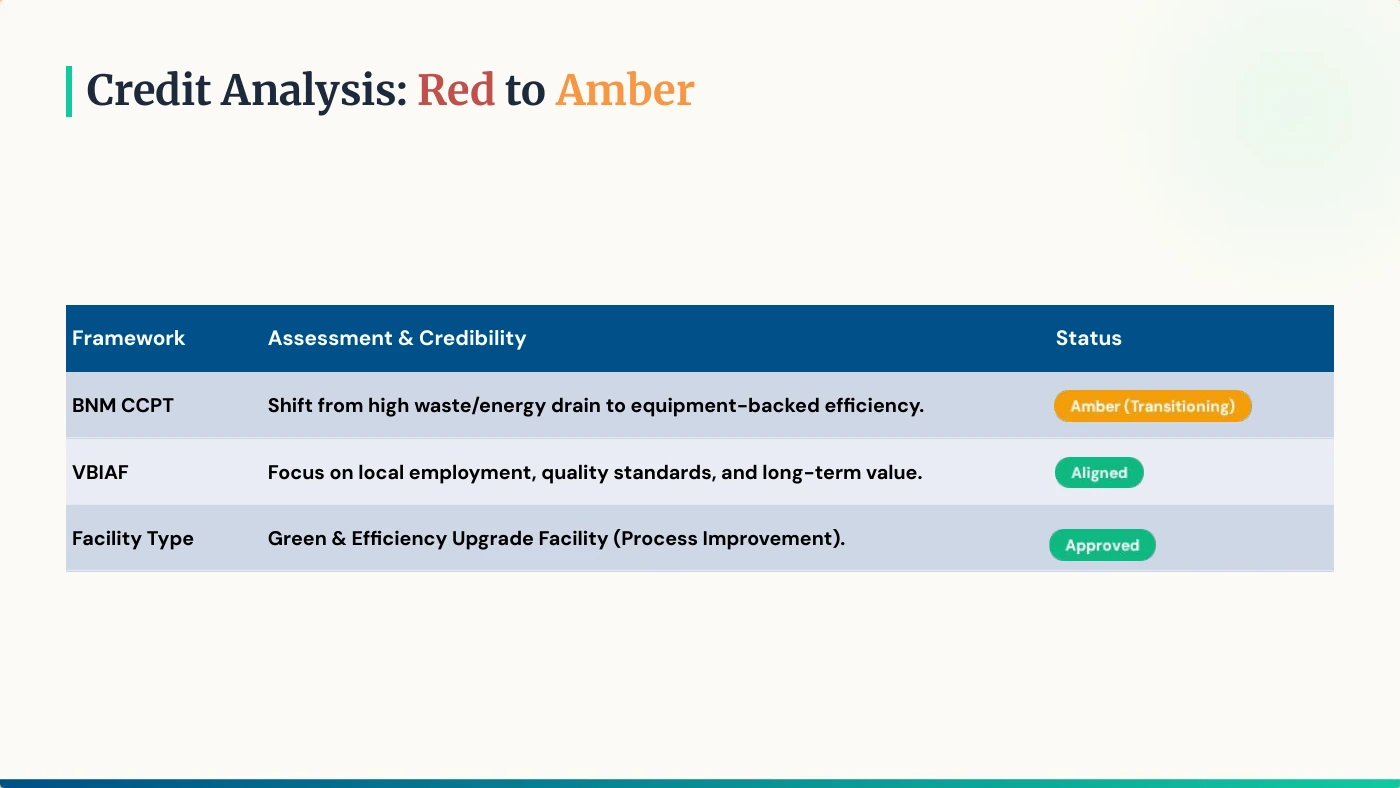
Framework Assessment & Credibility Status
BNM CCPT Shift from high waste/energy drain to equipment-backed efficiency. Amber (Transitioni
VBIAF Focus on local employment, quality standards, and long-term value. Aligned
Facility Type Green & Efficiency Upgrade Facility (Process Improvement). Approved
Credit Analysis: Red to Amber
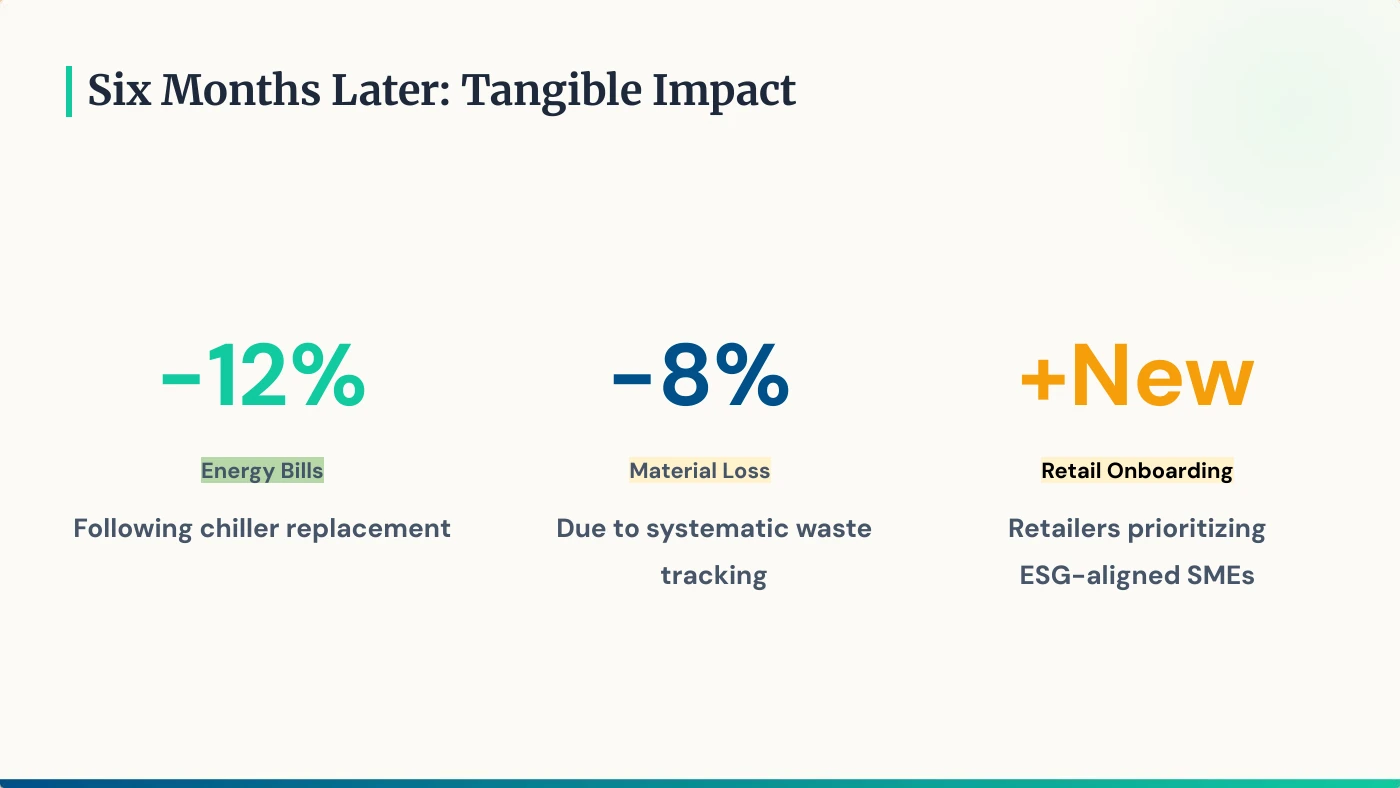
-12%
Energy Bills
Following chiller replacement
-8%
Material Loss
Due to systematic waste
tracking
+New
Retail Onboarding
Retailers prioritizing
ESG-aligned SMEs
Six Months Later: Tangible Impact
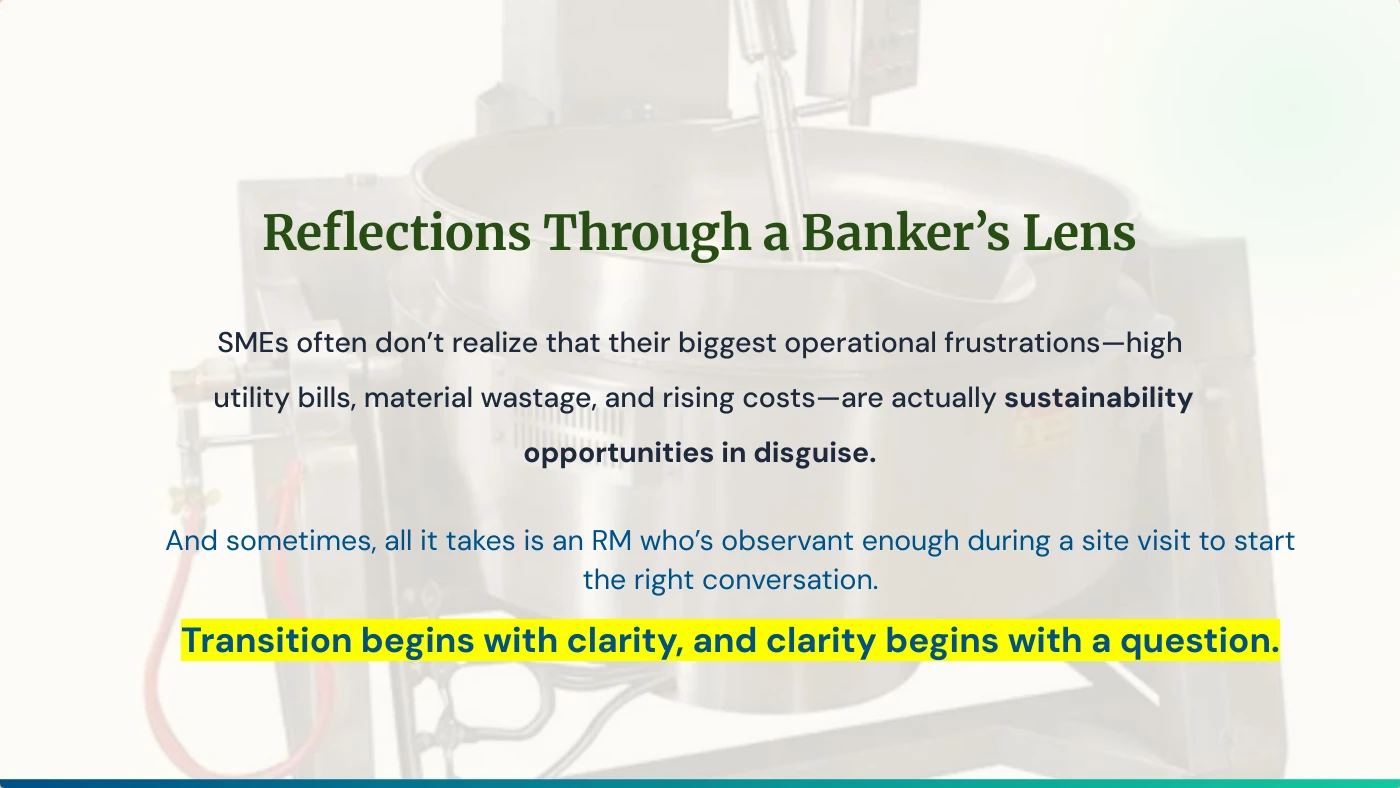
Reflections Through a Banker’s Lens
SMEs often don’t realize that their biggest operational frustrations—high
utility bills, material wastage, and rising costs—are actually sustainability
opportunities in disguise.
And sometimes, all it takes is an RM who’s observant enough during a site visit to start
the right conversation.
Transition begins with clarity, and clarity begins with a question.
Questions?
Let’s connect to build more resilient SME portfolios.
© 2025 Storytelling Series — Transition in Action
Connect with Yasotha K.R Gopal Certified Integrated Climate Risk
Practitioner