Document & post

Transition in Action - Construction Material Trader

Captured 13 August 2026 · LinkedIn displayed “6mo •” at capture. Original publication date unverified.

Read the original LinkedIn post Jump to original text ↓
SME transition cases

Original illustrated document

14 pages to explore

Download PDF (897 KB)
Page 1 of Transition in Action - Construction Material Trader. Read the extracted page text below or open the original PDF.

Page 1 of 14

Read the document text, page by page

Automatically extracted from the original PDF. Reading order and symbols may differ from the designed pages; the PDF remains the authoritative visual version.

Page 1

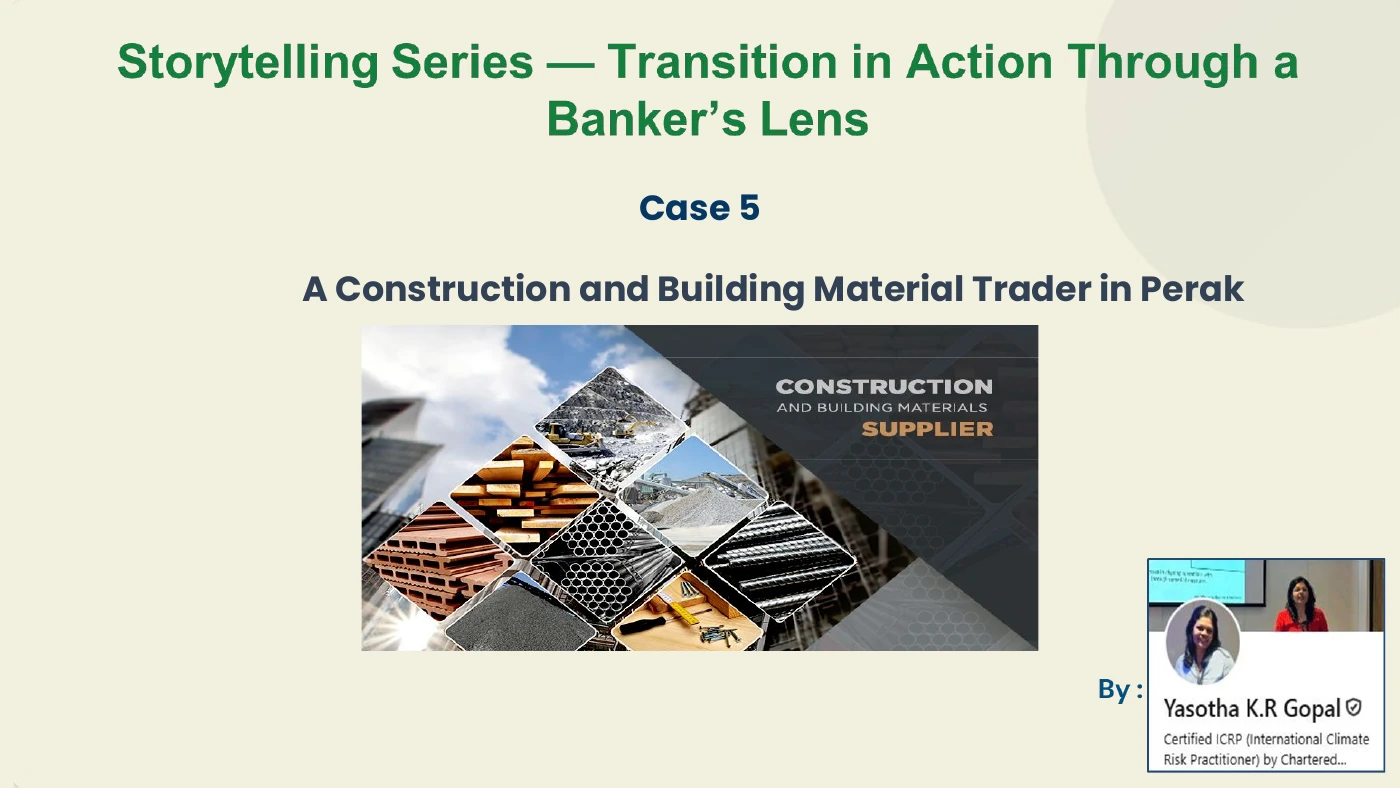
A Construction and Building Material Trader in Perak Case 5

Page 2

The Traditional Backbone A construction material trader in Perak supplying essential building blocks to regional contractors.

Page 3

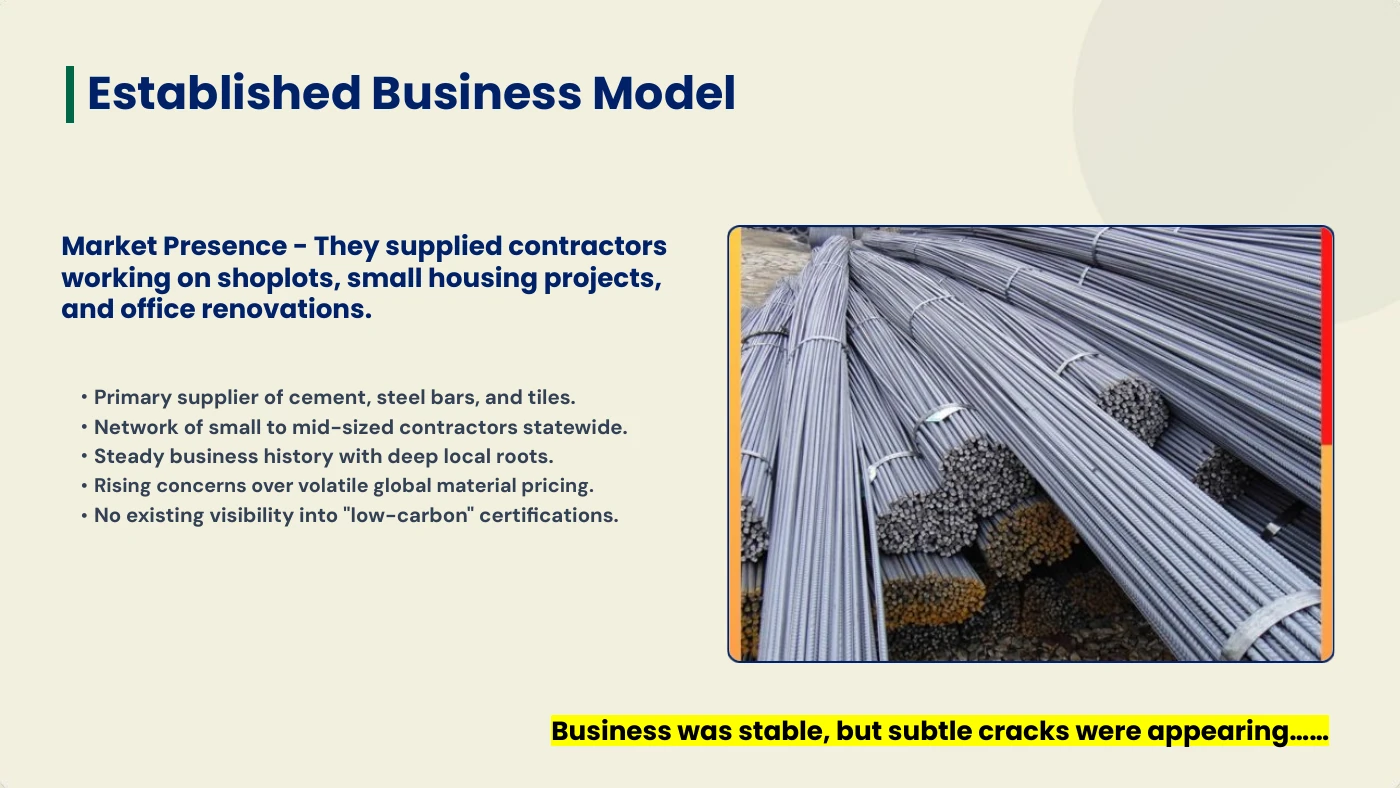
Market Presence - They supplied contractors working on shoplots, small housing projects, and office renovations. • Primary supplier of cement, steel bars, and tiles. • Network of small to mid-sized contractors statewide. • Steady business history with deep local roots. • Rising concerns over volatile global material pricing. • No existing visibility into "low-carbon" certifications. Established Business Model Business was stable, but subtle cracks were appearing……

Page 4

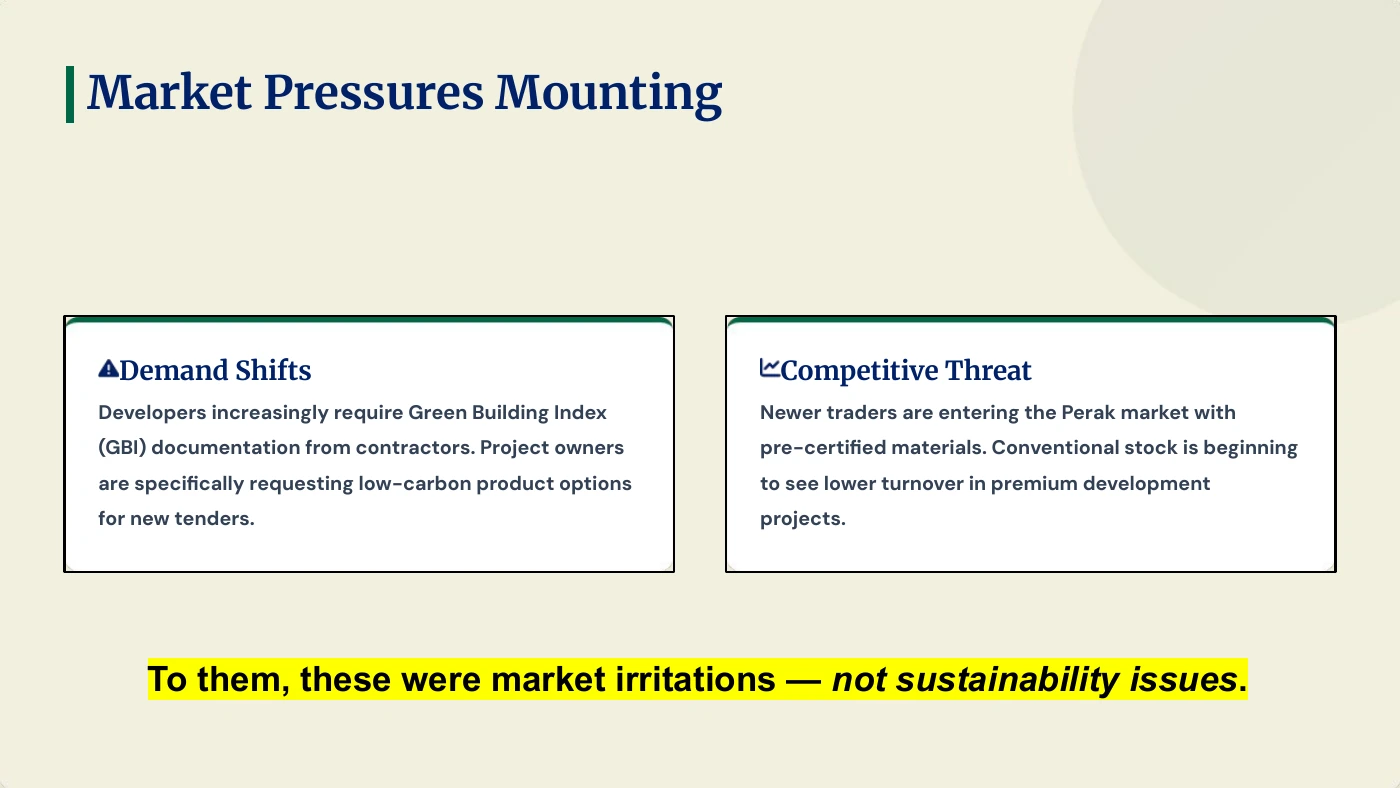
Demand Shifts Developers increasingly require Green Building Index (GBI) documentation from contractors. Project owners are specifically requesting low-carbon product options for new tenders. Competitive Threat Newer traders are entering the Perak market with pre-certified materials. Conventional stock is beginning to see lower turnover in premium development projects. Market Pressures Mounting To them, these were market irritations — not sustainability issues.

Page 5

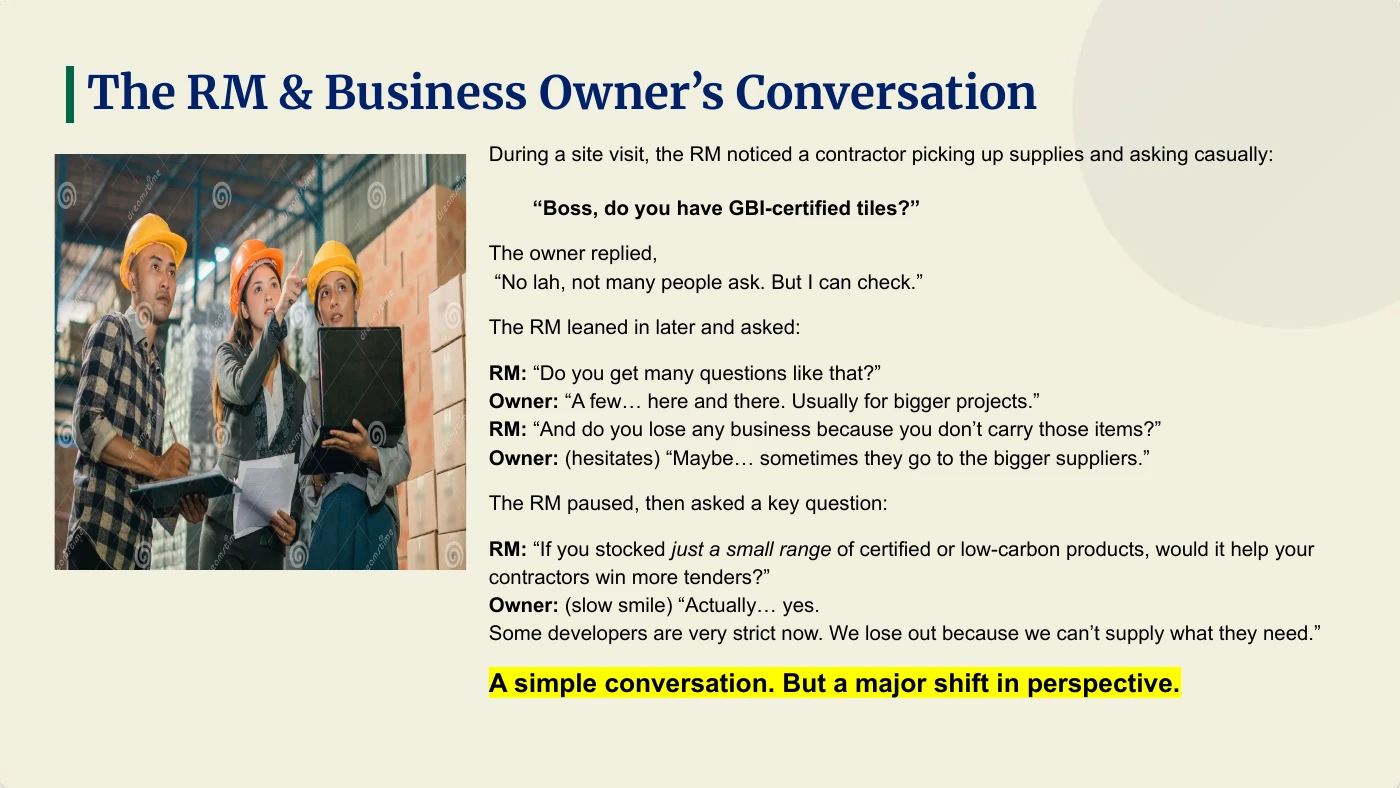
During a site visit, the RM noticed a contractor picking up supplies and asking casually: “Boss, do you have GBI-certified tiles?” The owner replied, “No lah, not many people ask. But I can check.” The RM leaned in later and asked: RM: “Do you get many questions like that?” Owner: “A few… here and there. Usually for bigger projects.” RM: “And do you lose any business because you don’t carry those items?” Owner: (hesitates) “Maybe… sometimes they go to the bigger suppliers.” The RM paused, then asked a key question: RM: “If you stocked just a small range of certified or low-carbon products, would it help your contractors win more tenders?” Owner: (slow smile) “Actually… yes. Some developers are very strict now. We lose out because we can’t supply what they need.” A simple conversation. But a major shift in perspective. The RM & Business Owner’s Conversation

Page 6

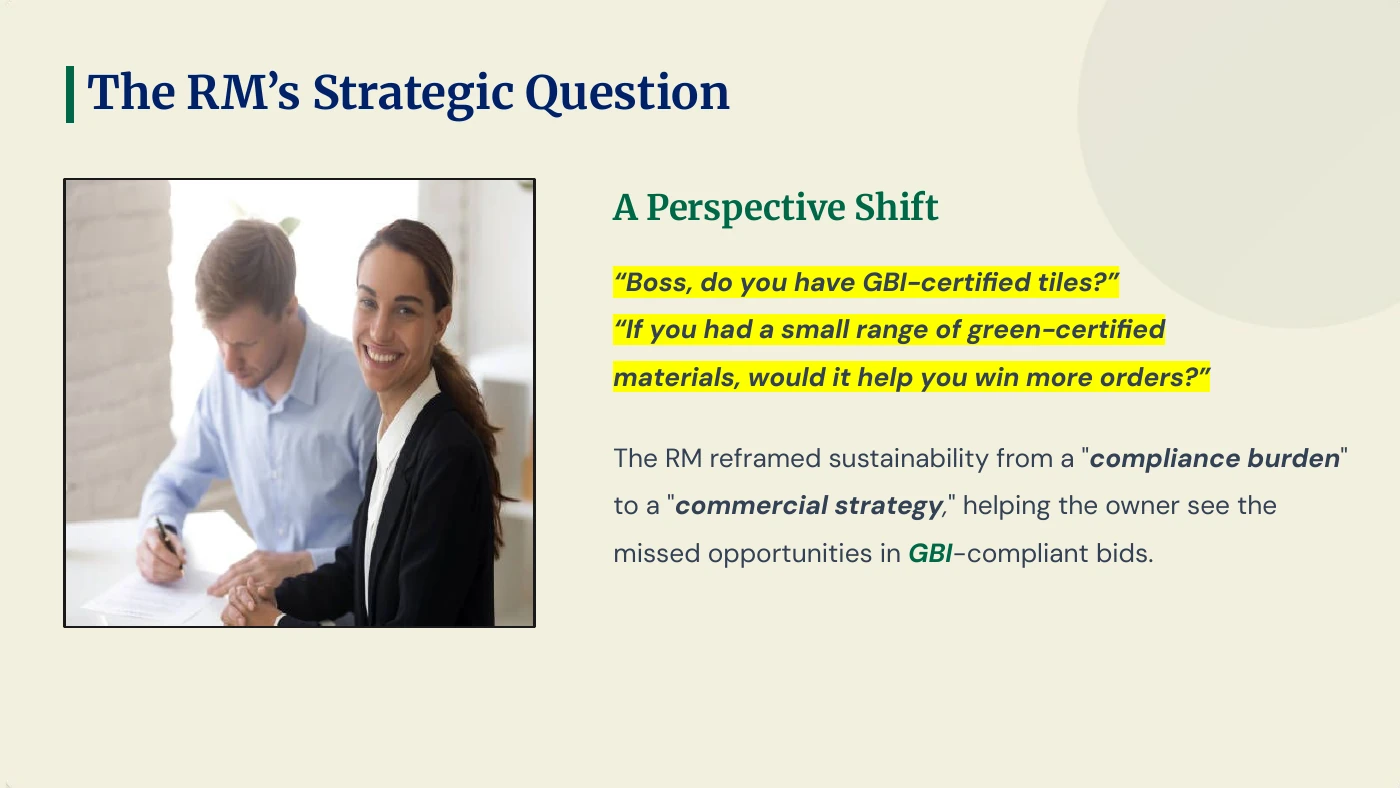
A Perspective Shift “Boss, do you have GBI-certified tiles?” “If you had a small range of green-certified materials, would it help you win more orders?” The RM reframed sustainability from a "compliance burden" to a "commercial strategy," helping the owner see the missed opportunities in GBI-compliant bids. The RM’s Strategic Question

Page 7

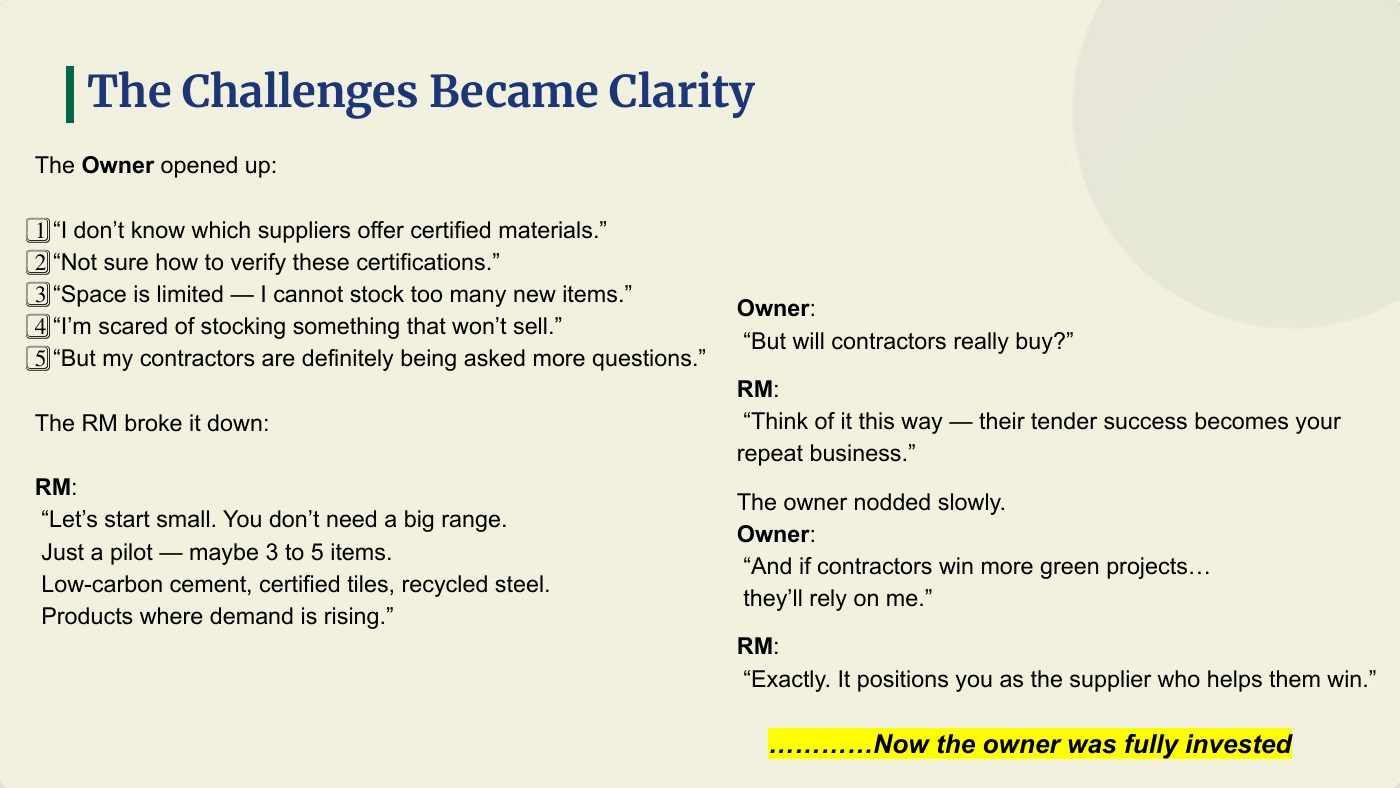
The Challenges Became Clarity The Owner opened up: 1⃣ “I don’t know which suppliers offer certified materials.” 2⃣ “Not sure how to verify these certifications.” 3⃣ “Space is limited — I cannot stock too many new items.” 4⃣ “I’m scared of stocking something that won’t sell.” 5⃣ “But my contractors are definitely being asked more questions.” The RM broke it down: RM: “Let’s start small. You don’t need a big range. Just a pilot — maybe 3 to 5 items. Low-carbon cement, certified tiles, recycled steel. Products where demand is rising.” Owner: “But will contractors really buy?” RM: “Think of it this way — their tender success becomes your repeat business.” The owner nodded slowly. Owner: “And if contractors win more green projects… they’ll rely on me.” RM: “Exactly. It positions you as the supplier who helps them win.” …………Now the owner was fully invested

Page 8

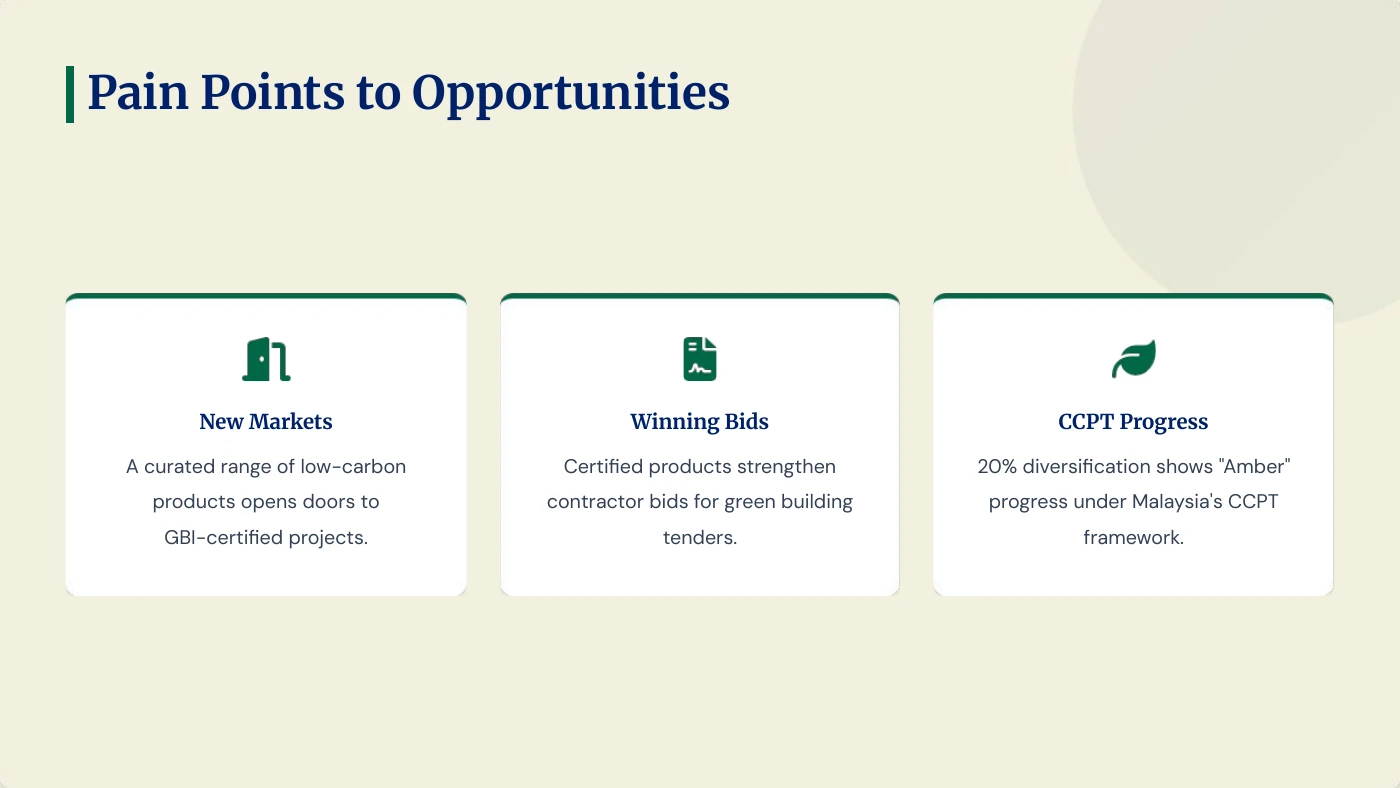
New Markets A curated range of low-carbon products opens doors to GBI-certified projects. Winning Bids Certified products strengthen contractor bids for green building tenders. CCPT Progress 20% diversification shows "Amber" progress under Malaysia's CCPT framework. Pain Points to Opportunities

Page 9

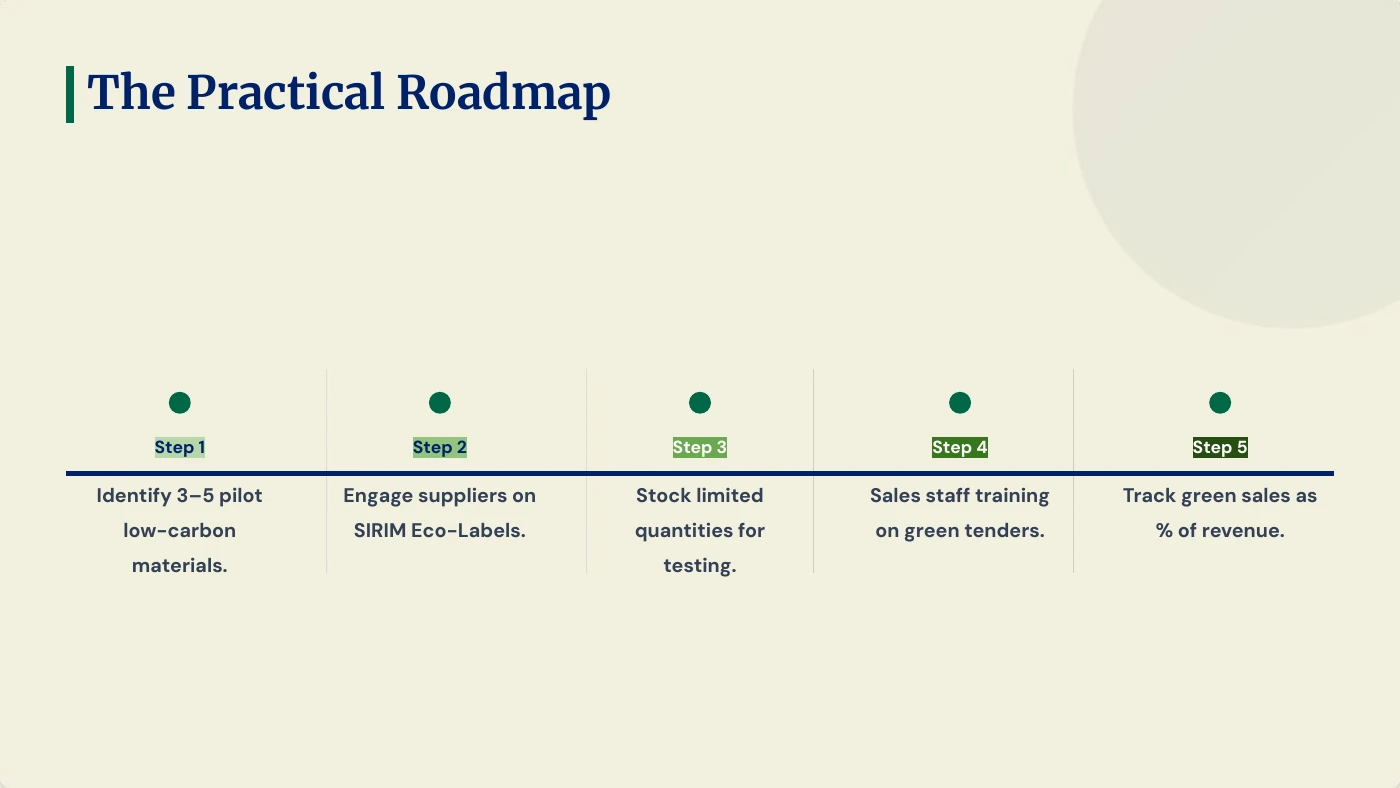
Step 1 Identify 3–5 pilot low-carbon materials. Step 2 Engage suppliers on SIRIM Eco-Labels. Step 3 Stock limited quantities for testing. Step 4 Sales staff training on green tenders. Step 5 Track green sales as % of revenue. The Practical Roadmap

Page 10

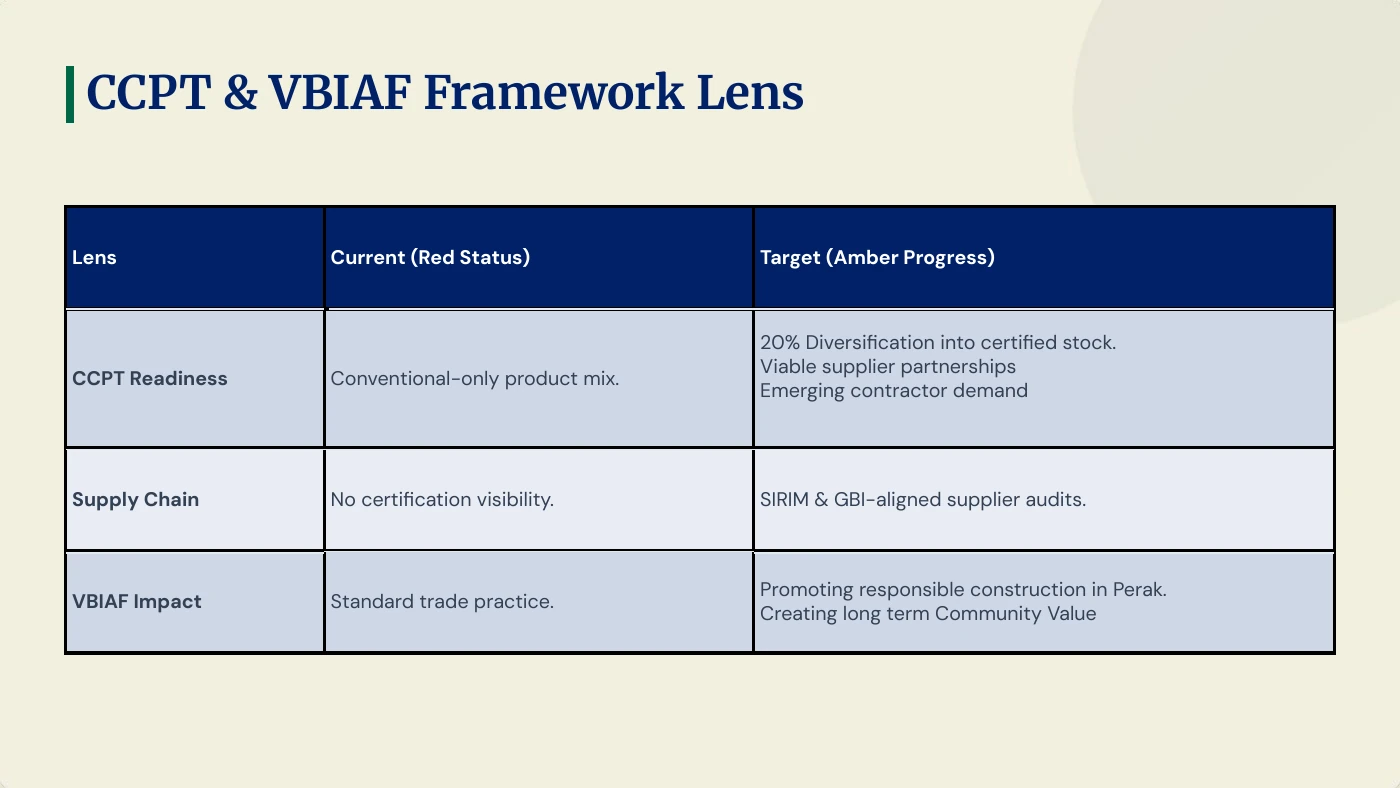
Lens Current (Red Status) Target (Amber Progress) CCPT Readiness Conventional-only product mix. 20% Diversification into certified stock. Viable supplier partnerships Emerging contractor demand Supply Chain No certification visibility. SIRIM & GBI-aligned supplier audits. VBIAF Impact Standard trade practice. Promoting responsible construction in Perak. Creating long term Community Value CCPT & VBIAF Framework Lens

Page 11

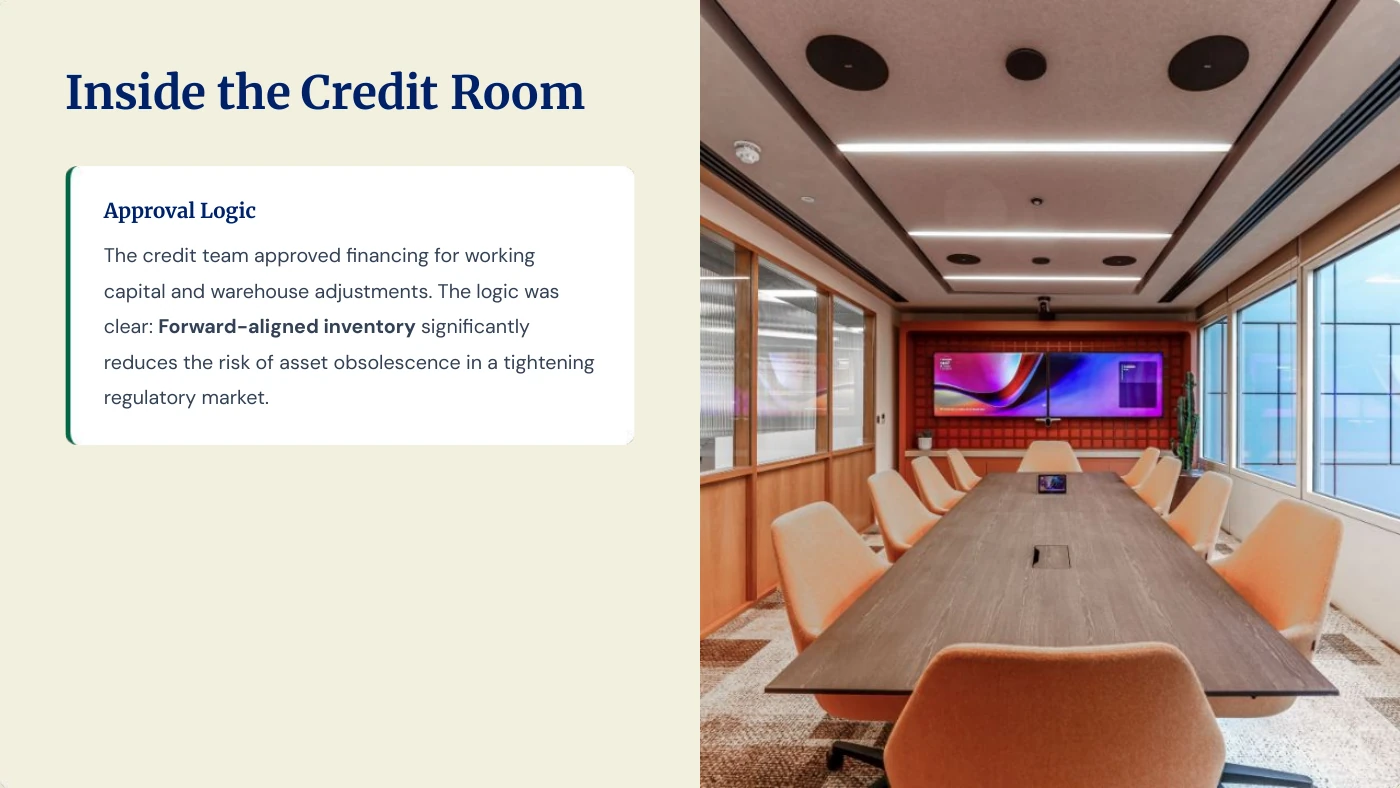
Inside the Credit Room Approval Logic The credit team approved financing for working capital and warehouse adjustments. The logic was clear: Forward-aligned inventory significantly reduces the risk of asset obsolescence in a tightening regulatory market.

Page 12

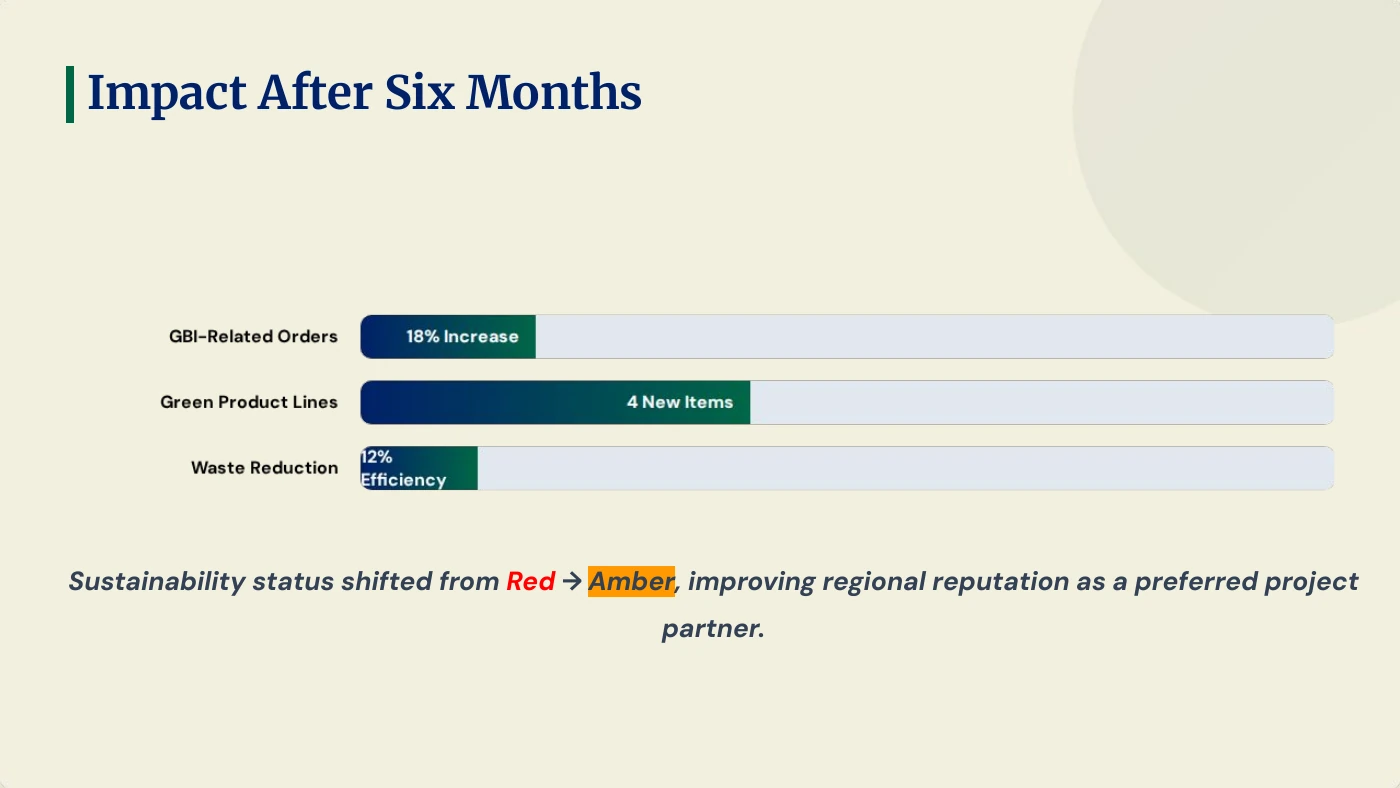
Sustainability status shifted from Red → Amber, improving regional reputation as a preferred project partner. Impact After Six Months

Page 13

“Sustainability in this sector doesn’t begin with factories. It begins with product choice, supplier transparency, and customer education. ” — Reflection through a Banker's Lens And it often starts with one RM asking: “Would a small range of certified products help you win more contractor orders?”

Page 14

Questions ? Questions on the Red-to-Amber Transition Path? Building the Future

Open the complete original PDF

In Yasotha’s words

Original post

Storytelling Series — Transition in Action Through a Banker’s Lens (Part 5)

"How a Construction Material Trading SME Began Its Sustainability Journey from Red → Amber?"

After exploring how an FMCG trading SME discovered its sustainability pathway through supply-chain transparency, several readers asked for examples from upstream industries, especially those linked to construction, where sustainability expectations are rapidly evolving.

And it’s true: the construction sector is undergoing a quiet but significant shift.

Builders, developers, and contractors are increasingly asked for low-carbon materials, certified products, and evidence of responsible sourcing. This shift doesn’t just affect cement producers or steel mills; it directly impacts construction material traders, many of whom still assume:

“We just sell what contractors want — sustainability has nothing to do with us.”

But that assumption is changing fast.

So, today’s story takes us from retail shelves to construction yards- to show how a Building Material Trading SME found its Red → Amber pathway through smart product diversification and supplier engagement.
Yasotha K.R Gopal

Banking insight. Practical learning. Thoughtful transition.

LinkedIn

Briefing enquiry

Shape a useful first conversation.

Choose a few starting points, then copy the summary into the channel you prefer. This website prepares a summary; it does not send a message.

Continue on LinkedIn