Document & post

Climate, Economy and Financial System Interconnectivity

Captured 13 August 2026 · LinkedIn displayed “11mo •” at capture. Original publication date unverified.

Read the original LinkedIn post Jump to original text ↓
Risk & resilience

Original illustrated document

7 pages to explore

Download PDF (4.7 MB)
Page 1 of Climate, Economy and Financial System Interconnectivity. Read the extracted page text below or open the original PDF.

Page 1 of 7

Read the document text, page by page

Automatically extracted from the original PDF. Reading order and symbols may differ from the designed pages; the PDF remains the authoritative visual version.

Page 1

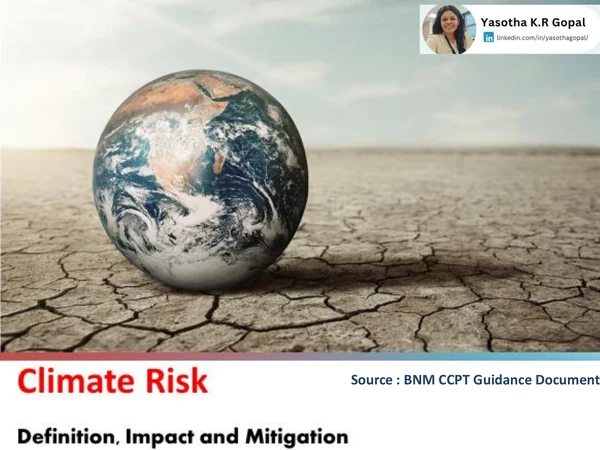
Climate Change, Economy, and Financial System Interconnectivity Malaysian Context

Page 2

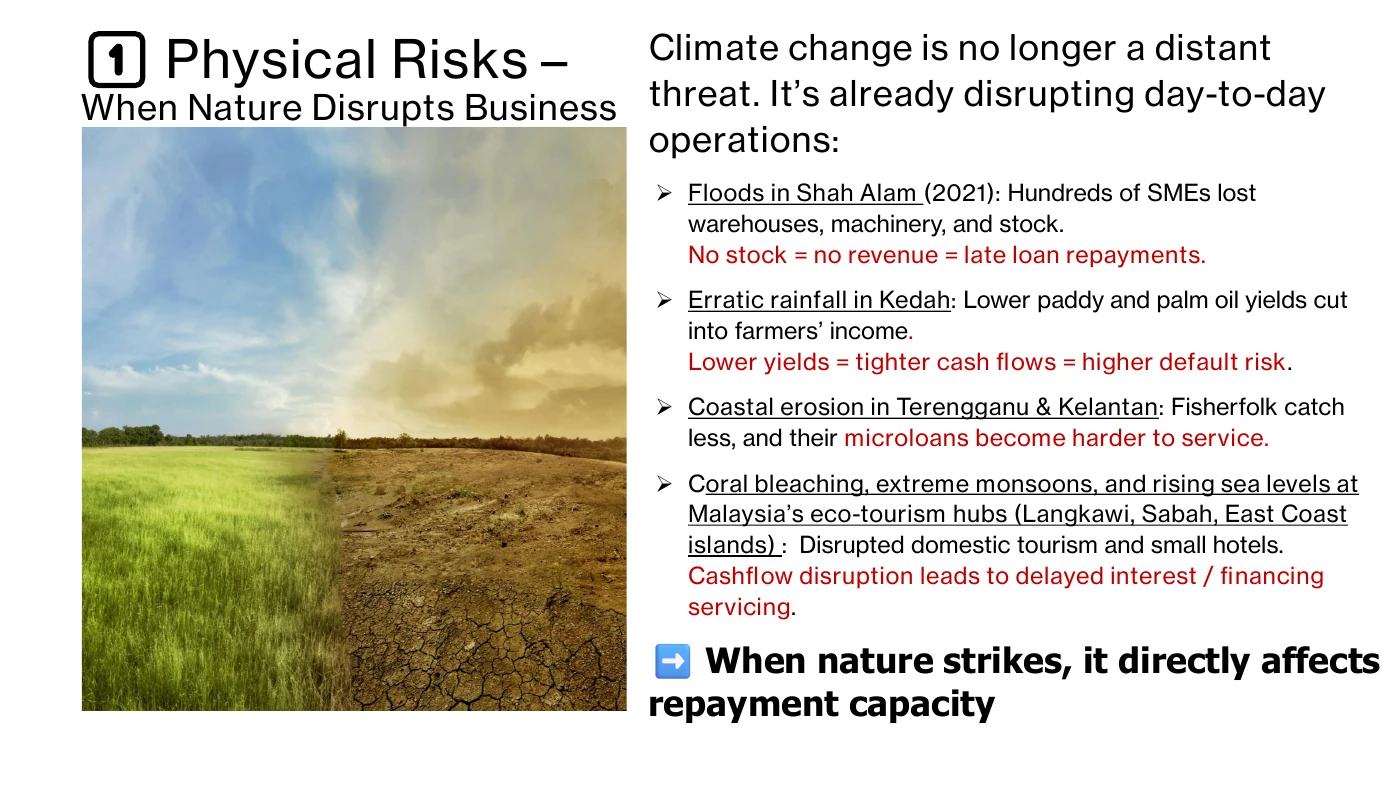
1️⃣Physical Risks – When Nature Disrupts Business Climate change is no longer a distant threat. It’s already disrupting day-to-day operations: ➢ Floods in Shah Alam (2021): Hundreds of SMEs lost warehouses, machinery, and stock. No stock = no revenue = late loan repayments. ➢ Erratic rainfall in Kedah: Lower paddy and palm oil yields cut into farmers’ income. Lower yields = tighter cash flows = higher default risk. ➢ Coastal erosion in T erengganu & Kelantan: Fisherfolk catch less, and their microloans become harder to service. ➢ Coral bleaching, extreme monsoons, and rising sea levels at Malaysia’s eco-tourism hubs (Langkawi, Sabah, East Coast islands) : Disrupted domestic tourism and small hotels. Cashflow disruption leads to delayed interest / financing servicing. When nature strikes, it directly affects repayment capacity

Page 3

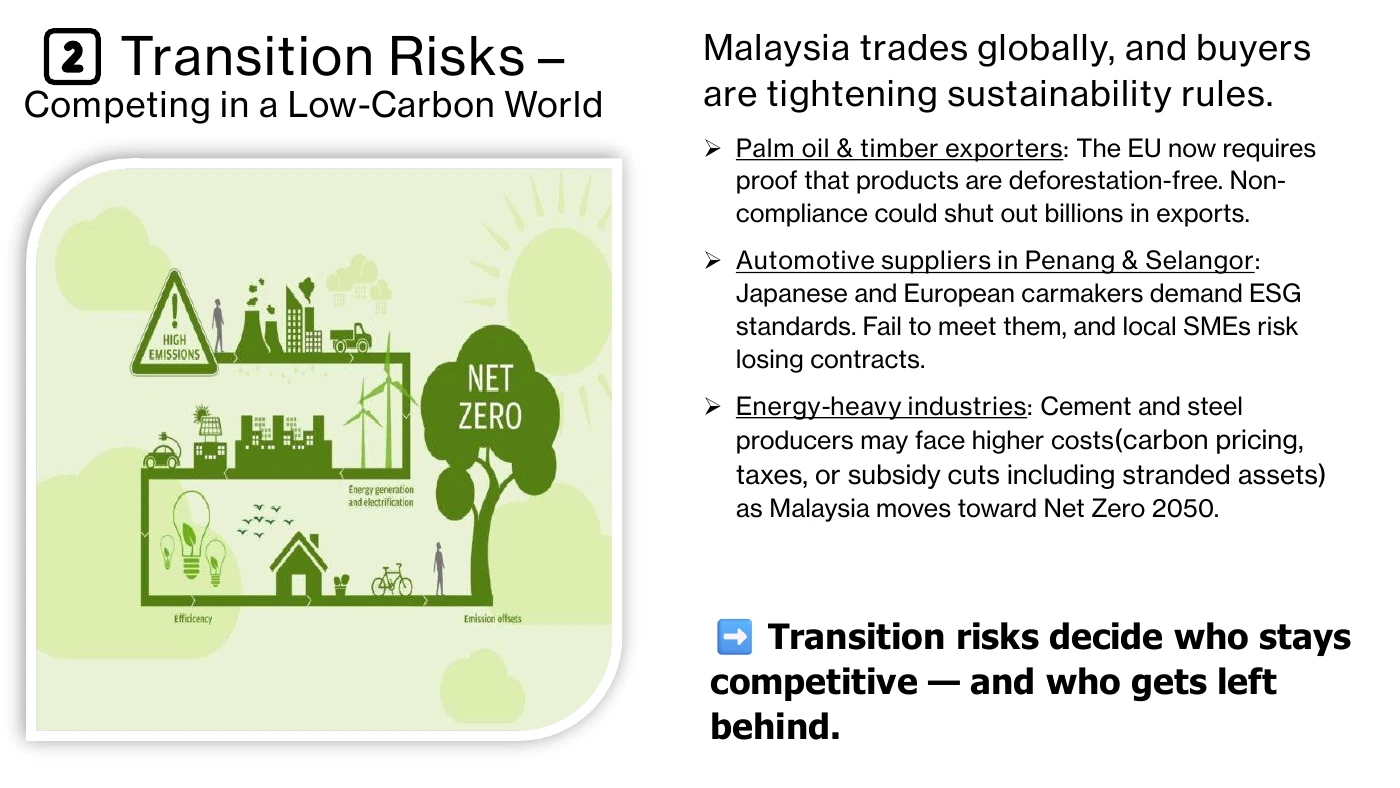
2️⃣ Transition Risks – Competing in a Low-Carbon World Malaysia trades globally, and buyers are tightening sustainability rules. ➢ Palm oil & timber exporters: The EU now requires proof that products are deforestation-free. Non- compliance could shut out billions in exports. ➢ Automotive suppliers in Penang & Selangor: Japanese and European carmakers demand ESG standards. Fail to meet them, and local SMEs risk losing contracts. ➢ Energy-heavy industries: Cement and steel producers may face higher costs(carbon pricing, taxes, or subsidy cuts including stranded assets) as Malaysia moves toward Net Zero 2050. Transition risks decide who stays competitive — and who gets left behind.

Page 4

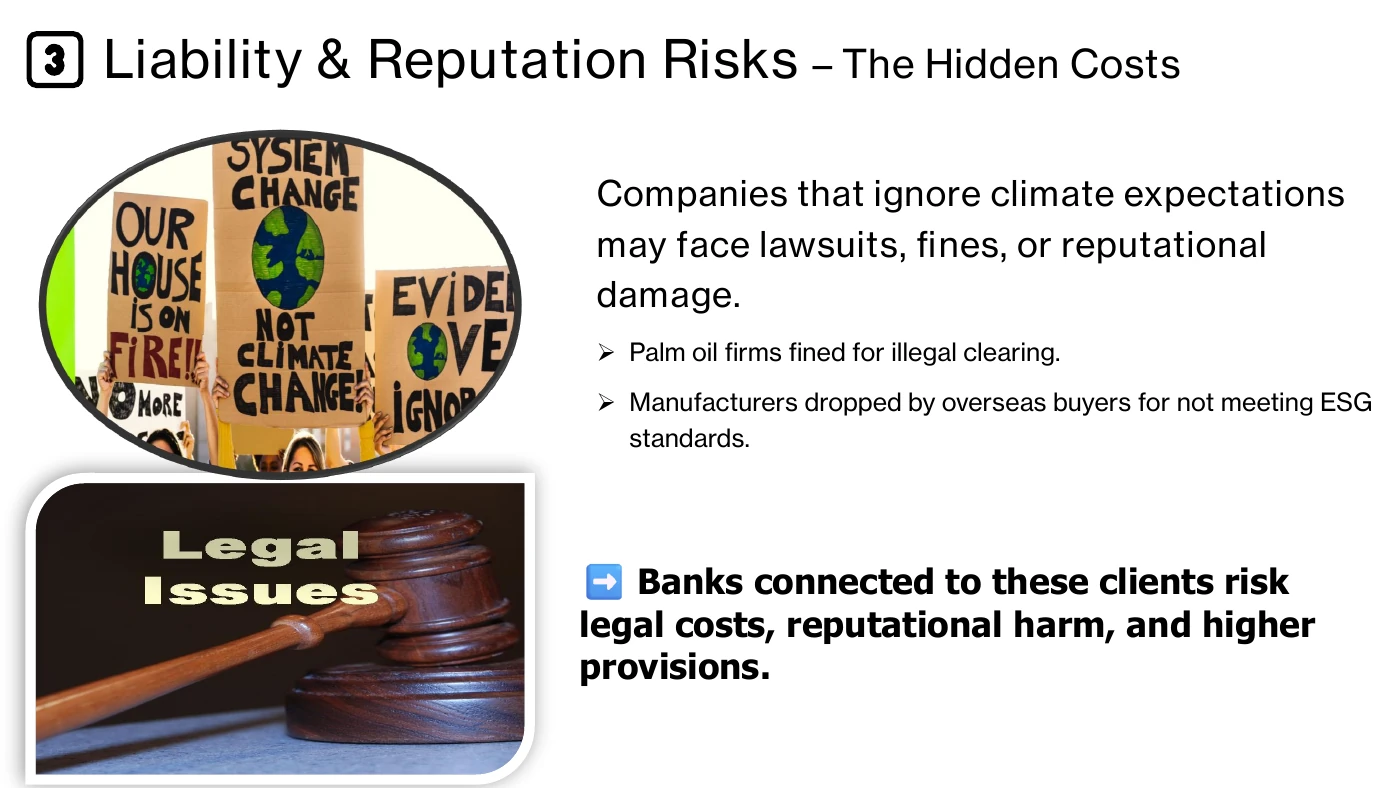
3️⃣ Liability & Reputation Risks – The Hidden Costs Companies that ignore climate expectations may face lawsuits, fines, or reputational damage. ➢ Palm oil firms fined for illegal clearing. ➢ Manufacturers dropped by overseas buyers for not meeting ESG standards. Banks connected to these clients risk legal costs, reputational harm, and higher provisions.

Page 5

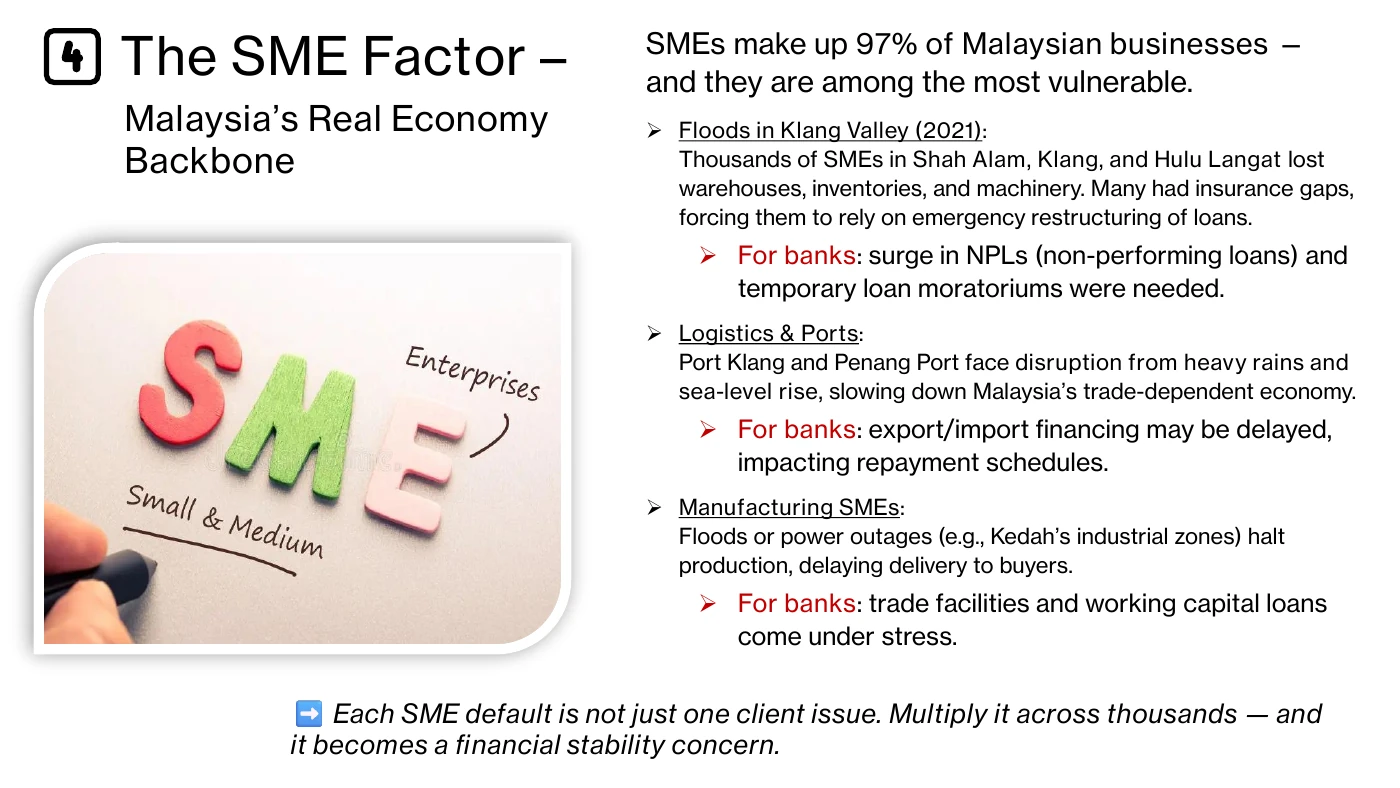
4️⃣ The SME Factor – Malaysia’s Real Economy Backbone SMEs make up 97% of Malaysian businesses — and they are among the most vulnerable. ➢ Floods in Klang Valley (2021): Thousands of SMEs in Shah Alam, Klang, and Hulu Langat lost warehouses, inventories, and machinery. Many had insurance gaps, forcing them to rely on emergency restructuring of loans. ➢ For banks: surge in NPLs (non-performing loans) and temporary loan moratoriums were needed. ➢ Logistics & Ports: Port Klang and Penang Port face disruption from heavy rains and sea-level rise, slowing down Malaysia’s trade-dependent economy. ➢ For banks: export/import financing may be delayed, impacting repayment schedules. ➢ Manufacturing SMEs: Floods or power outages (e.g., Kedah’s industrial zones) halt production, delaying delivery to buyers. ➢ For banks: trade facilities and working capital loans come under stress. Each SME default is not just one client issue. Multiply it across thousands — and it becomes a financial stability concern.

Page 6

Spillovers into the Financial Sector BNM’s CCPT stresses that these economic shocks flow back into the financial system through: ➢ Credit Risk: ➢ SMEs unable to repay loans due to flood losses or export contract cancellations. ➢ Corporate borrowers in carbon-intensive industries see weakened balance sheets and downgraded credit ratings. ➢ Market Risk: ➢ Asset values in oil & gas, coal, and unsustainable palm oil sectors decline as investors shift to greener portfolios. ➢ Insurance Risk: ➢ Frequent floods, landslides, and crop failures push up insurance claims. ➢ If not priced properly, insurers risk capital adequacy shortfalls. ➢ Systemic Risk: ➢ Widespread floods (e.g., Klang Valley) simultaneously affect households, SMEs, corporates, and banks, amplifying contagion across the economy.

Page 7

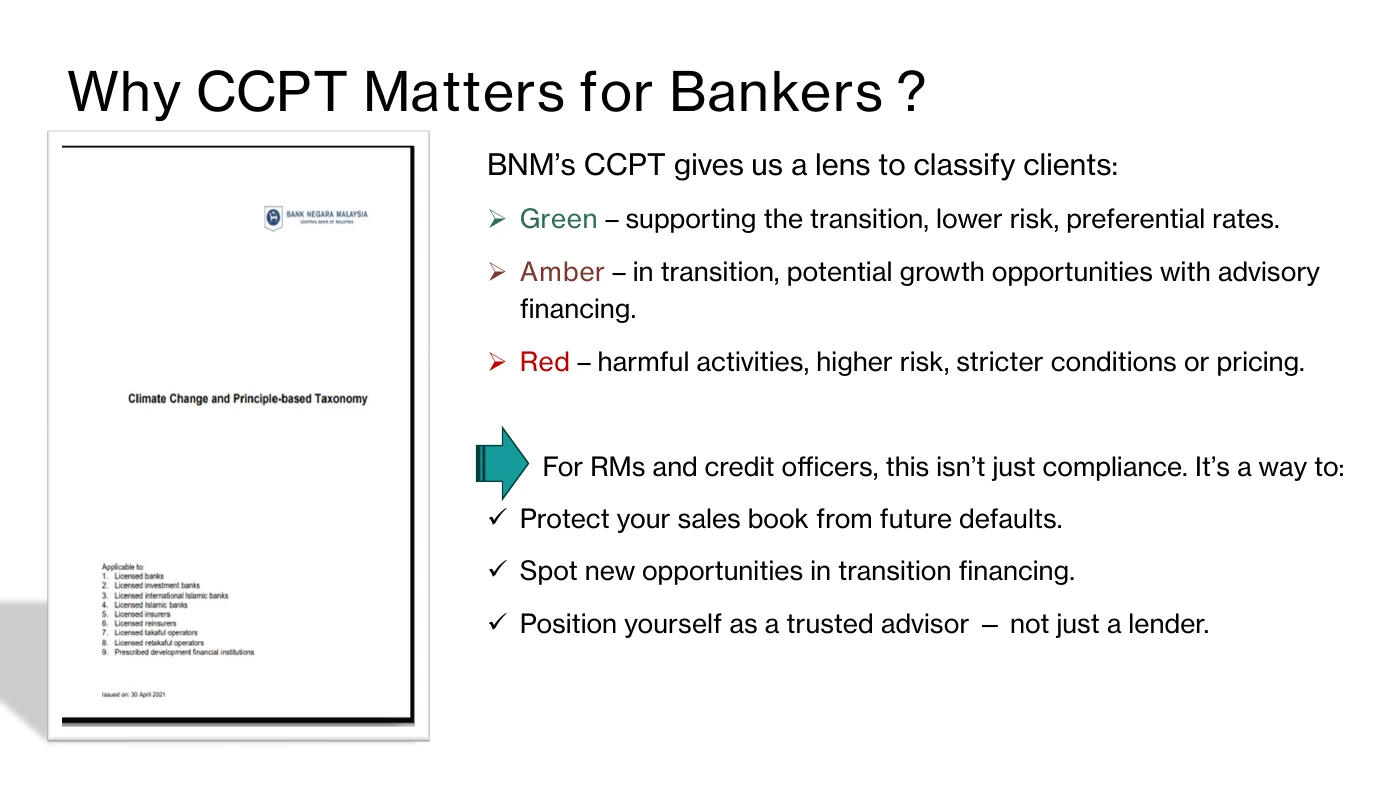
Why CCPT Matters for Bankers ? BNM’s CCPT gives us a lens to classify clients: ➢ Green – supporting the transition, lower risk, preferential rates. ➢ Amber – in transition, potential growth opportunities with advisory financing. ➢ Red – harmful activities, higher risk, stricter conditions or pricing. For RMs and credit officers, this isn’t just compliance. It’s a way to: ✓ Protect your sales book from future defaults. ✓ Spot new opportunities in transition financing. ✓ Position yourself as a trusted advisor — not just a lender.

Open the complete original PDF

In Yasotha’s words

Original post

Climate, Economy & Finance: How It All Connects

Have you ever wondered how a flood in Klang Valley or a drought in Kedah can shake up Malaysia’s banking system?

It’s simple: when businesses lose income, they struggle to repay loans. Multiply that across thousands of SMEs, exporters, and corporates — and suddenly, climate change is not just an environmental issue, but a financial stability issue.

That’s exactly why Bank Negara Malaysia introduced the Climate Change and Principle-based Taxonomy (CCPT). It’s a framework to help us see how climate risks ripple through the economy and land on the balance sheets of banks.

Refer to Presentation Slides for detailed explanation with industry/ies.

Takeaway: Climate change is not a future problem. It is TODAY’s business problem — and by extension, today’s BANKING problem.

As bankers, we must recognise the interconnection between climate, economy, and finance. Classifying and reporting under CCPT isn’t about slowing down deals. It’s about ensuring the deals we close today will still stand tomorrow.
Yasotha K.R Gopal

Banking insight. Practical learning. Thoughtful transition.

LinkedIn

Briefing enquiry

Shape a useful first conversation.

Choose a few starting points, then copy the summary into the channel you prefer. This website prepares a summary; it does not send a message.

Continue on LinkedIn